A Scandal Beyond Imagination
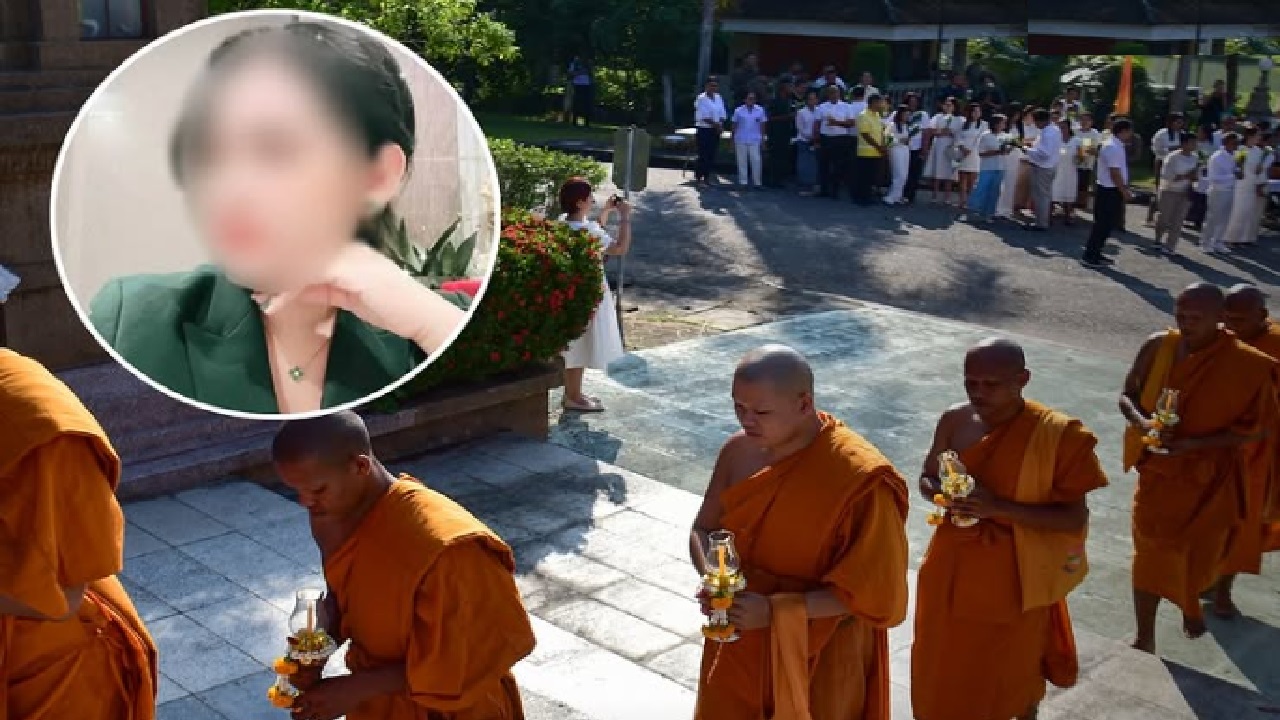
In a case that has shaken the spiritual and social fabric of Thailand, a woman known as “Ms Golf” has allegedly blackmailed at least nine Buddhist monks, extorting over ₹100 crore (385 million baht) over the past three years.
Behind the serene walls of temples, where monks are traditionally seen as paragons of discipline and virtue, this scandal has exposed a complex web of deceit, exploitation, and abuse of religious trust.
The Woman Behind the Scam: Who is “Ms Golf”?
The woman at the center of the scandal has been identified by Thai authorities as Wilawan, though she’s more widely referred to by her alias “Ms Golf.” According to investigators, she systematically lured monks into romantic and sexual relationships, secretly recorded intimate encounters, and later used the footage to blackmail them for massive sums of money.
Her home was raided in June, revealing over 80,000 images and videos—a digital library of blackmail evidence. Police say the material was used not only to extort cash but also to manipulate monks into abandoning the monkhood altogether to avoid disgrace.
Her Modus Operandi: Seduction, Scandal, and Silence
The scheme came to light in mid-June when a Bangkok abbot abruptly left the monkhood. Upon investigation, police discovered he had been extorted for 7.2 million baht by a woman who claimed to be pregnant with his child.
Further inquiry revealed this was no isolated incident—in fact, it fit a pattern. Wilawan allegedly built trust with monks through online and offline interactions, initiated intimate relationships, and then used the digital evidence to demand money. In some cases, she posed as a victim in need; in others, she threatened to go public with the recordings unless temple funds were transferred to her.
Much of the money she extorted was withdrawn in cash or funnelled into online gambling platforms, police revealed. Wilawan now faces serious charges including extortion, money laundering, and possession of stolen property.
Religious Trust Undermined: A System Under Scrutiny
Thailand, where over 90% of the population practices Buddhism, holds its monks in deep reverence. It’s customary for many Thai men to become monks temporarily to earn religious merit. But scandals in recent years—from drug trafficking to sexual misconduct—have badly bruised the credibility of the monastic system.
“This isn’t just about individual failings,” said Police Major General Jaroonkiat Pankaew, who is leading the investigation. “Wilawan exploited their vulnerabilities… but it’s also a betrayal of public trust in our religious institutions.”
As digital forensic teams dig deeper into Wilawan’s data, police warn that more monks may be implicated, potentially expanding the scandal far beyond the initial nine victims.
An Unfolding Crisis: Monastic Reform and Government Response
In response to the scandal, the Sangha Supreme Council, Thailand’s highest monastic authority, announced plans to revise regulations governing monk behavior, temple finances, and personal conduct.
The Thai government, meanwhile, has swung into action. Acting Prime Minister Phumtham Wechayachai has ordered a comprehensive review of monastic laws, financial transparency, and penalties for clergy who breach their vows.
Among the measures:
· A national hotline to report “misbehaving monks”
· A Facebook page for anonymous tips from the public
· A proposed legal framework for punishing errant monks, including fines and imprisonment
These moves signal the beginning of what could be a long-overdue reckoning for Thailand’s Buddhist institutions.
The Bigger Picture: What the Numbers Say
While the emotional and spiritual impact of this case is immense, the financial scope is equally staggering. Over 385 million baht flowed through Wilawan’s bank accounts in three years. Authorities believe temple funds were routinely siphoned, turning what should have been sacred institutions into cash sources for blackmailers.
Thai police are now coordinating with financial regulators to track the flow of funds, freeze suspicious accounts, and determine how religious donations were diverted for personal gain.
A Sacred Institution at a Crossroads
The Wilawan case is more than just a scandal—it’s a crisis of faith. It has exposed deep cracks in how monastic life is regulated, funded, and perceived. While Wilawan may have orchestrated the extortion, the case also highlights the vulnerabilities and failings within the clergy itself.
As the Thai public grapples with a growing distrust of once-revered institutions, restoring confidence will require more than just arrests. It will take structural reforms, moral accountability, and a renewed commitment to the spiritual values that monks are meant to embody.
For now, the silence of the monks involved is deafening—but the reckoning has begun.
(With agency inputs)