A Journey Against All Odds
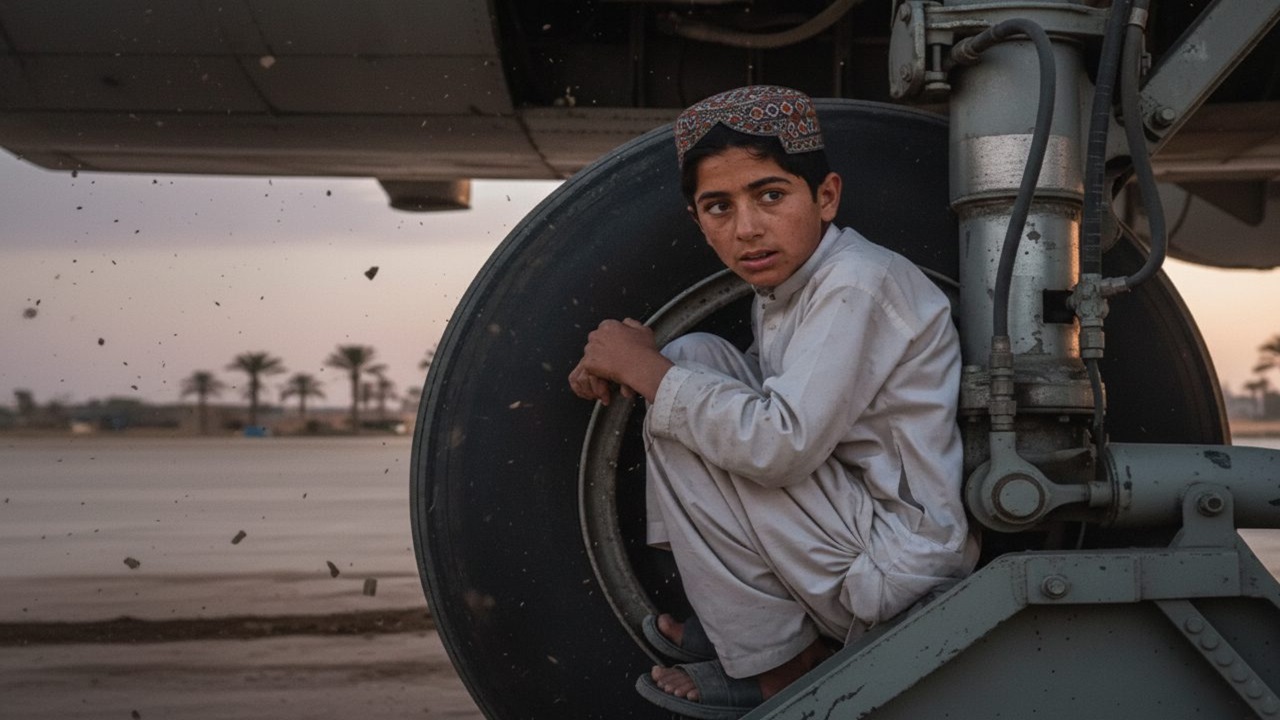
In a story that seems straight out of a survival thriller, a 13-year-old Afghan boy miraculously survived a perilous journey from Kabul to Delhi by hiding in the landing gear compartment of a commercial aircraft. Discovered wandering at Indira Gandhi International Airport, the teen’s tale has stunned authorities and experts alike, highlighting both the dangers of such stowaway attempts and the extraordinary resilience of the human body.
The Incident: A Stowaway’s Journey
Officials from the Central Industrial Security Force (CISF) encountered the boy at IGI Airport on Sunday, dressed in a white kurta-pyjama. Investigations revealed that he had boarded Kam Air flight RQ-4401 from Kabul, not as a ticketed passenger but by hiding in the aircraft’s rear wheel well. He carried only a small red audio speaker during the flight.
According to reports, the boy intended to travel to Iran, but mistakenly ended up in India. After being questioned, he was sent back to Afghanistan the same day. Authorities described the incident as a mix of curiosity and misadventure, underscoring the extreme risks involved in stowing away on aircraft.
A Deadly History of Stowaways
While this case captured attention, stowing away in an aircraft’s landing gear is not unprecedented. Historical records trace such incidents back to 1928, when 19-year-old Clarence Terhune hid in a Zeppelin’s wheel compartment. In India, Pradeep Saini survived a 1996 flight from Delhi to London in a British Airways Boeing 747, though his companion Vijay Saini died during the attempt. Internationally, Somali teenager Yahya Abdi survived a 5.5-hour flight in 2014, and in 2015, a South African man endured an 11-hour flight from Johannesburg to London under similar conditions, while his partner tragically perished.
Data from the US Federal Aviation Administration (FAA) indicates that 132 people attempted to travel in landing gear compartments between 1947 and 2021, with a staggering 77% mortality rate.
The Science of Survival
Surviving a wheel-well flight requires enduring extreme conditions. At cruising altitudes of around 35,000 feet, ambient temperatures can drop to -54°C, while oxygen levels fall to 26% of sea-level concentration. In these conditions, the human body becomes poikilothermic, with heart rate, breathing, and body temperature largely controlled by the external environment. Frostbite, hypoxia, and even loss of consciousness are common risks.
Ken Baillie, consultant in intensive care medicine at the University of Edinburgh, explained to the BBC that the combination of cold and oxygen deprivation would typically shut down the brain, leaving the stowaway unconscious but technically alive.
Some factors can increase survival odds. Heat from hydraulic lines and retained warmth in the aircraft tires may provide limited protection. Gradual ascent and descent allow the body to enter a low-metabolic state, preserving the central nervous system despite hypothermia and hypoxia.
Expert Advice: The Risks Are Real
While miraculous survival stories capture headlines, experts emphasize the extreme danger of such attempts. The risk of being crushed by landing gear, suffering permanent organ damage, or dying from oxygen deprivation is extraordinarily high. Medical professionals stress that surviving stowaway flights is exceptional, not typical.
FAA guidelines caution against such acts, noting that the vast majority of wheel-well stowaways do not survive. Experts unanimously advise purchasing a ticket rather than risking life and limb in such a perilous endeavor.
Courage, Curiosity, and Caution
The Afghan teenager’s survival is a testament to human resilience but also a stark reminder of the lethal hazards of stowing away. From historical accounts to contemporary cases, the odds are overwhelmingly against survival. While heat from hydraulic lines and a gradual ascent can occasionally preserve life, the risk of death or severe injury remains immense.
Ultimately, this extraordinary story serves as both an awe-inspiring tale of survival and a cautionary lesson: while curiosity may drive adventure, safety and prudence must always prevail. The boy’s ordeal should encourage awareness, regulation, and above all, the wisdom to buy a ticket rather than risk a miracle.
(With agency inputs)