The Rise of AI Conversations
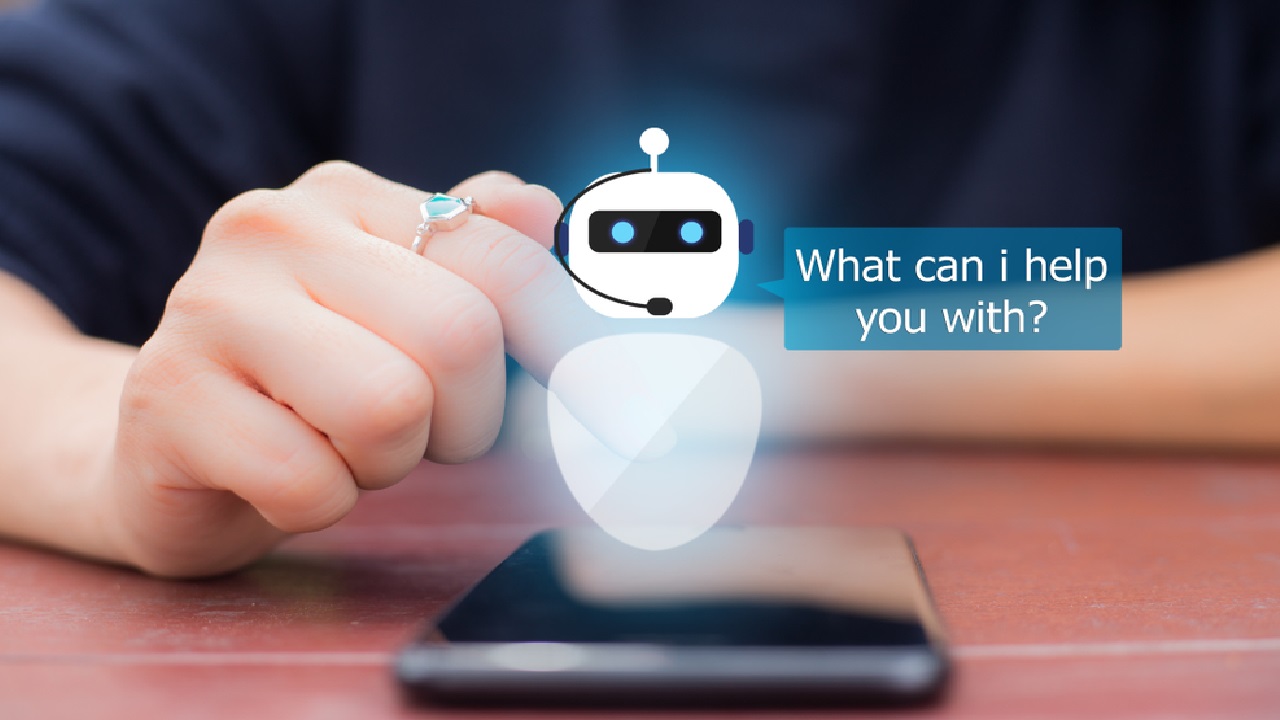
Artificial intelligence is reshaping the very foundation of India’s technology services industry — one chatbot at a time. Once known as the world’s call-center capital, India is now at the crossroads of another digital revolution: AI-driven automation. Chatbots and generative AI agents are replacing thousands of customer-service representatives, transforming how businesses interact with clients.
Companies like LimeChat and Haptik are at the forefront of this shift, building conversational AI that speaks, texts, and responds like a human — but faster, cheaper, and tireless. What began as an experiment in automation has evolved into a full-fledged industrial transformation, forcing India’s vast $283 billion IT sector to rethink its future.
AI’s Disruption: From Call Centers to Code
For decades, India’s success in outsourcing relied on low-cost, English-speaking labor that powered customer service desks for global corporations. Today, that edge is eroding. Generative AI systems are now able to perform many of these tasks with precision and speed.
At LimeChat’s Bengaluru office, developers refine bots capable of handling up to 10,000 monthly customer queries — with 80% fewer human staff. “Once you hire a LimeChat agent, you never have to hire again,” said co-founder Nikhil Gupta, whose firm has already automated 5,000 jobs across India.
These AI agents don’t just answer questions. They recommend products, process returns, and even detect customer frustration. One bot, dubbed “Neha”, deployed by The Media Ant, a Bengaluru ad agency, replaced an entire call center — and converses fluently in an Indian-accented English voice.
However, the human cost is mounting. Customer-care professionals are among the first to feel the impact. Megha S., a 32-year-old software support worker, lost her job last month as her firm adopted AI systems. “I was told I am the first one replaced by AI,” she said quietly.
The Numbers Behind the Shift
India’s business process management (BPM) sector — employing 1.65 million people — is under immense pressure. According to TeamLease Digital, net hiring in this segment has fallen sharply, growing by fewer than 17,000 workers last year, compared with 130,000 just two years earlier.
AI’s advance has created demand for new roles — such as AI coordinators and prompt engineers — but far fewer than those being displaced. Neeti Sharma, CEO of TeamLease Digital, said the workforce “is being redefined faster than any training program can catch up.”
Despite the anxiety, the Indian government remains optimistic. In February, Prime Minister Narendra Modi asserted that technology “does not eliminate work; it transforms it.” His administration is betting that new opportunities in data science, AI engineering, and automation design will absorb those displaced.
Yet critics warn of complacency. Santosh Mehrotra, a development economist, argues that India lacks a clear national strategy to mitigate AI’s impact on young workers. “There’s no game plan,” he said, calling for urgent investment in reskilling and social safety nets.
The AI Gold Rush and Global Stakes
India’s approach to AI adoption is a calculated gamble. Rather than slowing innovation to protect jobs, the country is racing forward — hoping that leadership in AI technology will outweigh short-term disruptions.
Investment bank Jefferies estimates that AI adoption could cut call-center revenues by 50% and back-office revenues by 35% within five years. That’s a major blow for a nation that commands over half the global outsourcing market.
Nevertheless, industry veterans like Pramod Bhasin, founder of Genpact, see potential for reinvention. “India could move from being the world’s back office to its AI factory,” he said — a hub for developing, training, and maintaining intelligent automation systems.
The Startups Driving Change
LimeChat, which reported revenue growth from $79,000 in 2022 to $1.5 million in 2024, now partners with Microsoft Azure to power its chatbots. Clients include personal-care brand Mamaearth and wellness company Kapiva, both of which use AI agents to handle customer conversations on WhatsApp — from order tracking to personalized product recommendations.
Meanwhile, Haptik, acquired by Reliance Industries in 2019, boasts revenue nearing $18 million, offering AI agents that cost as little as $120 a month and can reduce customer-support expenses by 30%. “Brands are not investing in humans anymore,” said Haptik product manager Suji Ravi.
Even small firms are following suit. The Media Ant replaced nearly half its workforce with AI tools that identify sales leads and send emails. The remaining staff now work alongside bots, blending automation with human creativity.
Training for Tomorrow: From Java to AI
India’s famed IT training hubs are transforming too. In Ameerpet, Hyderabad’s bustling tech-learning district, banners now advertise courses in AI data science and prompt engineering, replacing older programs in Java or Microsoft Office. “Recruiters are demanding AI-ready candidates,” said Priyanka Kandulapati from Quality Thought Institute, where enrolments in AI programs have doubled in a year.
This shift reflects a larger national trend — a move from basic coding to AI integration, model supervision, and algorithmic ethics, fields expected to drive future employment.
Between Innovation and Inequality
India’s bet on AI may define its economic future. By embracing automation rather than resisting it, the country hopes to transform a looming crisis into an opportunity for global leadership in artificial intelligence. Yet the transition won’t be painless.
As millions of call-center workers face displacement, the challenge lies in ensuring that AI growth does not deepen inequality. The government and industry must work together to upskill workers, expand social protections, and democratize access to AI education.
If successful, India could emerge not as the world’s back office, but as the brain behind its intelligent machines. If not, the same technology that once empowered its rise could rewrite its success story — in a language only AI understands.
(With agency inputs)