


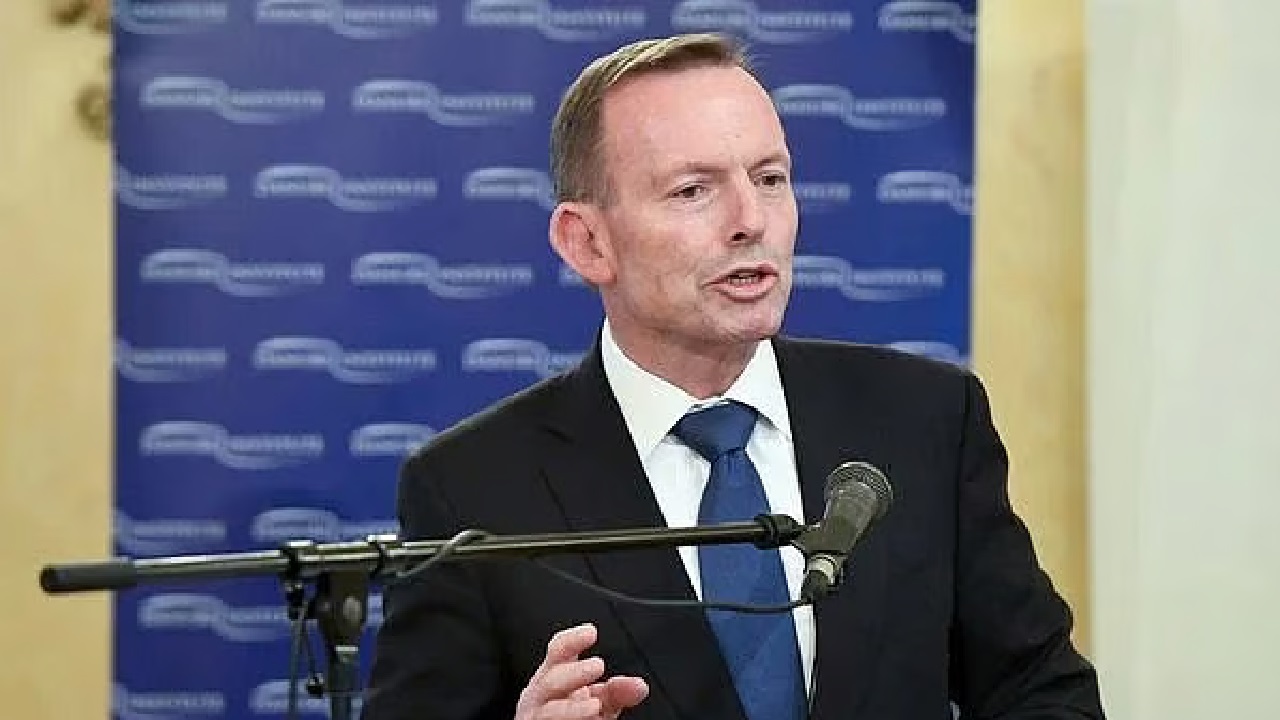
A Vision Cast from the Summit Stage
At the NDTV World Summit 2025, former Australian Prime Minister Tony Abbott made a sweeping and bold forecast — that in four to five decades, the Prime Minister of India could well become the leader of the free world, a title historically associated with the United States.
Abbott’s statement captured immediate global attention. Declaring that “the 21st century belongs to India,” he urged New Delhi to embrace its destiny as a democratic superpower and a strategic counterbalance to China in the Indo-Pacific.
“The Prime Minister of India — whoever that may be — will be at the helm of the democratic world within the next 40 to 50 years,” Abbott said, emphasizing the country’s steady rise in economic, military, and moral influence.
India’s Moment on the Global Stage
Abbott noted that India’s growth story was no longer potential — it was unfolding in real time. “Every Indian city you visit shows an incredible infrastructure push — airports, highways, and industrial corridors. India is ascending and can serve as a substitute for China in global supply chains,” he observed.
According to him, India possesses three defining advantages over its Asian rival:
· Democracy – which grants legitimacy and stability.
· Rule of law – which ensures predictability and fairness in governance.
· English language – which connects it effortlessly with the Western world.
These pillars, Abbott said, will propel India toward the kind of economic and military transformation that China experienced in the late 20th century — but with the moral authority of an open society.
A Democratic Counterweight to Beijing
Abbott’s remarks reflected growing Western consensus that India’s role is pivotal in restraining China’s assertive expansionism. The former Australian leader described Beijing’s ambitions as “hegemonic,” warning that “China wants to dominate, and that spells trouble for all its neighbours and for global peace.”
He argued that free trade agreements, like those India signed with Australia in 2022 and the United Kingdom in 2024, indicate a strategic realignment — democratic nations are reducing dependence on China and pivoting toward more trustworthy partners like India.
In Abbott’s view, the world’s geopolitical axis is subtly shifting, and India is emerging as the natural anchor of this transformation — a stabilizing force in an unpredictable Indo-Pacific order.
Taiwan: The Next Flashpoint
Turning to East Asia, Abbott cited Taiwan as a potential test of China’s ambitions. He cautioned against complacency, asserting that peace cannot be preserved by ignoring Beijing’s intent. “The best way to ensure nothing untoward happens is to show preparedness. Weakness is provocative,” he warned.
Abbott stressed that deterrence — not appeasement — must guide global policy toward China. “If China knows that any attempt to seize Taiwan will fail, escalation can be avoided,” he said, drawing parallels to lessons from the Korean War.
Tony Abbott: The Conservative Statesman with a Global Outlook
A seasoned politician and thinker, Anthony John Abbott served as Australia’s 28th Prime Minister (2013–2015). Educated at the University of Sydney and later at Oxford as a Rhodes Scholar, Abbott’s career spanned journalism, priesthood training, and politics before he led the Liberal Party.
During his tenure, he implemented Operation Sovereign Borders, repealed the carbon tax, and championed key trade agreements with China, Japan, and South Korea. He also launched the New Colombo Plan to strengthen Australia’s engagement with Asia and supported humanitarian missions, including the resettlement of Syrian refugees.
Though his leadership ended in 2015, Abbott remains a vocal advocate for democratic values, free markets, and strong Indo-Pacific partnerships. His continued involvement in global discourse — including his role on the UK Board of Trade — underscores his belief in a rules-based world order.
A Prediction Rooted in Perspective
Tony Abbott’s declaration that India could one day lead the free world may seem ambitious — but it reflects a growing conviction among global observers that the world’s largest democracy is poised for historic prominence. With its population advantage, democratic ethos, and expanding influence, India’s rise is not a question of “if,” but “when.”
For Abbott, this isn’t mere rhetoric. It’s a strategic reading of the global future — one where India’s leadership, grounded in freedom and fairness, might guide the democratic world through the 21st century and beyond.
(With agency inputs)