A Fresh Wave of Hostility
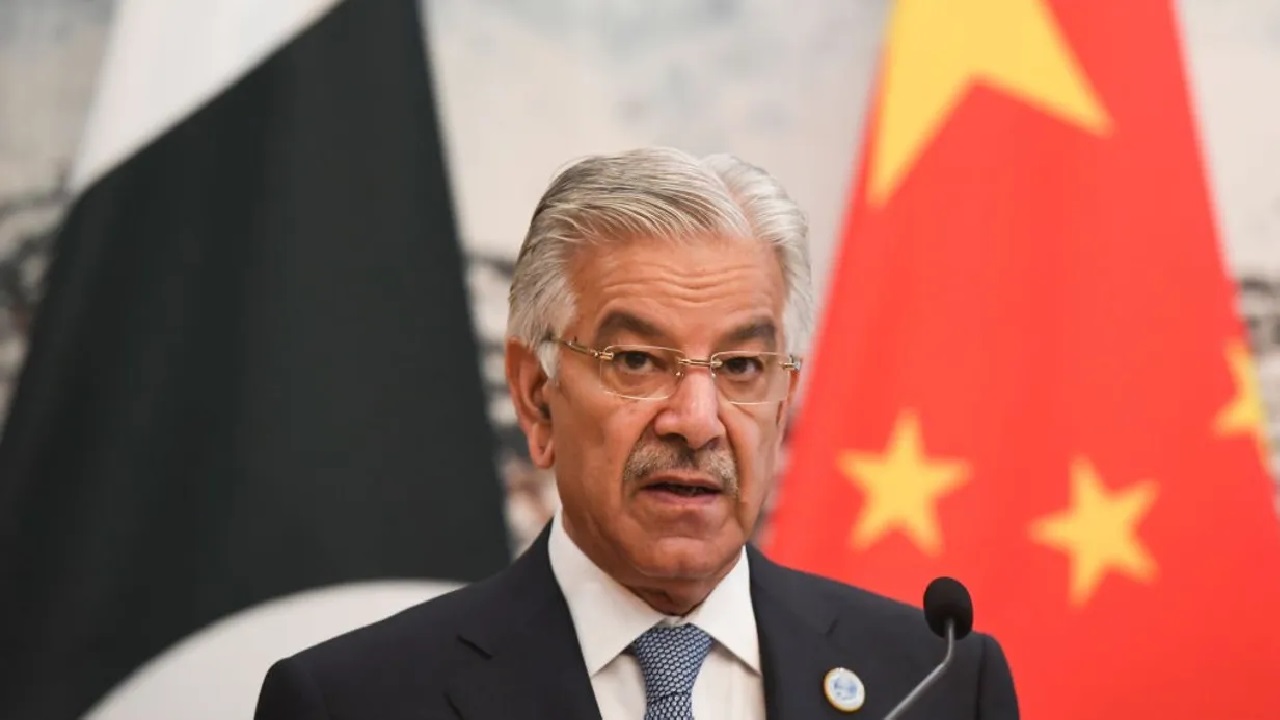
In a provocative statement that has heightened regional anxieties, Pakistan’s Defence Minister Khawaja Asif has warned that Islamabad is ready for a “two-front war” — one with India and another with the Taliban regime in Afghanistan. Speaking in a televised interview on Samaa TV, Asif linked India to Pakistan’s mounting tensions with Kabul, alleging that New Delhi might “play dirty at the border.” His remarks come as border clashes between Pakistan and the Taliban intensify, threatening to further destabilize South Asia’s fragile security balance.
Allegations Against India and Talk of War
When questioned about possible Indian provocations, Asif declared that such actions “cannot be ruled out,” suggesting “strong possibilities” of Indian interference along Pakistan’s eastern border. He insisted that Pakistan’s armed forces were “fully prepared” for simultaneous conflicts, though he refrained from sharing operational details.
This rhetoric marks yet another instance of Islamabad’s attempt to link India to its internal and regional crises. The Defence Minister’s assertion that India might exploit the current chaos with Afghanistan underscores Pakistan’s growing paranoia amid worsening security conditions. Asif claimed that contingency strategies were already in place should such a scenario unfold.
Tensions with Afghanistan Boil Over
The strained relationship between Pakistan and Afghanistan has reached one of its lowest points in recent years. Following Pakistan’s air strikes on Tehreek-e-Taliban Pakistan (TTP) camps in Kabul and Kandahar, the Taliban launched retaliatory attacks, reportedly killing 58 Pakistani soldiers and capturing military equipment, including tanks.
Islamabad, in turn, claimed to have neutralized 200 militants in its counter strikes. However, images of Taliban fighters parading captured Pakistani tanks and weaponry have inflicted a major public embarrassment on Pakistan’s military establishment. A 48-hour ceasefire, negotiated through Saudi and Qatari mediation, failed within days, reflecting the deep mistrust on both sides.
Asif’s Controversial Remarks on Afghan Refugees
During the same interview, Asif also targeted Afghan refugees living in Pakistan, accusing them of contributing to instability. “What have they given us except terrorism?” he asked, claiming that Pakistan had sacrificed its peace by sheltering millions of Afghans for decades.
He added that the ongoing government crackdown on undocumented Afghans was justified, arguing that “the majority should go back now that the situation is improving.” His statements have drawn sharp criticism from human rights groups, who accuse Islamabad of scapegoating refugees amid political and military failures.
India Once Again in Pakistan’s Crosshairs
Asif’s remarks took an even sharper turn when he alleged that the Taliban government was acting as a proxy for India, claiming that Delhi was “sponsoring” Kabul’s actions against Pakistan. “The decisions of the Afghan Taliban are being guided by Delhi… Kabul is fighting a proxy war for India,” he alleged.
He further pointed to the recent visit of Taliban foreign minister Amir Khan Muttaqi to India, implying that the trip was part of a “coordinated plan” against Pakistan. Such assertions, lacking evidence, appear aimed at shifting blame for Pakistan’s deteriorating regional position — a strategy Islamabad has historically employed whenever domestic or security crises escalate.
Intelligence and Military Failures Exposed
The Taliban’s ability to inflict heavy losses on Pakistani troops and capture sophisticated weaponry has highlighted serious lapses in Pakistan’s intelligence and surveillance systems. Analysts suggest that the military’s focus on eastern border deployments and internal politics may have left western defences vulnerable.
Despite Islamabad’s claims of decisive retaliation, the optics of defeat — from captured tanks to viral Taliban propaganda videos — have dealt a blow to Pakistan’s military credibility, already under scrutiny for its economic and political entanglements.
A Familiar Blame Game and Its Consequences
Khawaja Asif’s fiery statements are not new. Earlier this year, he accused Kabul of waging India’s “proxy war”, echoing Islamabad’s long-standing narrative of externalizing blame for internal insecurities. Yet, the irony remains that Pakistan itself has long faced global accusations of harbouring terror networks, many of which have destabilized its own neighbourhood.
By portraying India and Afghanistan as dual adversaries, Asif seems intent on reinforcing a siege mentality within Pakistan — one that distracts from governance failures and mounting public discontent.
A Dangerous Game of Deflection
Khawaja Asif’s warning of a possible two-front war underscores Pakistan’s deepening strategic anxiety amid internal unrest and external challenges. However, by continuously framing India as the orchestrator of its troubles and vilifying Afghan refugees, Islamabad risks further isolating itself diplomatically.
Rather than resorting to belligerent rhetoric, Pakistan’s leadership must confront its domestic extremism, intelligence flaws, and economic instability — the real threats eroding its stability. As regional dynamics shift, only measured diplomacy and introspection, not militaristic bravado, can steer Pakistan away from a self-inflicted crisis.
(With agency inputs)