A New Chapter in India’s Defence Independence
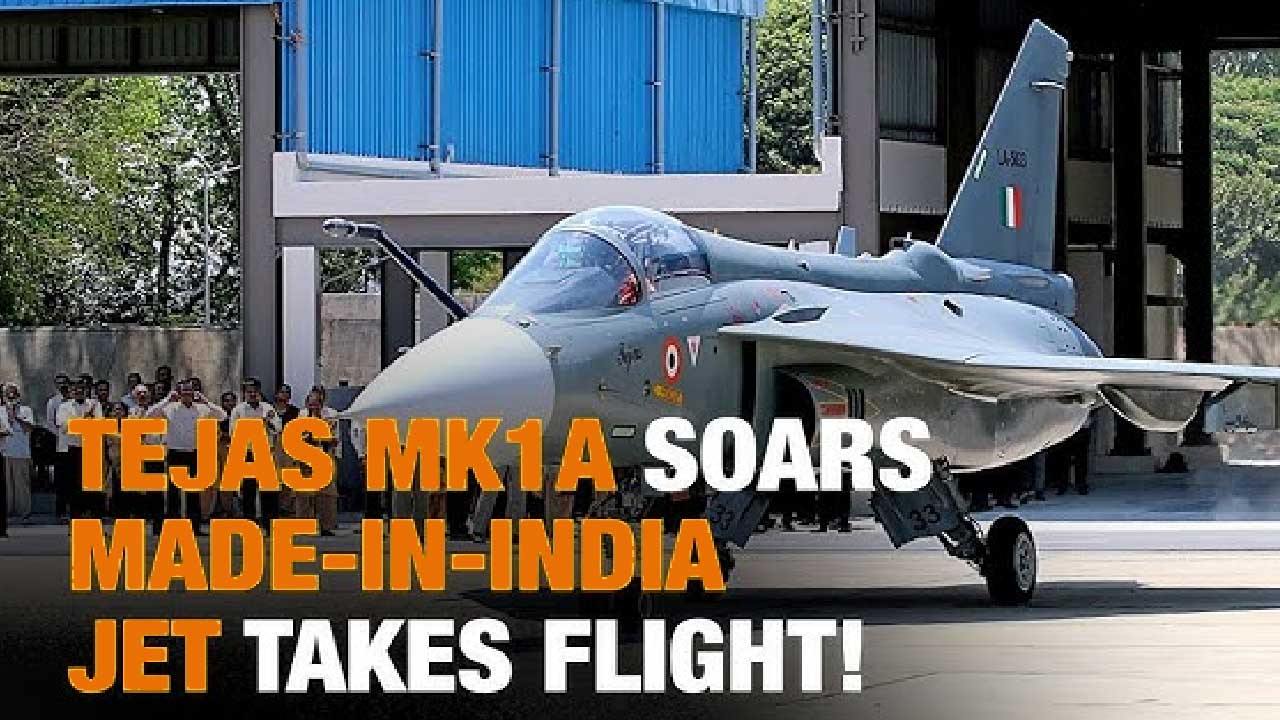
India’s long-cherished dream of self-reliance in defence has gained fresh momentum with the successful rollout of the HAL Tejas Mk1A Light Combat Aircraft from Hindustan Aeronautics Limited’s (HAL) Nashik facility. The event, marked by Defence Minister Rajnath Singh inaugurating the third Tejas Mk1A production line and the second HTT-40 trainer aircraft line, reflects the country’s accelerating progress toward strategic autonomy in defence manufacturing.
The inaugural Tejas Mk1A sortie, piloted by HAL Chief Test Pilot (Retd.) Group Captain KK Venugopal, was a powerful symbol of India’s rising technological prowess. The aircraft’s maiden flight was followed by stunning aerial displays from the Su-30MKI and HTT-40, with the Tejas receiving a ceremonial water cannon salute—fitting recognition for an aircraft now regarded as the pride of Indian aviation.
Rajnath Singh: From Import Dependence to Innovation
Addressing the gathering, Defence Minister Rajnath Singh hailed the flight of Tejas Mk1A as a “shining symbol of India’s growing Aatmanirbharta in defence.” Reflecting on India’s transformation since 2014, he noted that the nation, once importing nearly 70% of its critical military equipment, now manufactures 65% of it domestically.
“When we came to power, India’s defence preparedness was limited, our import dependency was high, and private participation was minimal,” Singh said. “Today, we are building at home what we once imported—fighter aircraft, missiles, engines, and electronic warfare systems.”
The minister highlighted the remarkable growth of the defence sector: annual defence production has risen from ₹46,429 crore in 2014–15 to over ₹1.5 lakh crore in 2024–25, while exports have surged to ₹25,000 crore from less than ₹1,000 crore a decade ago. The government now aims for ₹3 lakh crore in defence production and ₹50,000 crore in exports by 2029.
HAL: The Backbone of India’s Aerospace Ambition
Calling HAL, the “backbone of India’s defence sector,” Singh praised its long-standing role in nation-building and technological advancement. He cited its crucial contribution during Operation Sindoor, when the Nashik team successfully integrated the BrahMos missile onto the Sukhoi Su-30MKI, enabling precision strikes on terrorist hideouts.
He also lauded the Nashik division’s six-decade legacy—having produced over 900 aircraft and overhauled 1,900, from the MiG-21 and MiG-27 to the modern Su-30MKI—cementing its position as one of India’s most vital aerospace hubs.
Building for the Future: Speed, Scale, and Skill
HAL Chairman and Managing Director DK Sunil described the operationalisation of the new Tejas and HTT-40 lines as “a testament to HAL’s expanding capacity and efficiency.” The Tejas Mk1A production line was completed in just two years, capable of building eight aircraft annually, raising HAL’s total Tejas output to 24 aircraft per year.
The new lines are expected to generate around 1,000 jobs and strengthen collaboration with more than 40 industry partners in the Nashik region, further embedding India’s private sector into the defence production ecosystem. The HTT-40 line will assemble key components like wings, fuselages, and control surfaces, expanding HAL’s domestic manufacturing portfolio.
Secretary (Defence Production) Sanjeev Kumar called the Tejas Mk1A “a statement of India’s design and manufacturing excellence,” developed through a seamless partnership among HAL, the Aeronautical Development Agency (ADA), DRDO, and the Indian Air Force (IAF).
India Takes Command of Its Skies
The flight of the Tejas Mk1A is not merely a technological milestone—it is a resounding declaration of India’s capability to design, produce, and sustain advanced combat aircraft indigenously. It signifies a decisive break from decades of import dependence and a confident stride into a future of innovation-driven self-reliance.
As HAL’s jets roll out from Nashik and take to the skies, India’s vision of Aatmanirbhar Bharat in defence is no longer a distant dream—it is a living, flying reality, powered by homegrown skill, innovation, and determination.
(With agency inputs)