Endless Smog, Elusive Solutions
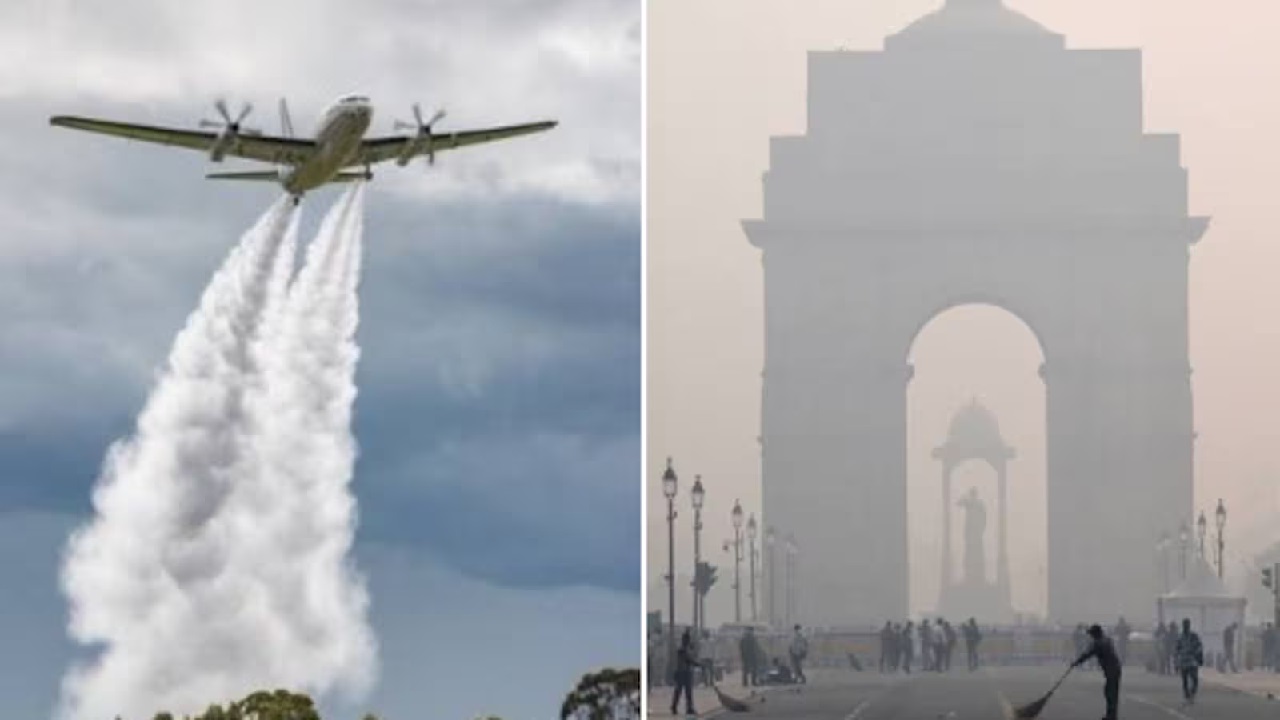
Each winter, Delhi sinks under a suffocating blanket of toxic haze. Despite bans on firecrackers, curbs on construction, and vehicle restrictions, the capital’s air remains among the most polluted in the world. In a fresh attempt to outsmart the smog, the Delhi government joined hands with IIT Kanpur to conduct cloud seeding experiments, hoping artificial rain could rinse the skies clean.
But after three trials and over ₹1 crore spent, the results have been largely disappointing. Not a single shower worth noting fell over the capital, and what little relief the city saw was fleeting. As officials push ahead with more trials costing up to ₹30 crore this season, scientists and citizens alike are questioning whether Delhi’s latest fight against pollution is more illusion than innovation.
Trials That Missed Their Mark
The cloud seeding missions—one on October 23 and two on October 28, 2025—involved aircraft dispersing silver iodide flares across north and northwest Delhi and adjoining districts. However, the skies refused to cooperate. No measurable rainfall occurred over the city; peripheral regions saw barely 0.1–0.2 mm of drizzle.
Despite the absence of rain, instruments detected a brief improvement in air quality. Levels of PM2.5 dropped by 6–10%, and PM10 by nearly 21%, but the effect lasted less than a day. Within hours, pollution rebounded as emissions from vehicles, industries, and crop fires reloaded the city’s toxic atmosphere.
The temporary dip only reinforced a hard truth—Delhi’s pollution problem cannot be washed away that easily.
Scientific Realities: The Missing Moisture
So why did the ambitious trials fail? The answer, experts say, lies in the science of cloud physics. According to Professor Manindra Agarwal, Director of IIT Kanpur, low humidity was the main barrier. For successful cloud seeding, humidity levels need to hover around 50%, but Delhi’s atmosphere during the trials registered a mere 10–20%. Without sufficient natural moisture, silver iodide particles cannot trigger raindrop formation.
“The process wasn’t wasted,” Agarwal explained. “We gathered crucial microphysical data on atmospheric responses and pollutant behavior. When the right conditions arrive, results could be more promising.”
Still, the findings underline the unpredictable and weather-dependent nature of cloud seeding—hardly a dependable weapon against a recurring pollution crisis.
Counting the Cost: High Price, Low Return
The pilot program’s first five sorties are pegged at ₹3.2 crore, roughly ₹64 lakh per attempt. Should the experiment run through the full winter, costs could soar to ₹25–30 crore. Expenses include aircraft modification, pilot operations, chemical agents, and meteorological monitoring.
While proponents argue this is modest compared to Delhi’s ₹300 crore annual pollution control budget, critics question the cost-effectiveness and sustainability of an approach that offers no guarantee of success. Some experts have derided it as “vanity science”—a high-profile distraction from tackling deeper sources of pollution such as vehicle emissions, industrial discharge, and biomass burning.
Even Professor Agarwal admits the method is “not a long-term solution”, calling it a temporary measure for extreme conditions rather than a substitute for structural reform.
Beyond Rain Dreams: Searching for Real Answers
Environmentalists warn that reliance on expensive, short-term experiments risks diverting focus from systemic interventions. Measures like cleaner public transport, strict industrial regulation, waste management, and regional crop residue control remain Delhi’s most viable paths toward breathable air.
Yet, the trials have yielded one silver lining: they have elevated scientific inquiry within India’s pollution policy, encouraging data-backed approaches and inter-agency collaboration.
A Wake-Up Call Beneath the Haze
Delhi’s cloud seeding experiment stands as a symbol of both innovation and desperation—a city yearning for relief yet trapped in the inertia of its own environmental neglect. While artificial rain may someday play a supporting role in managing pollution peaks, it cannot replace the hard, long-term reforms that cleaner air demands.
The capital’s challenge now is not to wait for the clouds to save it, but to rebuild its environmental policies from the ground up. Until that happens, Delhi’s air may continue to promise hope with every drizzle—and despair with every dawn.
(With agency inputs)