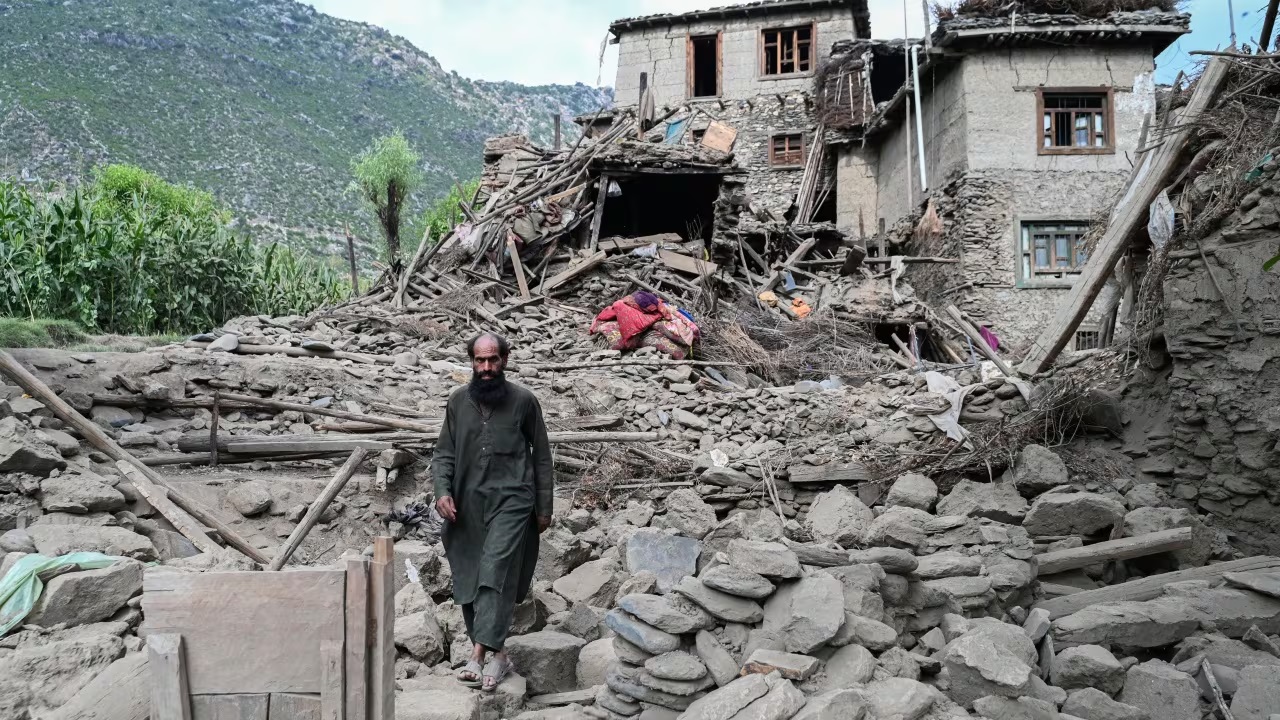
A Night of Fear: 6.3-Magnitude Quake Shakes Mazar-e Sharif
In the early hours of Monday morning, northern Afghanistan was jolted awake by a 6.3-magnitude earthquake that struck near Mazar-e Sharif, one of the country’s most historic cities.
According to the U.S. Geological Survey (USGS), the tremor occurred at a depth of 28 kilometers, with its epicenter 22 kilometers west-southwest of Khulm. The quake hit around 12:59 a.m. local time, claiming at least 10 lives and injuring over 260 people, as confirmed by local officials.
Hospitals across Balkh and Samangan provinces were quickly overwhelmed as victims poured in. Emergency teams scrambled through the night to rescue people trapped beneath collapsed buildings, with aftershocks adding to residents’ fear and uncertainty.
Heritage Shaken: Blue Mosque Suffers Structural Damage
Among the worst-hit sites was the 15th-century Blue Mosque, also known as the Shrine of Hazrat Ali, a spiritual and cultural icon of Afghanistan. Parts of its intricate minaret crumbled, scattering turquoise tiles and bricks across its courtyard — a painful sight for locals who regard the site as both sacred and symbolic of national pride.
Other parts of Mazar-e Sharif also suffered serious damage. Several residential buildings and commercial structures collapsed, and roads were blocked by debris. Local rescue teams, joined by community volunteers, worked through the dawn to clear wreckage and search for survivors.
The USGS PAGER system issued an “orange alert”, signaling a high likelihood of significant casualties and major economic losses — a warning that prompted a regional emergency response.
Tremors of Panic: Human Impact and Emergency Response
The quake struck when most residents were asleep, magnifying the sense of panic. Witnesses described waking up to walls shaking and windows shattering as they rushed into the cold night to escape collapsing homes.
Social media quickly filled with images of chaotic rescue efforts — citizens carrying the wounded, rescuers digging through rubble with bare hands, and hospitals struggling to handle the influx of injured.
Authorities from the National Disaster Management Authority (NDMA) are now assessing the full scale of the devastation, while local officials have appealed for urgent medical supplies, tents, and food aid.
A Fragile Land: Afghanistan’s Earthquake Vulnerability
Afghanistan’s geography places it squarely along active tectonic fault lines, making it one of the world’s most earthquake-prone regions. In recent years, the nation has faced a string of devastating quakes — from the Herat tragedy of 2023, which killed over a thousand people, to the 2015 Hindu Kush earthquake, which caused widespread destruction.
Chronic instability, weak infrastructure, and limited emergency resources continue to magnify the toll of each disaster. Most Afghan homes are built using mud and unreinforced materials, offering little resistance to seismic shocks.
A Reminder of Fragility and Urgent Need for Preparedness
Monday’s earthquake has once again exposed Afghanistan’s acute vulnerability to natural disasters. With 10 dead, more than 260 injured, and damage to the historic Blue Mosque, the tragedy underscores the urgent need for stronger disaster preparedness, resilient construction, and international aid coordination.
For a nation already burdened by conflict and economic hardship, the quake is not only a humanitarian crisis but a call to action — to rebuild safer, smarter, and stronger against the tremors that continue to test its resilience.
(With agency inputs)