NIA Confirms Suicide Bombing, Key Conspirator Arrested
India’s National Investigation Agency (NIA) has officially confirmed that the October 10, 2025, blast near Delhi’s historic Red Fort was a suicide attack, marking the first car-borne bombing of its kind in the national capital. The explosion, carried out by Umar Un Nabi, killed 13 people and injured more than 30, jolting the city into fear and triggering one of the most aggressive counterterrorism investigations in recent years. Authorities have now arrested Amir Rashid Ali, a Kashmiri man believed to have played a critical role in facilitating the attack, adding new urgency to the expanding probe.
The Blast That Rocked Delhi: A Historic Landmark Targeted
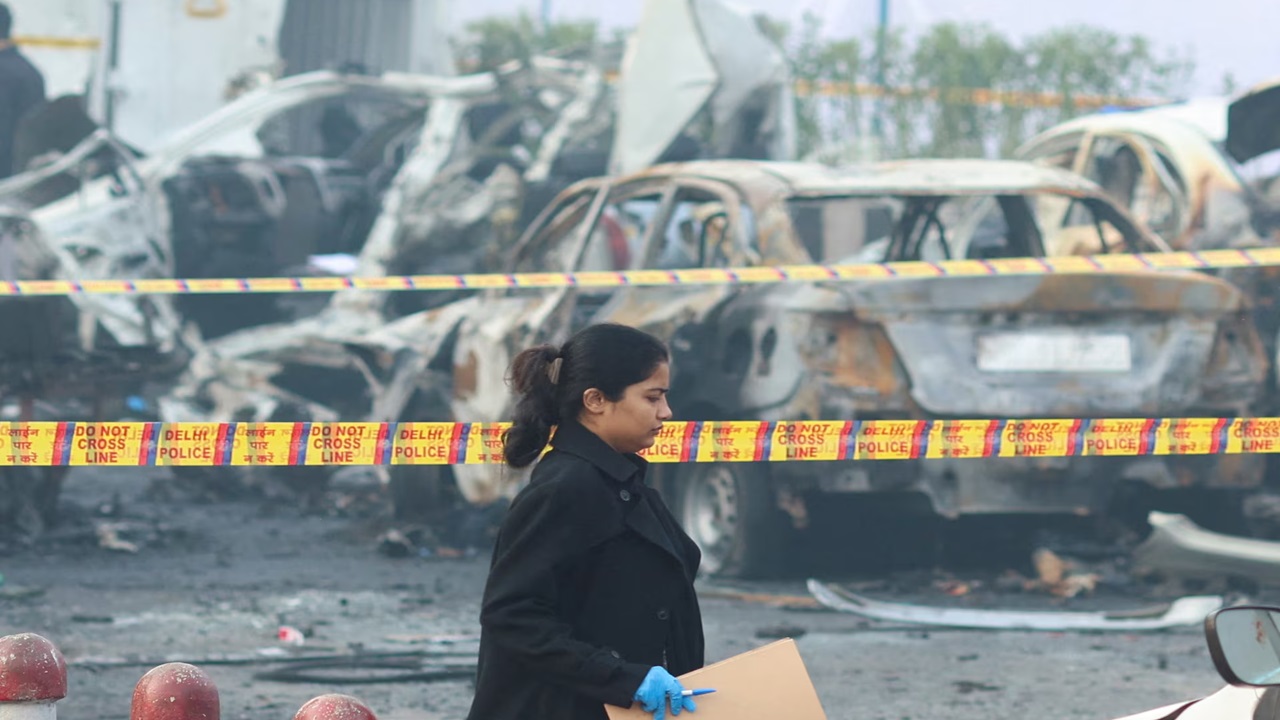
The attack unfolded on the evening of October 10, when a white Hyundai i20 detonated near the Red Fort—one of the country’s most politically sensitive and culturally iconic locations. The explosion caused widespread damage and immediate panic. Investigators soon determined that the vehicle was loaded with explosives and driven by Umar Un Nabi, an assistant professor of general medicine at Al-Falah University in Faridabad. His involvement shocked many, adding a disturbing layer to the growing challenge of radicalization among educated professionals.
Piecing Together the Plot: A Suicide Bomber and a Crucial Arrest
The NIA’s investigation has revealed that Umar was a “hardcore radical” who insisted on carrying out the mission himself. Using footage captured from over 1,300 CCTV cameras, investigators traced his route across Delhi, tracking his movements near high-security zones such as the Prime Minister’s residence, Connaught Place, India Gate, and Rail Bhavan. Umar spent nearly 10 hours driving through the capital in the explosive-laden vehicle before triggering the blast.
The breakthrough came with the arrest of Amir Rashid Ali, the registered owner of the Hyundai i20. A resident of Samboora, Pampore in Jammu and Kashmir, Amir was detained in Delhi and is believed to have helped procure the vehicle and coordinate the logistics of the attack. His arrest followed sweeping raids across Delhi, Jammu and Kashmir, Punjab, Haryana, Uttar Pradesh, and Madhya Pradesh as agencies pursued a potentially larger terror network.
A Wider Web: Kashmir-Based Module and Future Attack Plans
Investigators believe the Red Fort bombing was only one part of a broader terror conspiracy. Evidence points to a larger Kashmir-based module planning multiple attacks, including one reportedly timed for December 6, the anniversary of the Babri Masjid demolition. Authorities have seized another vehicle linked to Umar and recovered an astonishing 2,900 kg of explosives from various hideouts.
The NIA has examined 73 witnesses, including survivors, to reconstruct the full chain of events and identify every participant. Officials warn that further arrests are imminent as the investigation continues to expand.
Security Fallout: Urban Terror Risks in the Heart of India
The attack underscores the troubling evolution of terrorism in India’s capital, revealing vulnerabilities even in fortified zones. It has raised alarms over radicalization streams emerging from the Kashmir region and underscored the unsettling reality that highly educated individuals can be drawn into extremist ideologies. Security agencies have since intensified surveillance and counterterrorism measures to reassure a shaken public.
A Stark Reminder of Persistent Threats
The confirmation of Umar Un Nabi as the suicide bomber—and the arrest of co-conspirator Amir Rashid Ali—highlights the complex and dangerous reach of Islamist militancy deep into India’s heartland. As authorities dismantle the network behind the Red Fort attack, the incident stands as a sobering reminder of the ongoing challenges facing Indian security forces in protecting public spaces and confronting radicalization.
(With agency inputs)