CM’s Controversial Metaphor
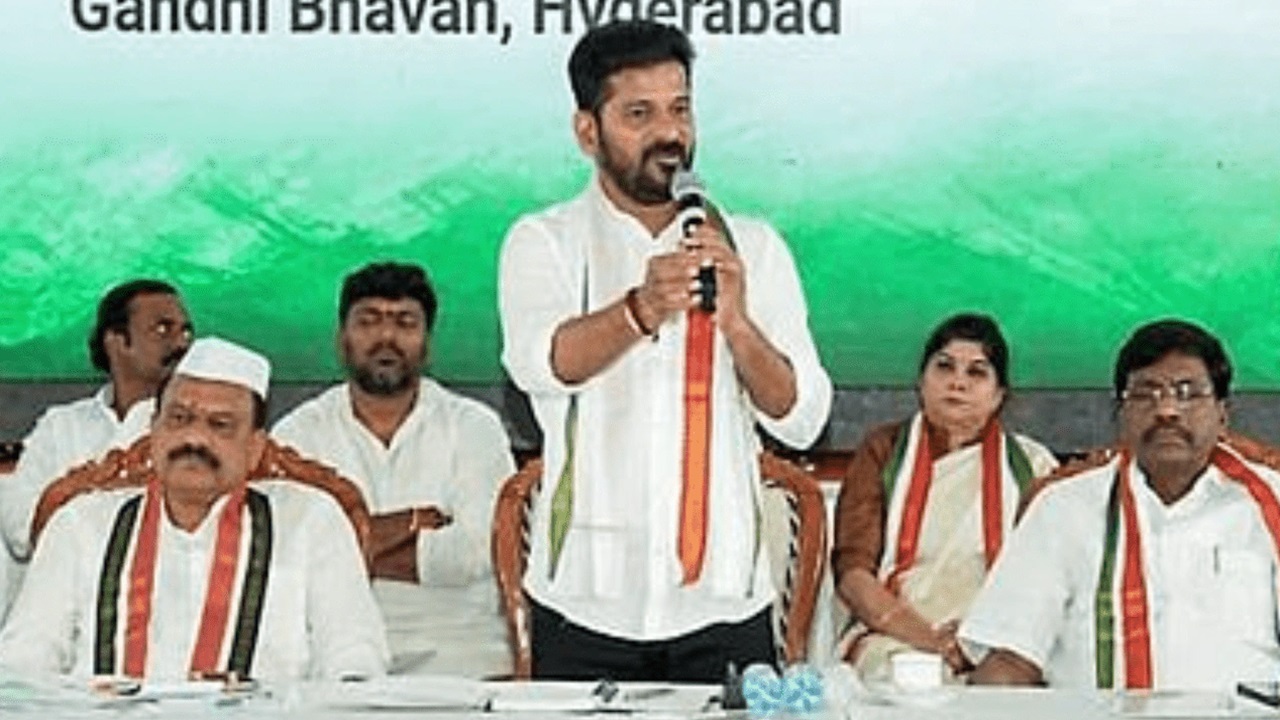
Telangana Chief Minister Revanth Reddy’s attempt to illustrate Congress’s internal diversity through Hindu religious pluralism has ignited a major political controversy. At a party event in Hyderabad, Reddy drew comparisons between the multiplicity of Hindu deities and varying political opinions, rhetorically asking if Hindus worship “three crore” gods. He cited examples like Hanuman for those who do not marry, other deities for those who marry twice, gods for drinkers, and village deities such as Yellamma, Pochamma, and Maisamma linked to offerings of alcohol, chicken, or rice and dal. His point was to emphasize the inherent plurality in belief and practice, drawing a parallel to internal party diversity and the challenges of achieving consensus.
Immediate Backlash
The remarks quickly triggered protests. BJP leaders seized on Reddy’s casual references to deities associated with alcohol and meat, framing them as insulting to Hindu faith. Senior BJP figures described the comments as “mocking Hinduism” and evidence of the Congress’s “Hinduphobic DNA.” Party cadres staged demonstrations across Telangana, chanting slogans and demanding an unconditional public apology. Social media amplification by national spokespersons, including Sambit Patra, highlighted specific clips, intensifying public outrage.
Political Implications
Reddy’s core argument—Hinduism’s intrinsic pluralism—is academically uncontroversial, yet his colloquial framing created a cultural flashpoint. For BJP, the episode serves as a tool to consolidate Hindu sentiment against the Congress CM in a state where it is seeking electoral growth. For Revanth Reddy and Congress, the controversy underscores the narrow margin for rhetorical risk in religious matters; even a metaphor grounded in cultural plurality can backfire when lines are easily clipped and circulated in a polarized political environment.
BJP and BRS Reactions
The BJP’s response was emphatic. Telangana BJP leaders described the CM’s comments as “extremely insulting,” asserting that they exposed Congress’s alleged disdain for Hindu beliefs. Party units demanded an unconditional apology and public retraction, framing the episode as an affront to millions of devotees. Senior leaders linked the remarks to Congress’s broader political alignment with AIMIM, suggesting systemic anti-Hindu bias. Neighboring Andhra Pradesh BJP units echoed the demand, pressing for accountability.
The Bharat Rashtra Samithi, despite being a rival to both parties, publicly aligned with BJP on condemning the comments. BRS leaders emphasized that a sitting chief minister should not make “light-hearted comments” about deities, particularly those invoked in official oaths of office. Figures like Rakesh Reddy Anugula and MP K.R. Suresh Reddy demanded withdrawal and apology, labeling the “three crore gods” remark as “demeaning” and inappropriate for a political leader. BRS positioned itself as a defender of religious sentiment and decorum rather than using the incident to mount an ideological campaign against Congress.
A Lesson in Rhetorical Risk
Revanth Reddy’s remarks illustrate the hazards of using religious metaphors in political discourse. While intended to highlight internal party diversity, the casual framing alienated core constituencies and triggered coordinated backlash from both BJP and BRS. The episode reinforces how religious symbolism, even when used analytically, remains a potent and volatile tool in Indian politics. For Congress and its leaders, the incident is a cautionary tale: navigating India’s pluralistic religious landscape requires careful communication, as missteps can rapidly escalate into state-wide controversies with both political and reputational costs.
(With agency inputs)