A Visit Framed by Strategy, Connectivity and a Higher Trade Horizon
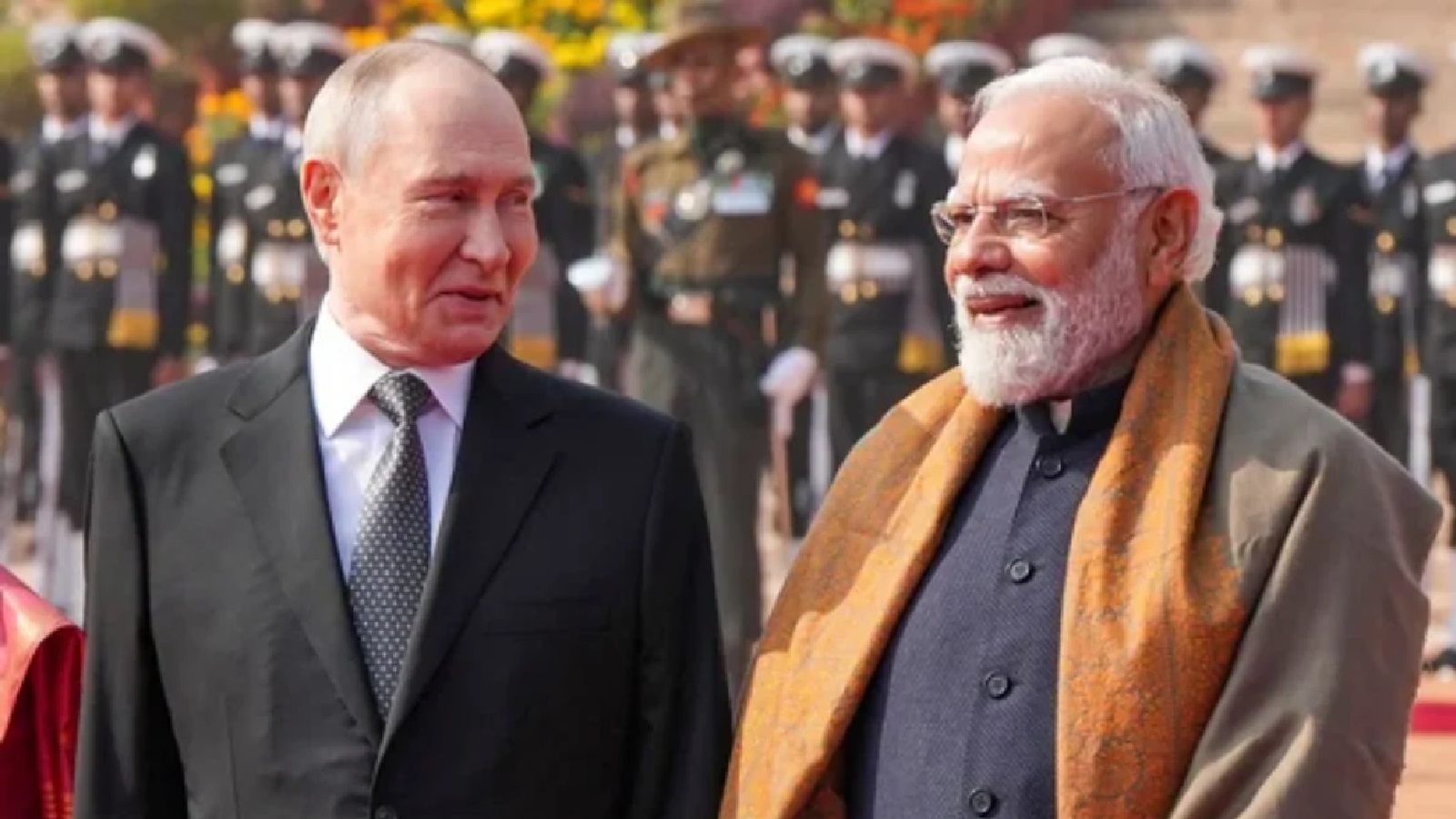
Vladimir Putin’s 2025 visit to New Delhi marked one of the most strategically charged India–Russia summits in recent years. For Prime Minister Narendra Modi, the takeaway was clear: the bilateral partnership must move faster, wider and deeper—especially in trade and connectivity. Modi’s announcement that the USD 100-billion trade milestone could be reached even before 2030 reframed the economic agenda, signalling a shift from energy dependence to a multidimensional, logistics-linked commercial relationship. The summit underscored that both nations are prepared to rewire transport corridors, diversify market access and insulate financial flows from sanctions-era disruptions.
Reframing Trade: From Oil Heavyweights to Diversified Growth Engines
Although discounted Russian crude currently dominates bilateral trade, both governments are committed to expanding the export basket. India aims to sharply increase its outbound shipments of marine goods, pharmaceuticals, engineering products, consumer items and digital services, supported by ongoing negotiations on an improved investment framework. For Russia, stable Indian demand is vital; for India, the goal is rebalancing a trade structure skewed by energy.
A diversified portfolio is essential if bilateral trade is to sustainably cross the USD 100-billion threshold. Joint working groups are now focusing on simplified regulatory pathways and faster entry for Indian products into Russian markets—particularly in food, healthcare and manufactured goods.
The Connectivity Push: Corridors, Logistics and New Payment Pathways
A strong theme of the summit was “moving goods differently.” The International North–South Transport Corridor, enhanced maritime links and wider logistics chains are central to lowering freight costs and giving Indian exporters competitive access to Russia’s vast geography. These corridors also help both countries bypass slow, Europe-dependent routes.
Equally important is the search for sanctions-proof payment systems, including local-currency settlement, bank-to-bank arrangements and SME-friendly financing tools. For small and mid-sized firms—which face the hardest hit from dollar-clearing risks—these mechanisms could unlock major unrealised trade potential.
Sectors Poised to Push Trade Towards USD 100 Billion
1. Energy and Petrochemicals
Russian crude will remain the anchor, but long-term volumes will expand through LNG, coal, fertilisers and petrochemicals. Indian participation in Russian upstream assets could secure stable offtake and anchor a multi-year energy trade pipeline.
2. Agriculture and Food Products
Russia’s growing import appetite for Indian marine goods, spices, grains and processed foods offers a direct opportunity. Improved cold-chain connectivity and harmonised sanitary approvals alone could add USD 5–8 billion to India’s export base.
3. Pharmaceuticals and Medical Devices
India currently supplies only a small share of Russia’s pharma market. With streamlined certification, Indian generics, APIs, OTC products and diagnostic equipment could expand exports toward USD 8–10 billion, making pharma a top-tier growth driver.
4. Machinery, Automobiles and Engineering Goods
Russia’s post-sanctions industrial pivot creates space for Indian machinery, electricals, telecom gear, commercial vehicles and industrial components. These categories can scale fast due to Russia’s urgent replacement needs.
5. Digital Services, Tourism and Talent Mobility
IT/ITES, fintech, cybersecurity and start-up collaborations are emerging as high-value trade enablers. Meanwhile, expanded mobility for Indian professionals in healthcare, construction, IT and engineering will boost India’s services surplus.
6. Infrastructure, Nuclear and Renewables
Civil nuclear cooperation, port and railway projects, and the North–South Corridor offer multi-billion-dollar procurement opportunities. Joint work in renewables deepens the energy partnership and aligns with India’s transition goals.
How India Can Fast-Track Market Access for Russian Goods
To translate political intent into real trade flows, India must reduce procedural friction at its borders and increase transparency for Russian exporters. Key enablers include:
· Risk-based customs lanes, green channels and advance documentation to cut port dwell times.
· Mutual recognition of standards in fertilisers, timber, food items and engineering goods, reducing repeated testing.
· Clear, consolidated import handbooks outlining tariffs, SPS norms and labelling requirements.
· Time-bound approval windows for registering Russian establishments in agri-food, marine and processed products.
· Progress on India–EAEU trade arrangements, lowering tariffs and creating predictable regulatory pathways.
· Local-currency payment mechanisms to ease transactions for smaller firms.
These reforms would meaningfully improve Russian exporters’ ability to access India without compromising regulatory safeguards.
A More Connected, Less Risk-Exposed Partnership
Putin’s 2025 visit did more than reaffirm political ties—it recalibrated the economic trajectory. India and Russia now appear aligned on building a trade relationship that is diverse, corridor-driven and resilient to external shocks. Achieving USD 100 billion by 2030 is feasible, but only if both sides operationalise the logistics corridors, regulatory reforms and sectoral partnerships outlined at the summit.
If delivered, this model could transform India–Russia trade from an oil-dominated exchange into a broad-based, innovation-infused economic partnership fit for a shifting global order.
(With agency inputs)