


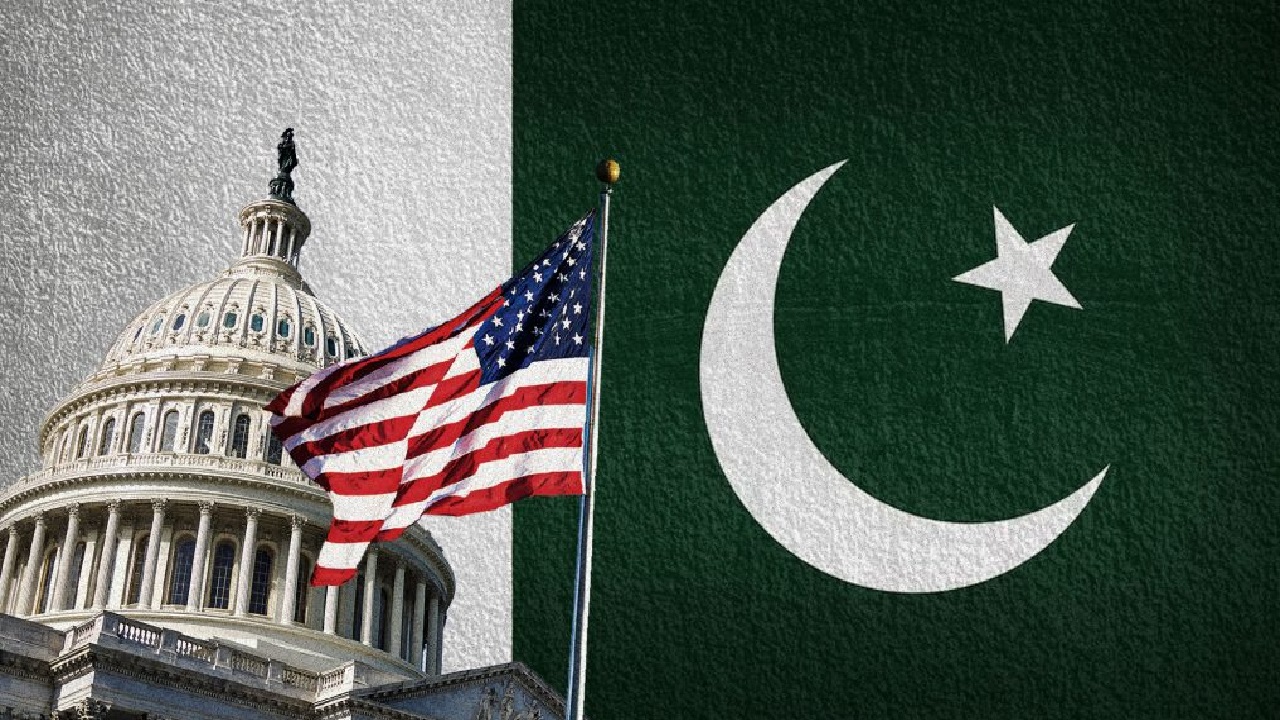
US legislators are sharpening their criticism of Pakistan, portraying the country under Prime Minister Shehbaz Sharif and Army Chief General Asim Munir as an escalating “human rights crisis” with disturbing cross-border implications. This shift—driven by concerns over repression affecting US citizens and residents—has catalysed a bipartisan push for targeted sanctions aimed squarely at Pakistan’s civil-military leadership.
A Bipartisan Demand for Action
In a forceful letter to Secretary of State Marco Rubio, more than 40 members of Congress urged the administration to activate the United States’ toughest human-rights tools against senior Pakistani officials. Their demands include:
· Visa bans and asset freezes on individuals credibly linked to systemic repression, including intimidation of dissidents abroad.
· Conditional security and economic cooperation, tied to the release of political detainees such as former Prime Minister Imran Khan.
These calls build on earlier draft bills that singled out Pakistan’s military command, reflecting a notable shift on Capitol Hill: Pakistan’s establishment is no longer viewed merely as a flawed partner, but as a potential perpetrator of rights abuses warranting direct personal sanctions.
Transnational Repression: The Noorani Trigger
At the heart of the congressional escalation lies concern over “transnational repression”—the use of coercive tactics against critics living overseas. The case repeatedly cited is that of investigative journalist Ahmed Noorani, now based in Washington, whose reporting on alleged nepotism linked to General Munir’s relatives reportedly prompted retaliation in Pakistan.
Soon after his publications, Noorani’s brothers in Islamabad were allegedly seized in a midnight raid by police and intelligence personnel, beaten, and taken to an unknown location. Human-rights petitions submitted in the Islamabad High Court and statements from rights advocates describe the detentions as forced disappearances intended to punish a US-based journalist. Amnesty International and press-freedom groups have condemned the episode, framing it as evidence of Pakistan’s coercive reach extending into the US diaspora.
For lawmakers, cases like these strengthen the argument that US inaction risks emboldening foreign intimidation campaigns targeting American residents.
Implications for US–Pakistan Relations
By defining Pakistan’s situation as a “human rights crisis,” Congress aims to shift bilateral engagement from routine security cooperation toward accountability measures that mirror US actions against officials in Russia, China and Iran. The emphasis on diaspora safety gives legislators a domestic-political rationale to advocate punitive steps, raising the diplomatic stakes for Islamabad.
A firm State Department response—through sanctions or assistance conditionality—would signal a major recalibration in Washington’s posture. Even absent immediate executive action, congressional activism alone complicates Pakistan’s efforts to reassure lenders, investors and allies at a moment of economic vulnerability.
What Sanctions the US Can Impose
The measures US lawmakers are advocating centre on targeted, individualised sanctions, designed to penalise officials without destabilising Pakistan’s broader economy.
1. Global Magnitsky Sanctions
Under the Global Magnitsky Act, the US can sanction foreign officials involved in serious human-rights abuses or major corruption. Consequences include:
· Asset freezes across all US-linked financial systems
· Prohibitions on transactions by US entities
· Visa denials and entry bans for sanctioned individuals
Lawmakers are urging the administration to apply these tools to military, intelligence, judicial and political figures implicated in disappearances, torture, electoral manipulation and transnational intimidation.
2. Additional Visa and Financial Restrictions
Beyond Magnitsky, the US can deploy:
· Section 7031(c) visa bars for officials and families involved in gross rights violations
· OFAC-led financial restrictions, which can cut individuals off from dollar-clearing systems and global banking networks
· General Munir and his close circle are among those lawmakers want examined for these measures.
3. Aid, Arms and Multilateral Conditionality
Congress also wields indirect pressure tools, including:
· Restrictions on security assistance, military training and defence sales if rights benchmarks are unmet
· Influence over IMF and World Bank support, linking economic relief to rule-of-law improvements
A Turning Point for Accountability
The intensifying scrutiny from Washington reflects more than episodic concern—it signals a structural shift in how the US political establishment perceives Pakistan’s governance trajectory. If the administration implements even part of the sanction’s menu Congress is pushing, Pakistan’s leadership will face unprecedented personal exposure abroad. Whether this becomes a diplomatic rupture or a pressure-driven correction will depend on Islamabad’s next moves—and on whether Washington chooses engagement, coercion or a mix of both.
(With agency inputs)