Lionel Messi’s much-hyped GOAT India Tour 2025 was meant to be a celebratory moment for Indian football fans. Instead, the opening event in Kolkata on December 13 descended into disorder, leaving behind damaged property, angry crowds, and uncomfortable questions about India’s preparedness to host global sporting icons. What should have been a landmark spectacle quickly became a case study in how not to manage scale, expectations, and safety.
The Flashpoint: Chaos Inside Salt Lake Stadium
The trouble unfolded at Vivekananda Yuvabharati Krirangan (Salt Lake Stadium), where tens of thousands of fans gathered after paying premium ticket prices ranging from roughly ₹4,000 to ₹18,000. Messi’s appearance, however, was fleeting—reports suggest he remained on the pitch for barely 10 to 20 minutes, offering little more than a ceremonial walk.
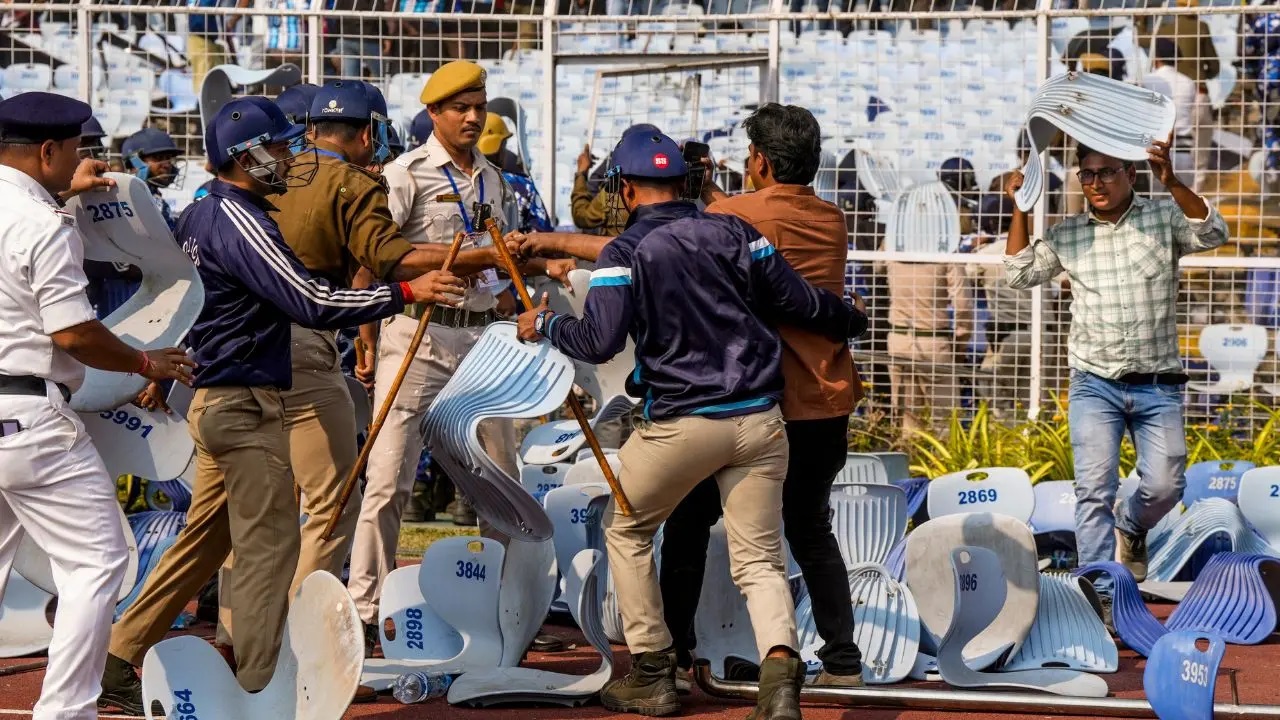
As disappointment turned to anger, sections of the crowd began throwing bottles, damaging hoardings, and attempting to breach barricades and gates. Videos circulating on social media showed scuffles, vandalism, and football chants morphing into hostile slogans. The mismatch between expectations and delivery proved combustible in a packed stadium already strained by numbers and logistics.
Who Was Responsible for Ticketing and Crowd Control?
Responsibility for the event was spread across multiple actors. Ticketing for the Kolkata leg was handled through the District.in platform, which sold access to a stadium with a capacity of over 85,000. Critics have questioned whether ticket volumes, seating plans, and sightline assurances were aligned with what the event realistically offered.
Overall organisation of the multi-city tour rests with sports promoter Satadru Dutta under the banner of “A Satadru Dutta Initiative,” with local coordinators overseeing execution on the ground. Crowd control, meanwhile, fell to the Kolkata Police, who eventually intervened to disperse agitated fans and prevent further damage. While police presence contained the situation from escalating further, the root causes—overcrowding, unclear access, and unmet fan expectations—lay upstream in planning and communication.
What Mamata Banerjee Said
West Bengal Chief Minister Mamata Banerjee responded swiftly, expressing that she was “shocked and deeply disturbed” by the lapses at the stadium. She announced the formation of a high-level inquiry committee headed by retired Justice Ashim Kumar Ray to investigate what went wrong. In a public message, Banerjee issued an apology to Lionel Messi, fans, and the wider sporting community, stressing that such failures should not be repeated. Notably, she stated she was on her way to the venue when the unrest peaked, underlining the political sensitivity of the episode.
Larger Lessons for India’s Mega-Event Ambitions
The Kolkata fiasco highlights structural weaknesses in India’s handling of celebrity-driven mass events: opaque ticketing, inadequate crowd modelling, and poor alignment between promotional hype and on-ground reality. With Messi’s post-World Cup stature drawing unprecedented interest, standard event protocols were clearly insufficient.
Beyond reputational damage to Kolkata’s football legacy, the incident risks casting a shadow over the remaining legs of the GOAT India Tour in other cities. It also raises the stakes for organisers and authorities to adopt stricter capacity controls, clearer disclosures about star appearances, and more robust crowd-management strategies.
Stardom Demands Structure
Messi’s Kolkata appearance reaffirmed his unmatched pull—but it also exposed how star power can overwhelm weak systems. For India to host global sporting icons credibly, admiration must be matched with meticulous planning and honest communication. Otherwise, the spectacle risks being remembered not for greatness on the pitch, but for chaos in the stands.
(With agency inputs)