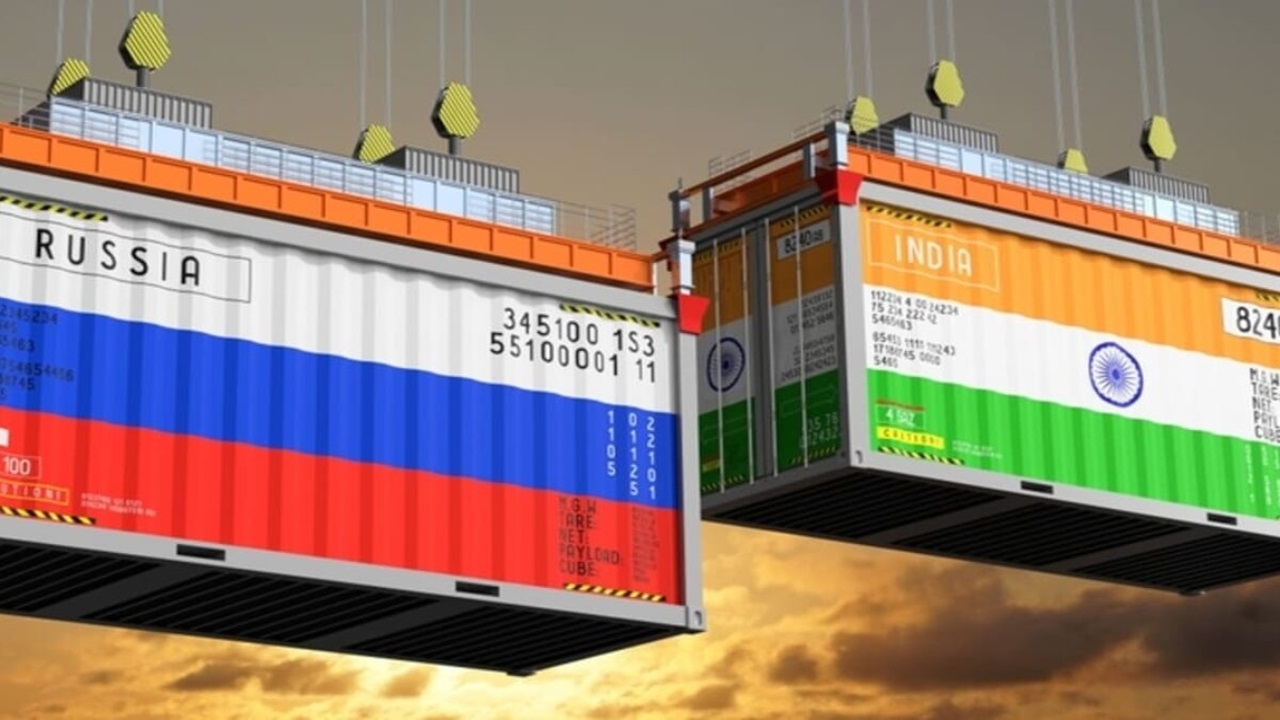
India’s Export Recalibration Towards Russia
India has identified close to 300 high-potential products to significantly expand exports to Russia, signalling a decisive shift in its trade strategy. The move is aimed at correcting a widening bilateral trade imbalance—currently estimated at USD 59–68 billion—while advancing the shared ambition of achieving USD 100 billion in two-way trade by 2030. The exercise reflects a granular assessment of India’s production strengths aligned with Russia’s evolving import needs, especially as Moscow pivots towards Asian partners amid geopolitical realignments.
Context and Strategic Rationale
Despite deep political trust and long-standing cooperation, India’s presence in the Russian import market remains modest at around 2.3%. Bilateral ties, elevated to a Special and Privileged Strategic Partnership in 2010, are anchored in defence, energy, space, and nuclear cooperation. Trade volumes surged post-Ukraine conflict, largely driven by discounted Russian crude, pushing total trade to nearly USD 69 billion in FY25. However, Indian exports still hover below USD 5 billion, exposing the need for diversification beyond oil-led imports.
The newly identified export basket spans engineering goods, pharmaceuticals, chemicals, agriculture, textiles, electronics, and light manufacturing—sectors where India enjoys cost competitiveness and scale.
Export Potential and Sectoral Opportunities
Engineering goods top the list, with machinery and equipment alone offering over USD 550 million in immediate export potential. Pharmaceuticals, ceramics, organic chemicals, and processed foods follow closely. Labour-intensive sectors such as apparel, leather, handicrafts, and agri-commodities—currently under-represented—present opportunities to tap Russia’s consumer market. Electronics and light engineering, though constrained by market access barriers, remain largely untapped.
This diversification is critical to de-risk India’s export profile and strengthen non-energy trade flows.
Key Challenges for Indian Exporters
· Sanctions and Payment Complexities
Western sanctions on Russia have complicated cross-border transactions. Indian exporters face delayed payments, higher compliance costs, and risks of secondary sanctions. Rupee-ruble settlement mechanisms, while functional, suffer from volatility and limited scalability, disproportionately affecting SMEs.
· Non-Tariff and Regulatory Barriers
Russia enforces over 65 non-tariff measures, particularly in agriculture, dairy, marine products, and pharmaceuticals. Lengthy certification, testing, and registration timelines delay market entry. Although raised at bilateral forums, resolution remains uneven.
· Logistics and Infrastructure Bottlenecks
The International North-South Transport Corridor (INSTC) and Chabahar route offer promise but continue to face operational gaps, increasing freight costs and transit uncertainty.
· Export Concentration Risks
India’s exports remain clustered in a few categories, making them vulnerable to demand shifts and regulatory shocks, limiting scalability towards the 2030 trade target.
Action Plan for Indian SMEs Entering Russia
1. Market Intelligence: Use EPCs, DGFT tools, and trade databases to identify niche demand and pricing benchmarks.
2. Regulatory Preparedness: Secure mandatory certifications (EAC, veterinary, pharma approvals) early.
3. Local Partnerships: Engage Russian importers or agents to manage customs and compliance.
4. Payments Strategy: Use Vostro accounts and implement robust sanctions-screening mechanisms.
5. Logistics Optimization: Leverage INSTC for bulk goods; use air freight for high-value shipments.
6. Market Development: Participate in buyer-seller meets, adapt products to local preferences, and start with pilot shipments.
7. Scaling and Finance: Monitor performance via DGFT portals and access export credit and EPC support.
From Opportunity Mapping to Execution
India’s 300-product export roadmap to Russia represents more than a trade correction—it is a strategic recalibration in a shifting global order. Success will depend on how effectively exporters navigate sanctions, logistics, and regulatory hurdles while building resilient payment and partnership models. For Indian SMEs, Russia offers a rare window: a large, import-dependent market actively seeking alternative suppliers. Converting this opportunity into sustainable export growth could redefine India-Russia economic engagement for the next decade.
(With agency inputs)