


A Judicial Push Against Ageing Vehicles
India’s top court has once again stepped into the policy vacuum surrounding air pollution, issuing firm directions on end-of-life vehicles (ELVs) in the Delhi–National Capital Region. The order reflects mounting judicial impatience with toxic winter smog and signals a shift from advisory frameworks to coercive enforcement, even as questions of fairness and capacity loom large.
Why ELVs Are Back in Focus
Vehicular emissions remain one of the most visible and politically contentious contributors to NCR’s air crisis. While stubble burning and construction dust dominate public debate, ageing vehicles running on outdated emission technologies continue to release disproportionate levels of particulate matter and nitrogen oxides. By targeting ELVs—vehicles that fail to meet BS-IV emission standards—the Supreme Court has sought to tackle a problem long acknowledged but weakly enforced.
The Supreme Court Directive: Scope and Intent
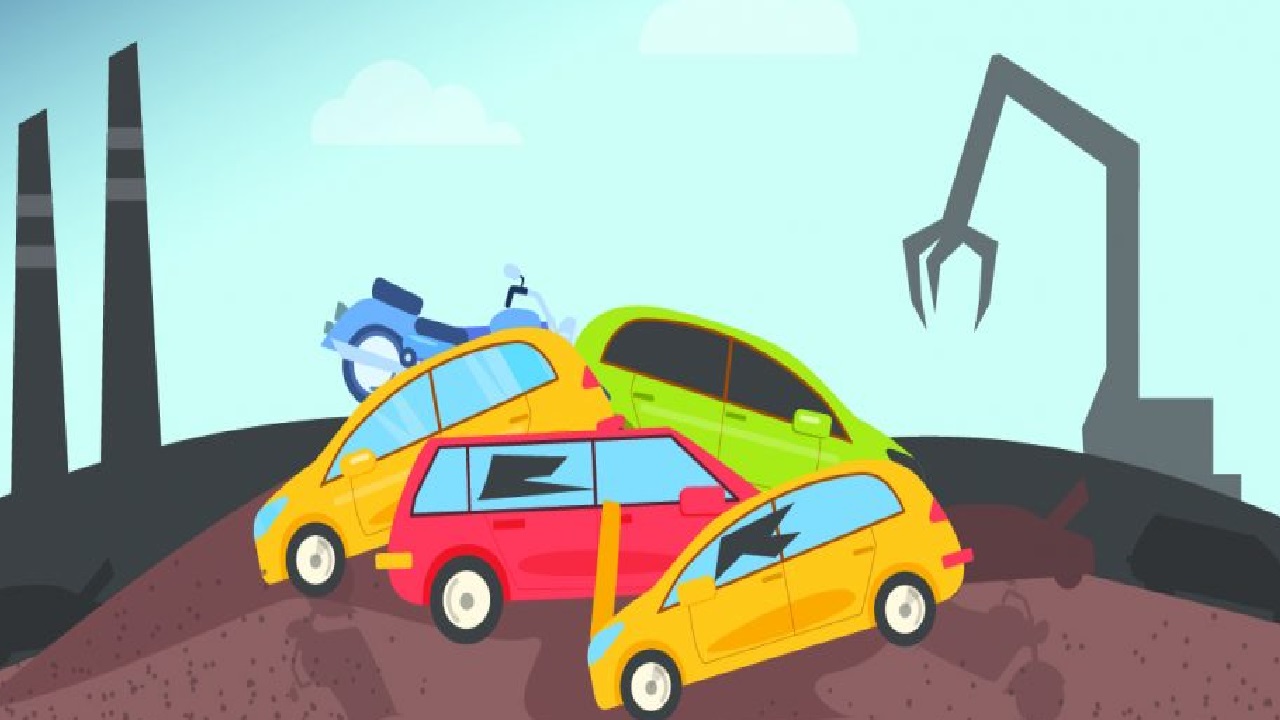
On December 17, 2025, the Supreme Court authorised strict action against pre-BS-IV vehicles across Delhi-NCR, citing the region’s recurring Air Quality Index readings well above hazardous levels. The bench permitted authorities to impound, scrap, or destroy non-compliant two-wheelers and four-wheelers, reinforcing measures outlined under the Graded Response Action Plan at its most severe stage.
Importantly, the court carved out protections for BS-IV and newer vehicles, recognising incremental improvements in emission control technology and the phased transition to BS-VI norms. It also directed NCR governments to intensify public outreach and explore toll concessions for compliant vehicles, attempting to blend deterrence with incentives rather than impose indiscriminate restrictions.
The order builds on sustained litigation that has flagged the scale of the problem: nearly two-fifths of the NCR’s vehicle fleet falls into the ELV category. Transport departments have been tasked with implementation, with Delhi already emerging as a test case due to its relatively advanced scrappage framework.
Enforcement on the Ground: Capacity and Compliance
In theory, enforcement will rely on registration data, pollution certificates, and vehicle fitness records, supported by authorised scrappage centres operating under the national scrappage policy. Older diesel and petrol vehicles will be prioritised, with owners receiving short notices before seizure. Financial incentives linked to vehicle replacement are expected to stimulate both compliance and demand in the automobile market.
In practice, however, capacity gaps are stark. Scrappage infrastructure remains uneven, storage yards are overwhelmed, and earlier impoundments have yet to be cleared. Without adequate processing facilities, enforcement risks degenerating into logistical chaos rather than environmental relief.
Equity Concerns and Systemic Weaknesses
The crackdown raises unavoidable equity questions. Informal workers, small transport operators, and low-income households are disproportionately dependent on older vehicles and least able to afford replacements. Subsidies and rebates soften the blow but do not bridge the affordability gap, encouraging evasion and cross-border registration instead.
Enforcement integrity is another concern. Weak monitoring has already spawned counterfeit pollution certificates, undermining the very premise of emissions control. Moreover, ELVs are only one part of the pollution puzzle: freight vehicles, road dust, and regional traffic spillovers continue largely unchecked. Fragmented governance across NCR states further complicates uniform implementation.
Necessary but Not Sufficient
The Supreme Court’s ELV directive marks a decisive escalation in India’s fight against urban air pollution, forcing governments to confront years of regulatory drift. Yet scrapping ageing vehicles, while necessary, is not a silver bullet. Without parallel investments in public transport, cleaner energy, digital enforcement, and regional coordination, the policy risks becoming punitive without being transformative. Clean air will ultimately depend not just on what is scrapped, but on what replaces it—and how equitably that transition is managed.
(With agency inputs)