



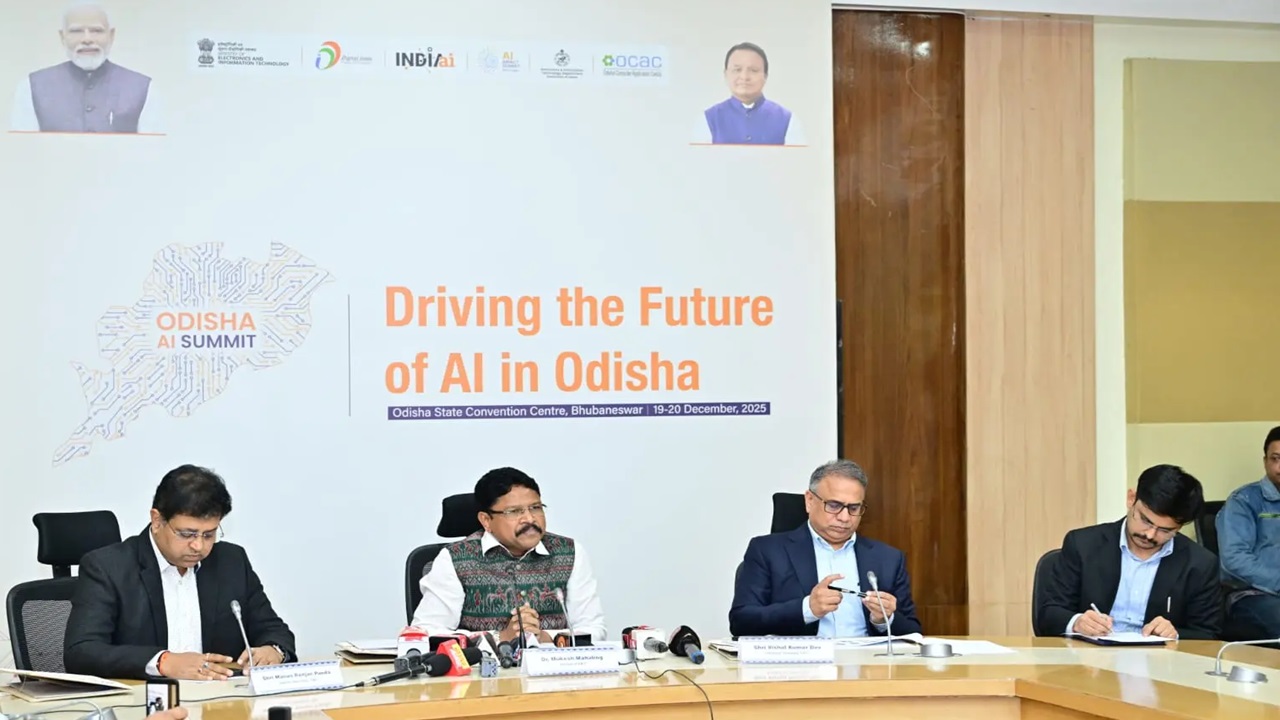
Setting the Stage in Bhubaneswar
Odisha is preparing to place itself firmly on India’s artificial intelligence map with the Regional AI Impact Conference in Bhubaneswar. More than a technology event, the gathering reflects a strategic intent: to use AI as a tool of governance rather than merely an engine of private-sector growth. In doing so, the state signals that innovation leadership in India is no longer confined to traditional metropolitan tech hubs.
A Conference with National Ambitions
Scheduled for December 19–20, 2025, the Regional AI Impact Conference brings together policymakers, technologists, academics, and industry leaders to examine how artificial intelligence can transform public administration. A curtain-raiser hosted by Odisha’s Electronics and IT Department outlined the state’s roadmap—one focused on embedding AI into everyday governance to improve service delivery, accountability, and citizen trust.
Unlike many technology summits that spotlight startups and venture capital, this conference is anchored in outcomes: faster welfare delivery, smarter disaster response, and data-driven policymaking. Odisha’s intent is to move AI from pilot projects to scalable public systems that can be replicated across India.
Odisha’s AI in Action: From Policy to Practice
Odisha’s credibility stems from implementation rather than aspiration. The state has already deployed AI across multiple sectors with measurable impact. In governance, AI-enabled platforms now assist in grievance redressal by prioritizing complaints and predicting resolution bottlenecks, significantly reducing processing delays. This has reshaped citizen interaction with government from reactive to responsive.
Agriculture offers another example of applied innovation. AI-powered tools using image recognition and predictive analytics help farmers identify crop diseases and optimize inputs, extending decision support to millions in rural areas. In a state prone to cyclones and floods, AI-driven disaster management models have proven critical, enabling authorities to anticipate impact zones and conduct timely evacuations.
Healthcare and education are next in line. Pilot projects using AI-assisted diagnostics and attendance analytics are being scaled, supported by Odisha’s robust digital infrastructure, including near-universal broadband connectivity. This infrastructure has allowed the state to treat rural and urban populations as equal stakeholders in its digital transformation.
Policy Vision: Ethical, Inclusive, and Localized AI
What distinguishes Odisha’s approach is its emphasis on ethical and inclusive AI. The state has prioritized data sovereignty, local data storage, and algorithmic transparency to address privacy and bias concerns. Investments in vernacular language processing ensure that AI tools work in Odia, lowering barriers to access and adoption.
Skill development is another pillar. By establishing AI Centers of Excellence and partnering with national and global institutions, Odisha aims to train a large pool of youth and government officials, aligning workforce readiness with technological ambition. This focus on capacity-building positions AI not as a job disruptor, but as a productivity multiplier.
Strategic Significance and Challenges Ahead
Odisha’s AI push carries broader implications for India’s digital governance landscape. At a time when advanced analytics remain unevenly adopted across districts, the state offers a replicable model centered on public value rather than private profit. Its efforts complement national initiatives such as the IndiaAI Mission, potentially influencing how AI is deployed in sectors like finance, identity management, and social welfare.
Yet challenges persist. Cybersecurity risks, data protection, and workforce transitions must be managed carefully. The long-term success of Odisha’s AI strategy will depend on sustained political commitment and adaptive regulation.
A Blueprint Beyond Borders
As the Regional AI Impact Conference unfolds, Odisha emerges not just as a host, but as a case study in pragmatic innovation. By aligning technology with governance priorities, the state demonstrates how AI can democratize public services and accelerate inclusive growth. In doing so, Odisha offers a compelling blueprint for how smaller states can shape India’s digital future—quietly, credibly, and at scale.
(With agency inputs)