


Relations between Washington and Caracas have long been defined by sanctions, diplomatic isolation, and mutual distrust. That uneasy history escalated sharply in early January 2026, when the United States took the extraordinary step of detaining Venezuelan President Nicolás Maduro. The move transformed years of pressure into a direct confrontation, pushing Venezuela–U.S. tensions from rhetorical hostility into open coercion. What followed was not merely a bilateral crisis, but the opening act of a broader U.S. strategy that fused resource security with geopolitical muscle.
Oil as Leverage: Trump’s Claim of a Venezuelan Transfer
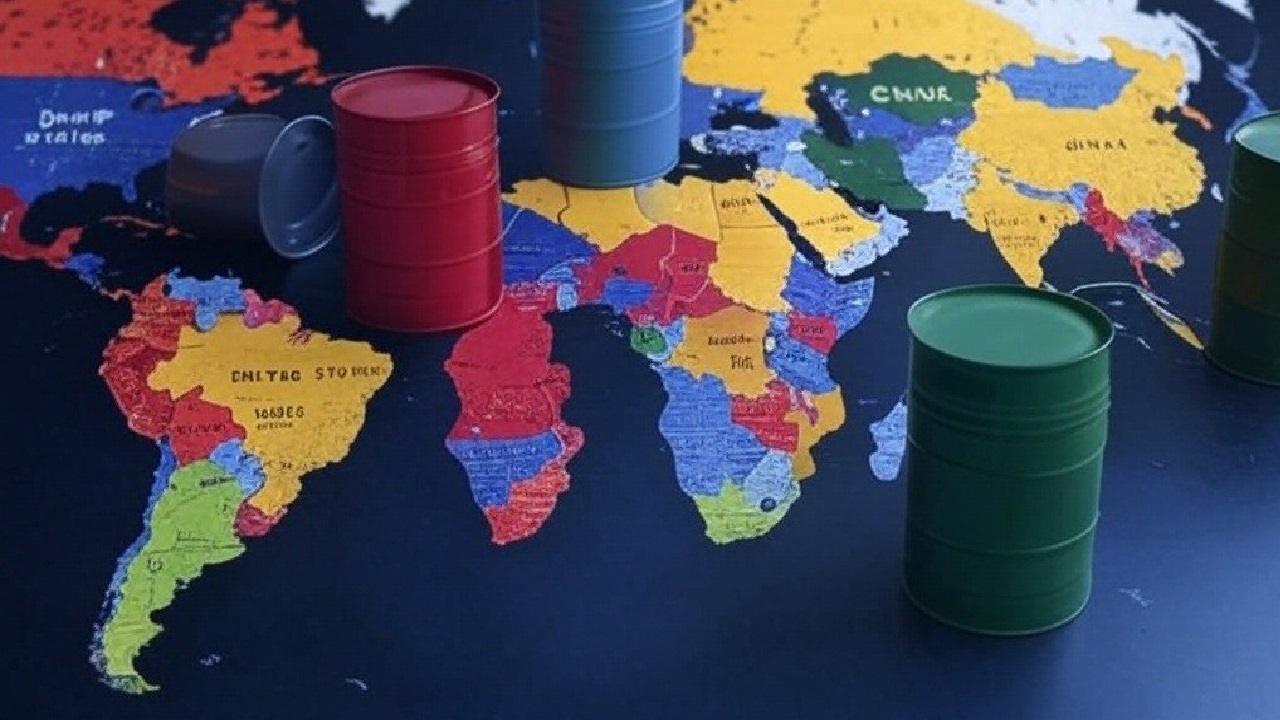
At the center of the controversy is President Donald Trump’s assertion that Venezuela will hand over between 30 and 40 million barrels of oil to the United States. In public statements, Trump framed the transfer as a swift, transactional outcome of Maduro’s capture and the emergence of interim authorities led by Vice President Delcy Rodríguez. He instructed U.S. energy officials to facilitate the immediate movement of the oil from storage facilities to American control, with sales proceeds ostensibly benefiting both Venezuelans and U.S. consumers.
The announcement served multiple purposes. Domestically, it reinforced Trump’s image as a leader willing to extract tangible economic gains from foreign adversaries. Internationally, it signaled that the detention of Maduro was not only a law enforcement action tied to longstanding criminal charges, but also a strategic effort to unlock Venezuela’s vast, sanctioned oil reserves. Rodríguez’s ambivalent responses—neither fully endorsing nor outright rejecting the claim—have added to uncertainty about whether such a transfer can occur without deeper instability.
Beyond the Caribbean: Greenland and the Shadow of Force
The Venezuela episode did not stand alone. Within hours of European governments reaffirming support for Denmark’s sovereignty over Greenland, the White House confirmed it was assessing “all available options” to bring the Arctic territory under U.S. control. Notably, officials did not exclude the use of military force, framing the issue as a matter of national security amid intensifying competition in the Arctic.
This rhetoric resurrected Trump’s earlier interest in acquiring Greenland, but with a sharper edge. The administration argued that control of the territory would counter growing Russian and Chinese influence in the region, secure Arctic shipping routes, and strengthen U.S. strategic depth. European allies reacted with alarm. Leaders from France, Germany, and Italy emphasized that Greenland remains an integral part of Denmark, a NATO member, and warned that coercive action would undermine the alliance itself.
Strategic Logic and Alliance Stress Tests
Taken together, the Venezuela oil demand and the Greenland posture reflect a revived “America First” doctrine grounded in material advantage and strategic geography. The seizure of Maduro has been portrayed by U.S. officials as a precise operation designed to reset leverage over Venezuela’s energy assets during a period of global supply strain. Simultaneously, the Greenland statements appear intended to test the limits of NATO solidarity in an era of renewed great-power rivalry.
Danish Prime Minister Mette Frederiksen’s stark warning that any U.S. attack on Greenland could fracture NATO highlights the risks embedded in this approach. Markets, meanwhile, are watching closely, particularly as U.S. energy firms consider deeper investments in Venezuelan oil fields—moves that could stabilize prices but provoke regional backlash.
Power, Precedent, and the Cost of Coercion
Trump’s early-2026 foreign policy offensive marks a decisive shift from sanctions and diplomacy toward overt leverage and implied force. While the promise of oil barrels and Arctic dominance may yield short-term gains, the longer-term consequences are far less certain. Strained alliances, unsettled regions, and the normalization of coercive acquisition threaten to erode the very order that has long underpinned U.S. influence. Whether this strategy secures American interests or accelerates global fragmentation will depend on how far Washington is willing—and able—to push its advantage.
(With agency inputs)