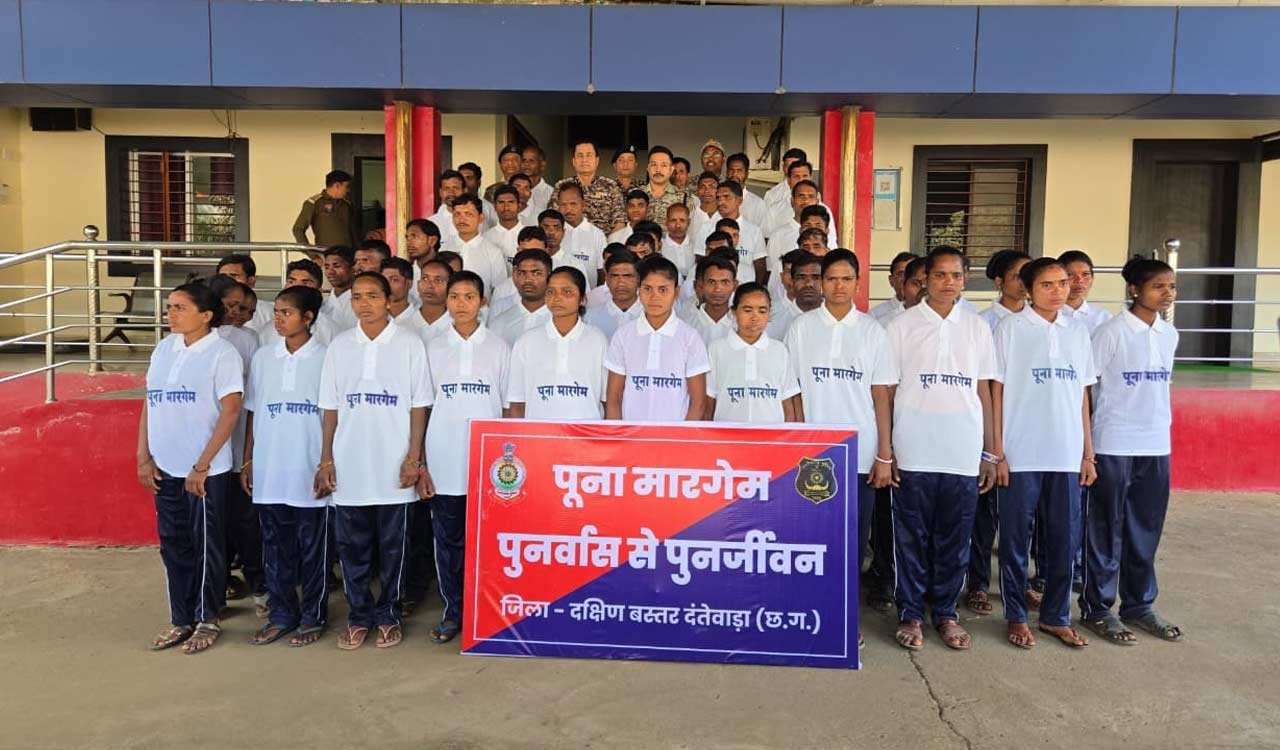
The mass surrender of Maoist cadres in Chhattisgarh’s Dantewada district in January 2026 has emerged as a powerful indicator of the shrinking space for Left-Wing Extremism in India. Sixty-three insurgents, including several high-value operatives carrying cumulative rewards exceeding ₹1.19 crore, voluntarily renounced violence before security forces. Their decision, driven by ideological fatigue, internal exploitation, and the attraction of the state’s rehabilitation framework, reflects a decisive shift on the ground. More than a symbolic gesture, the event signals a weakening insurgency struggling to retain legitimacy and manpower.
The Maoist Challenge in India: A Brief Overview
Maoism in India has historically thrived in forested, underdeveloped regions across central and eastern states, exploiting governance deficits and socio-economic marginalisation. At its peak in the mid-2000s, Left-Wing Extremism affected over 125 districts, forming the so-called “Red Corridor” from Andhra Pradesh to Jharkhand. Armed squads, parallel administrations, and extortion networks sustained the movement, while tribal communities bore the brunt of violence and coercion. Over time, however, improved governance, infrastructure penetration, and sustained security operations have steadily eroded the Maoist ecosystem.
Government Strategy: The Roadmap to a Naxal-Free India by 2026
The government’s commitment to eliminate Naxalism by March 31, 2026, rests on a comprehensive, multi-pronged approach under the SAMADHAN doctrine. This framework integrates strong political leadership, intelligence-driven operations, technological leverage, financial choke points, and tailored action plans for each affected theatre.
On the security front, deeper coordination between central and state forces—particularly the District Reserve Guard (DRG), CRPF, and COBRA units—has dismantled Maoist strongholds. The establishment of hundreds of forward operating bases has denied insurgents safe havens, while precision operations have neutralised top leadership and disrupted supply lines. These measures have drastically reduced both civilian and security force casualties.
Equally significant is the emphasis on rehabilitation. Policies such as Chhattisgarh’s ‘Poona Margem’ scheme provide immediate financial assistance, skill development, housing support, and long-term livelihood options. The growing number of women surrendering underscores internal disillusionment and a desire for stability, suggesting that rehabilitation is successfully undercutting recruitment and preventing recidivism.
Development has formed the third pillar of the strategy. Large-scale investments in roads, telecommunications, schools, healthcare, and vocational training have connected remote regions to mainstream economic opportunities. As governance reaches previously inaccessible areas, Maoist influence has receded, reducing the number of affected districts to under 40 nationwide.
From Insurgency to Integration
The Dantewada surrender episode encapsulates the cumulative impact of sustained pressure, policy coherence, and developmental outreach. While residual challenges persist in remote pockets such as Abujhmad, the balance has decisively tilted in favour of the state. The convergence of security dominance, credible rehabilitation, and inclusive development has pushed Maoism into a terminal phase. If momentum is maintained, India’s goal of becoming Naxal-free by 2026 appears not only aspirational, but achievable—marking the transformation of conflict zones into corridors of opportunity.
(With agency inputs)