


A Test that Redefines India’s Hypersonic Trajectory
India’s hypersonic ambitions crossed a critical threshold when the Defence Research and Development Organisation (DRDO) successfully conducted a long-duration scramjet combustor test in early January 2026. The 12-minute ground run, achieved under sustained Mach 5+ conditions, marks more than a technical success—it signals India’s transition from experimental hypersonics to systems capable of real-world operational relevance. By proving endurance, thermal stability, and combustion reliability, the test substantially accelerates India’s hypersonic missile programme and reshapes its strategic posture.
DRDO’s Broader Technology Ecosystem
DRDO’s hypersonic work is embedded within a much wider defence research architecture. Over the past decade, the organisation has simultaneously advanced ballistic missiles (Agni series), air defence systems, electronic warfare platforms, directed-energy research, and space technologies. Hypersonics sit at the intersection of these domains, demanding expertise in materials science, propulsion, guidance, aerodynamics, and thermal management.
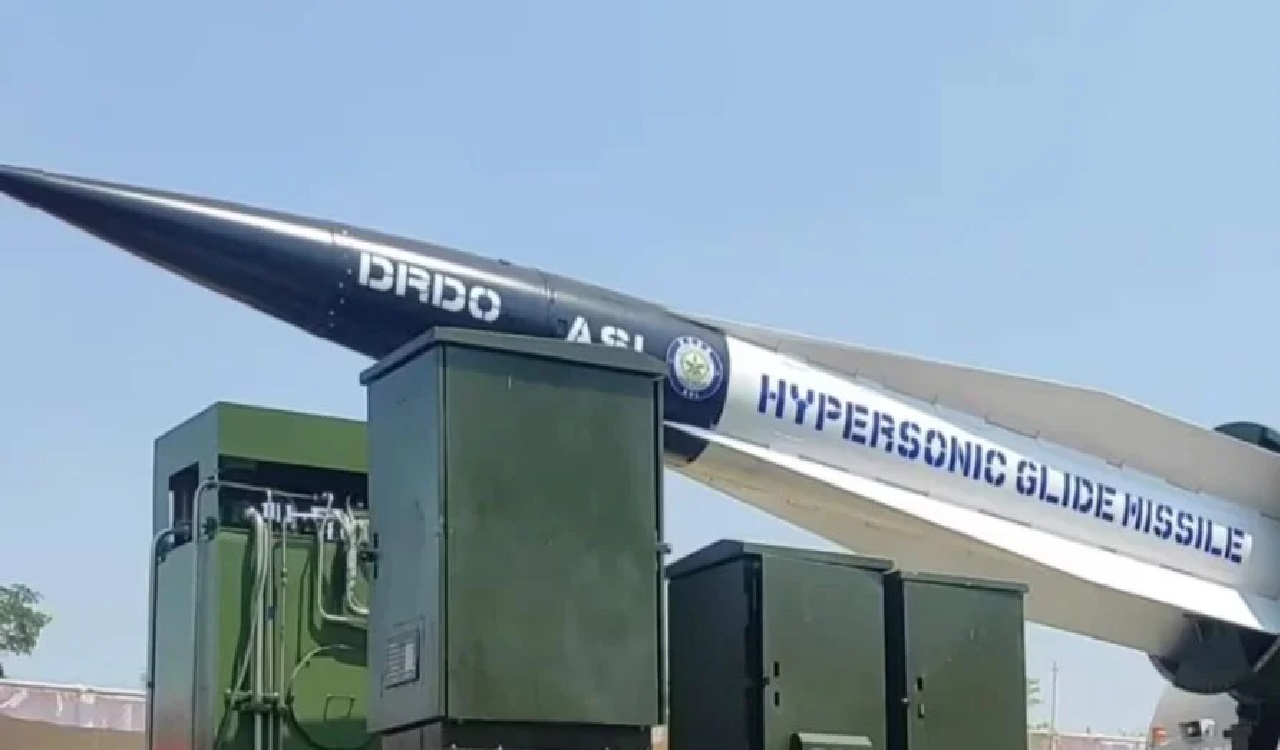
At the centre of this effort is the Hypersonic Technology Demonstrator Vehicle (HSTDV), which validated scramjet ignition during captive and free-flight trials between 2019 and 2020. Since then, DRDO has steadily extended combustion duration, cooling efficiency, and scalability—key prerequisites for weaponization. Parallel initiatives such as the Extended Technology Demonstrator Long Duration Hypersonic Cruise Missile (ETLD-HCM) and exploratory hypersonic glide vehicle concepts reflect a multi-track approach, combining air-breathing cruise missiles with boost-glide architectures. Importantly, DRDO has increasingly partnered with Indian industry, positioning hypersonic research as a dual-use enabler for both defence and advanced aerospace applications.
Why the Scramjet Test Matters Technically
Unlike ramjets, scramjets operate with supersonic airflow through the combustor, drastically increasing thermal and structural stress. Sustaining combustion for 12 minutes using hydrocarbon fuel required effective active cooling—one of the most difficult barriers to hypersonic endurance. This achievement confirms that Indian systems can survive prolonged hypersonic flight rather than short demonstration bursts.
Operationally, this shifts hypersonic cruise missiles from theoretical deterrents to credible battlefield assets. Such weapons combine extreme speed, atmospheric maneuverability, and low predictability, complicating interception by even advanced missile defence networks. The test therefore lays the foundation for future flight trials and eventual deployment, placing India in a select global cohort alongside the United States, Russia, and China.
Strategic and Diplomatic Implications
The diplomatic consequences of this breakthrough are significant. Regionally, it strengthens India’s deterrence posture vis-à-vis China’s hypersonic glide vehicles and sea-launched systems, while reinforcing escalation dominance against Pakistan. Hypersonic credibility reduces reliance on imported high-end weaponry, reinforcing India’s strategic autonomy narrative.
Globally, the achievement enhances India’s standing in security dialogues within the Quad and beyond. Technological parity improves bargaining power in defence cooperation, arms export negotiations, and non-proliferation discussions. It also allows India to engage as a contributor—not merely a consumer—in advanced aerospace ecosystems, aligning military strength with diplomatic influence.
Technology as Strategic Leverage
DRDO’s long-duration scramjet test is not simply an engineering milestone; it is a strategic inflection point. By demonstrating endurance and scalability, India has moved closer to operational hypersonic capability—reshaping deterrence, diplomacy, and defence innovation. As hypersonics increasingly define 21st-century military power, India’s progress ensures it will help shape, rather than react to, the emerging strategic order.
(With agency inputs)