A Strong Partnership in Numbers
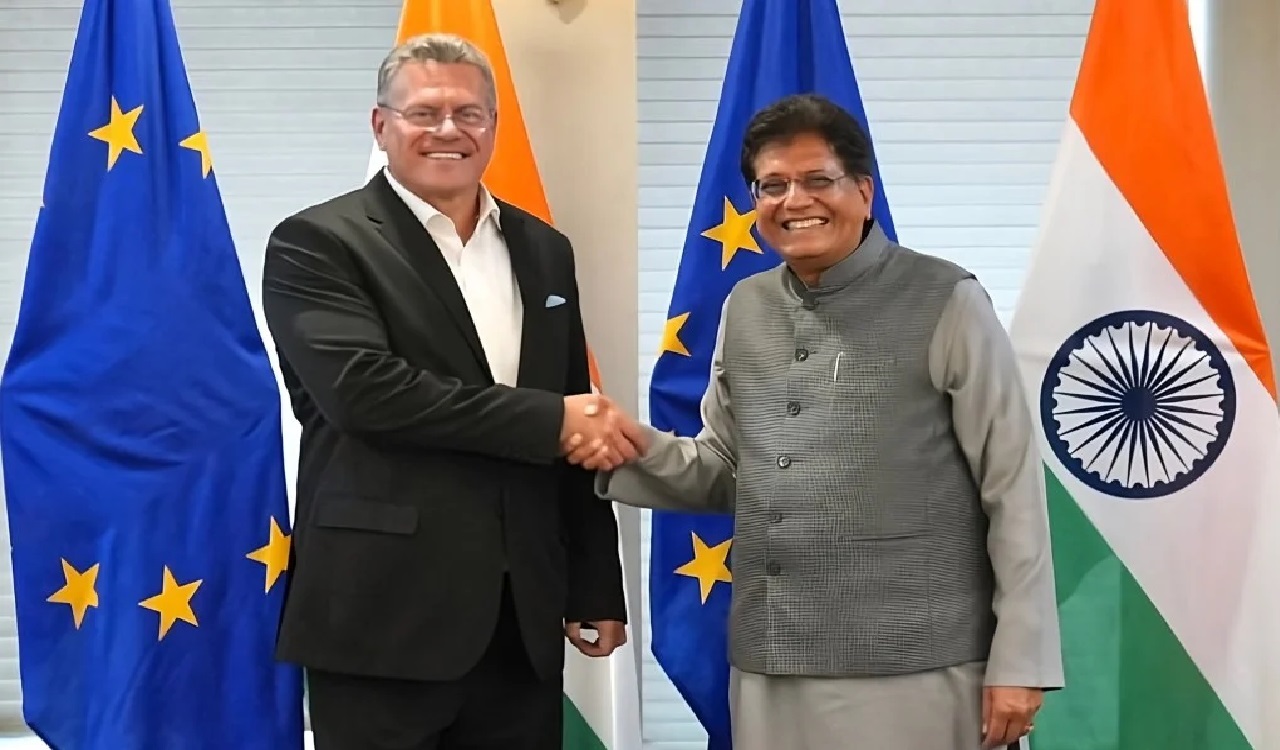
India’s commercial engagement with the European Union has entered a decisive phase. In FY 2024–25, bilateral goods trade touched an all-time high of USD 136.53 billion, with Indian exports alone climbing to USD 75.85 billion. This performance delivered a healthy trade surplus of USD 15.17 billion for New Delhi and reinforced the EU’s position as India’s largest trading partner in goods. Beyond headline figures, the composition and geography of exports are also evolving, pointing to deeper structural changes in India–EU trade relations.
From Volume to Value
Traditionally, Indian exports to Europe were concentrated in a handful of mature markets and sectors. Today, however, export growth is increasingly driven by diversification—both across countries within the EU and across product categories. Engineering goods, pharmaceuticals, chemicals, textiles, gems and jewellery are aligning well with Europe’s demand for reliable, sustainable, and technologically integrated supply chains. This transformation is occurring alongside renewed momentum in negotiations for an India–EU Free Trade Agreement (FTA), which could redefine the trajectory of this relationship.
Emerging Export Centres Within the EU
Several EU members have emerged as high-growth destinations for Indian goods. Spain has recorded exceptional expansion, with exports rising by 56 percent to USD 4.7 billion during April–November FY 2025–26, lifting its share in India’s EU exports to 2.4 percent. Germany, while growing at a steadier pace, remains a cornerstone market with a 2.6 percent share, supported by sustained demand for machinery and automobiles.
Belgium has demonstrated resilience, with exports edging up from USD 4.2 billion to USD 4.4 billion, underpinned by diamonds and pharmaceuticals. Poland, another fast-rising market, posted growth of 7.6 percent to USD 1.82 billion, driven by electrical machinery and organic chemicals. Collectively, these markets reflect a strategic shift away from overdependence on traditional hubs such as the Netherlands and the UK.
How an India–EU FTA Could Transform Exports
A comprehensive FTA would likely accelerate these trends. Currently, EU tariffs on Indian products average between 5 and 10 percent, but can be substantially higher for sensitive sectors—reaching nearly 38 percent on garments and around 12 percent on chemicals and pharmaceuticals. Eliminating or reducing these duties would immediately improve price competitiveness, particularly in fast-growing markets like Spain.
Sector-specific benefits would be substantial. Engineering goods, pharmaceuticals, electrical equipment, steel, and petroleum products—key exports to Germany and Poland—would gain from simplified rules of origin and mutual recognition of standards. Belgium’s diamond and pharmaceutical trade could expand further with duty-free access, while textiles and chemicals would see faster penetration in Spain. Estimates based on comparable trade agreements suggest exports to these emerging EU hubs could rise by 20–30 percent within five years of an FTA’s implementation.
Constraints and Negotiating Challenges
Despite the upside, challenges remain. Non-tariff barriers, including the EU’s Carbon Border Adjustment Mechanism and stringent sanitary standards, could dilute some of the gains unless explicitly addressed in the agreement. There are also domestic sensitivities in India, particularly around agriculture and MSME protection, which negotiators are attempting to manage through safeguard clauses and phased liberalisation.
A Strategic Opportunity with Long-Term Payoffs
An India–EU Free Trade Agreement has the potential to elevate the EU’s share in India’s exports from about 17 percent to nearly 25 percent, adding USD 20–30 billion annually over time. More importantly, it would consolidate India’s presence in stable, high-value European markets at a moment of global trade uncertainty. If carefully structured, the deal could serve as a cornerstone of India’s ambition to reach USD 1 trillion in exports by 2030, transforming a strong trading partnership into a truly strategic economic alliance.
(With agency inputs)