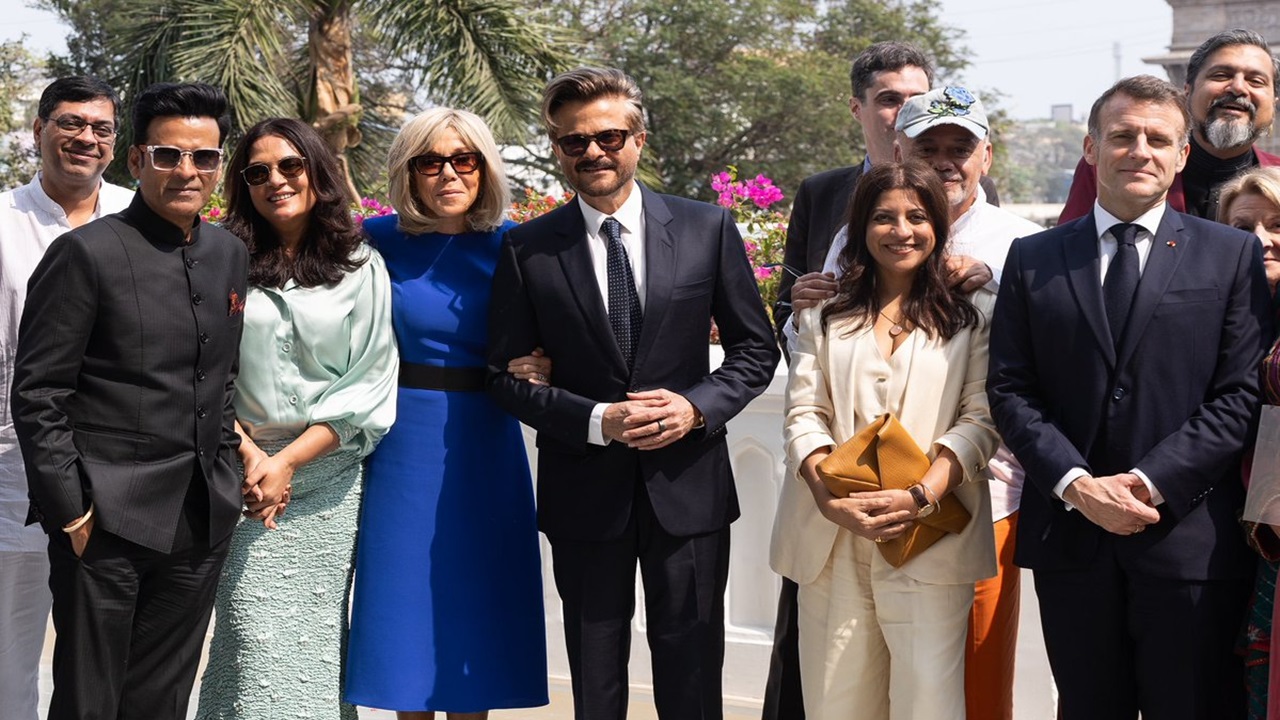
French President Emmanuel Macron’s Mumbai stop turned into a cultural moment as he met Bollywood figures including Anil Kapoor, Zoya Akhtar and Manoj Bajpayee—highlighting cinema’s growing role in global diplomacy.
A Cultural Interlude in a Strategic Visit
During his February 2026 visit to India, Emmanuel Macron met a cross-section of Indian film personalities—among them Anil Kapoor, Zoya Akhtar, and Manoj Bajpayee—in Mumbai ahead of the India AI Impact Summit. The informal gathering, attended by First Lady Brigitte Macron, followed official engagements including a tribute to the 26/11 attacks and meetings with Indian leaders.
Photos and messages from the interaction showed relaxed conversations on cinema, culture, and cross-border storytelling—offering a softer counterpoint to the trip’s strategic discussions on defence, AI, and trade.
Macron’s Official Visit and Strategic Context
Macron’s India visit combined hard diplomacy with cultural outreach. Alongside talks on defence cooperation, technology partnerships, and long-term economic collaboration, the French leader used his Mumbai stop to reinforce cultural ties. France remains one of India’s leading European partners in investment and technology, and both countries have increasingly highlighted “people-to-people” exchanges as a pillar of bilateral relations.
By engaging directly with India’s film industry—one of the world’s largest and most influential—Macron sought to strengthen France’s soft-power engagement with India. The move also complements ongoing cooperation in film co-production, film-festival exchanges, and audio-visual technology.
How Bollywood Stars Reacted
The Bollywood personalities who attended the meeting responded with enthusiasm and optimism.
Anil Kapoor described the interaction as an “inspiring afternoon,” emphasising discussions around storytelling and the cultural bridge between India and France. His social-media posts reflected a sense of creative camaraderie and potential collaboration.
Actor-producer Richa Chadha highlighted conversations on cross-border film partnerships and co-production opportunities, suggesting growing industry interest in European collaboration. Meanwhile, Manoj Bajpayee and Zoya Akhtar—both associated with globally streamed content—were seen as representing a new generation of Indian storytellers with international reach.
The presence of veteran actor Shabana Azmi and composer Ricky Kej added gravitas, reinforcing the perception that the meeting brought together influential voices across cinema and music. Collectively, the reactions framed the encounter as more than a ceremonial meet-and-greet: it was viewed as a platform for deeper creative and institutional cooperation.
Cinema Diplomacy and Its Strategic Value
The meeting illustrates how cinema is becoming a diplomatic tool. Bollywood’s global reach—across South Asia, the Middle East, Africa, and diaspora markets—makes it a powerful soft-power asset. By engaging with film personalities, France positions itself as a cultural collaborator and creative partner.
For India, such interactions open pathways for co-productions, access to European film funds, and technological collaboration in areas like visual effects and animation. Cultural diplomacy also complements strategic ties, helping build public goodwill that reinforces political and economic cooperation.
At a time when global alliances increasingly rely on both hard and soft power, cinema diplomacy provides a humanised dimension to statecraft.
Beyond Red Carpets
Macron’s Bollywood outreach underscores the evolving nature of diplomacy in the 21st century—where cultural industries play a central role in shaping international partnerships. By connecting with India’s film community, France signalled an interest in deeper creative collaboration alongside strategic cooperation. If sustained through co-production agreements, festival exchanges, and joint ventures, this cinematic engagement could strengthen Indo-French ties far beyond official summits—demonstrating that cultural narratives often travel further, and last longer, than political statements.
(With agency inputs)