


The Controversy Unfolds
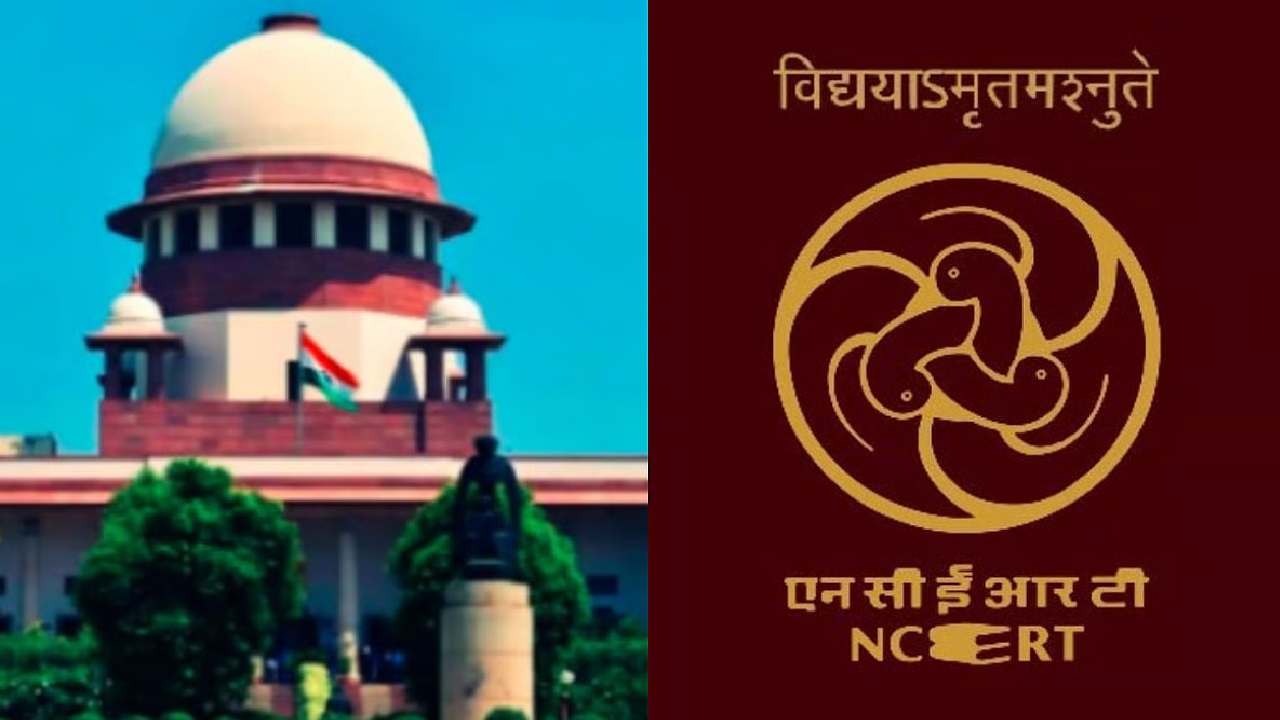
A storm erupted in India’s education landscape after the Supreme Court banned a newly released NCERT Class 8 Social Science textbook over a chapter discussing corruption within the judiciary. Acting suo motu, a Bench led by Chief Justice Surya Kant issued show-cause notices to the Secretary of the Department of School Education and the Director of National Council of Educational Research and Training (NCERT), Dinesh Prasad Saklani.
The Court objected to portions of the chapter titled “The Role of the Judiciary in Our Society” in Exploring Society: India and Beyond, Vol II, which cited data on judicial complaints and delays. The Bench termed certain references “contemptuous” and potentially damaging to judicial dignity. Printed copies meant for schools affiliated with the Central Board of Secondary Education (CBSE) and state boards were halted, marking an extraordinary judicial intervention in textbook regulation.
Who Writes NCERT Textbooks?
Founded in 1961 under the Ministry of Education, NCERT functions as an autonomous academic body tasked with curriculum design and textbook preparation. Its books, though mandatory for CBSE schools, are widely adopted by state boards and private institutions nationwide.
The textbook development process is typically multi-layered. Subject expert committees—comprising university academics, school teachers, pedagogy experts, and NCERT faculty—draft content aligned with the National Curriculum Framework and the National Education Policy 2020. Chief advisors supervise revisions, ensuring conceptual clarity and age appropriateness.
After drafting, manuscripts undergo internal peer review and institutional clearance. High-level committees examine major curricular shifts before final approval. While NCERT enjoys academic autonomy, the Ministry retains the authority to intervene on matters of national importance. In principle, this layered system is designed to prevent oversight failures.
Yet this episode suggests that even elaborate review mechanisms may falter when contentious framing escapes scrutiny or contextual balance.
How the Chapter Slipped Through—and Was Pulled
The controversial chapter reportedly cited figures such as 8,639 complaints against judges between 2016 and 2025, alongside commentary on pendency of cases. Media reports triggered judicial attention, leading the Chief Justice to take suo motu cognisance on February 25, 2026.
The Court expressed concern that the chapter singled out the judiciary without proportionate discussion of institutional reforms or accountability challenges in other branches of governance. It described the presentation as potentially undermining institutional trust.
Though distribution had begun, it was paused before the formal ban. Ordinarily, textbook revisions can be initiated through feedback mechanisms, with committees recommending amendments in subsequent print cycles. However, once printed copies circulate, enforcement becomes complex. The Supreme Court’s directive mandated nationwide seizure of physical copies from warehouses, schools, and retail outlets, alongside digital takedowns from official platforms.
NCERT has been ordered to disclose the identities of authors, drafters, and reviewers involved in the chapter, along with minutes of relevant meetings. Director Saklani has been made personally accountable for compliance, and reprinting remains prohibited pending revision.
Fallout and Broader Implications
The Union Government termed the episode an “error in judgement,” while NCERT pledged to redraft the chapter with expert consultation before the 2026–27 academic session. Non-compliance could invite contempt proceedings.
Beyond immediate compliance, the controversy raises deeper questions. Does judicial intervention risk chilling academic inquiry? Or does it safeguard institutional sanctity in school education? The case also revives debate over NCERT’s autonomy amid ongoing curriculum politics and heightened public scrutiny of textbooks.
Stricter pre-publication vetting mechanisms now appear inevitable. Yet excessive caution may dilute critical thinking in classrooms.
Balancing Integrity and Inquiry
The ban on the Class 8 textbook marks a rare collision between the judiciary and the academic establishment. While institutions must be protected from unfounded attack, education must also cultivate informed civic awareness.
The challenge ahead lies in achieving equilibrium—ensuring textbooks are rigorous, balanced, and responsible without compromising intellectual honesty. In navigating that balance, India’s education system confronts a defining test of both credibility and constitutional maturity.
(With agency inputs)