


Diplomatic Chill Deepens Amid Dhaka’s Call for Greater Chinese Role in Eastern India
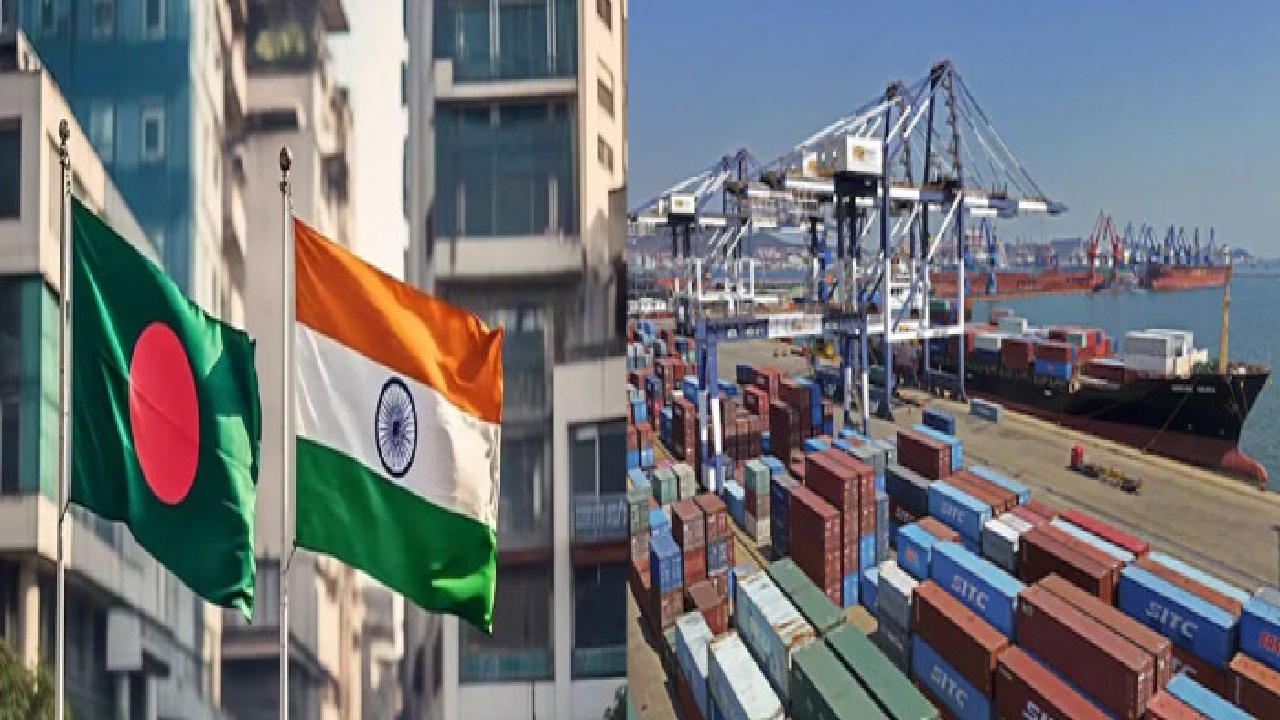
In a sharp diplomatic shift, India has withdrawn a key transshipment facility extended to Bangladesh, following controversial remarks by Muhammad Yunus, Chief Adviser of Bangladesh’s interim government. The facility, once seen as a symbol of India’s regional goodwill, had allowed Bangladesh to route its cargo to Nepal, Bhutan, and Myanmar through Indian ports, airports, and Land Customs Stations (LCSs).
The rollback underscores rising tensions between New Delhi and Dhaka, which have shared a traditionally strong but recently strained bilateral relationship. While ties were warm under the Sheikh Hasina-led Awami League government, the interim administration under Yunus has signaled a tilt toward China, unsettling strategic and economic calculations in the region.
What Prompted the Rollback?
The decision came after Yunus, during a visit to China, controversially referred to India’s Northeast as “landlocked” and pitched Bangladesh as the sole maritime gateway for the region. More provocatively, he called for the integration of India’s Northeast with the Chinese economy, describing it as a “huge possibility.”
“The seven states of India, the eastern part of India, are called the Seven Sisters. They have no way to reach out to the ocean. So, this opens up a huge possibility. This could be an extension of the Chinese economy,” Yunus said at a high-level roundtable in Beijing.
These remarks were interpreted by Indian policymakers as a challenge to India’s territorial integrity and strategic autonomy, especially given China’s aggressive posture in the Indo-Pacific and border regions.
India’s Official Response and Policy Shift
India’s External Affairs Minister Dr. S. Jaishankar responded strongly to Yunus’ comments, stating that cooperation must not be “cherry-picked” or driven by narrow geopolitical interests.
He reminded observers of India’s extensive infrastructure and strategic position:
“We, after all, have the longest coastline in the Bay of Bengal, almost 6,500 km… Our Northeast is not isolated, but emerging as a connectivity hub for BIMSTEC through roads, railways, waterways, grids, and pipelines.”
Following these remarks, India’s Central Board of Indirect Taxes and Customs (CBIC) issued a circular on April 8, formally revoking the transshipment facility granted in June 2020. While cargo already in transit will be allowed to exit under existing procedures, no future access will be permitted.
Trade Implications: India Eyes Sectoral Gains
According to trade analysts, the decision could positively impact Indian exporters in textiles, footwear, and jewellery, sectors where Bangladesh has been a strong competitor — particularly in global apparel markets.
By curbing Bangladesh’s ease of access to regional markets through India, Indian manufacturers may regain pricing and logistical advantages, especially in Nepal and Bhutan.
What Happens Next: Diplomatic Fallout and Regional Realignment
India’s move is being seen as a strategic signal to Dhaka, cautioning against aligning too closely with Beijing at the cost of its relationship with New Delhi. Bangladesh, traditionally dependent on India for trade routes and security coordination, now faces increased logistical hurdles and possible economic slowdowns in its export supply chain.
If Dhaka continues to push for deeper Chinese involvement in South Asia — particularly in India’s sensitive Northeast — it could lead to a cooling of bilateral ties at a time when regional cooperation is crucial for economic recovery and stability.
A Wake-Up Call for Strategic Prudence
India’s swift policy response is a calibrated diplomatic move, not just to assert territorial integrity, but to redefine the boundaries of regional cooperation. As South Asia balances between economic interdependence and geopolitical caution, Dhaka may now be compelled to reassess its foreign policy trajectory.
The message is clear: India values partnership — but not at the cost of sovereignty or strategic vulnerability.
(With inputs from agencies)