The Perfect Storm: When Nature Collided with Airspace Politics
On a routine domestic flight from Delhi to Srinagar, 220 passengers aboard IndiGo Flight 6E-2142 lived through what some described as a “near-death experience.” What should’ve been a standard journey turned harrowing as the aircraft encountered a violent hailstorm, system failures, and a rapid descent, all intensified by denied airspace access from Pakistan.
According to an initial report from India’s Directorate General of Civil Aviation (DGCA), the flight was cruising at 36,000 feet near Pathankot when it encountered a monstrous thunderstorm. Seeking to avoid it, the pilots made urgent requests—to Indian and Pakistani air traffic control—for a brief detour into Pakistani airspace. Both were denied.
What Went Wrong in the Sky
With the storm too close for a return to Delhi and alternative routes blocked, the crew made a decision: fly through it.
Once inside the weather system, the aircraft was pummeled by hail and turbulence. Critical sensors like the Angle of Attack (AoA) were likely damaged, triggering a cascade of system failures. The aircraft’s autopilot disengaged, and alternate law mode—where critical protections like stall and overspeed prevention are disabled—took over.
The plane then plunged at an unprecedented rate of 8,500 feet per minute, far exceeding the standard descent rate of 1,500–3,000 ft/min. At the same time, the cockpit was blaring stall warnings and alerts of excessive speed, all likely caused by erroneous airspeed readings from blocked pitot tubes—tiny instruments crucial for safe flight.
Manual Flying Saves the Day
With multiple alerts and system degradations, the pilots took full manual control under extreme stress. As updrafts and downdrafts tossed the aircraft, they navigated through sheer turbulence, emerging from the storm system en route to Srinagar.
The crew declared a “PAN PAN” emergency, signaling a situation of urgent concern but not immediate danger to life. Air Traffic Control in Srinagar provided vectoring for a stable descent. The flight landed safely, though visibly shaken passengers emerged with a renewed appreciation for their flight crew.
Aftermath and Damage Report
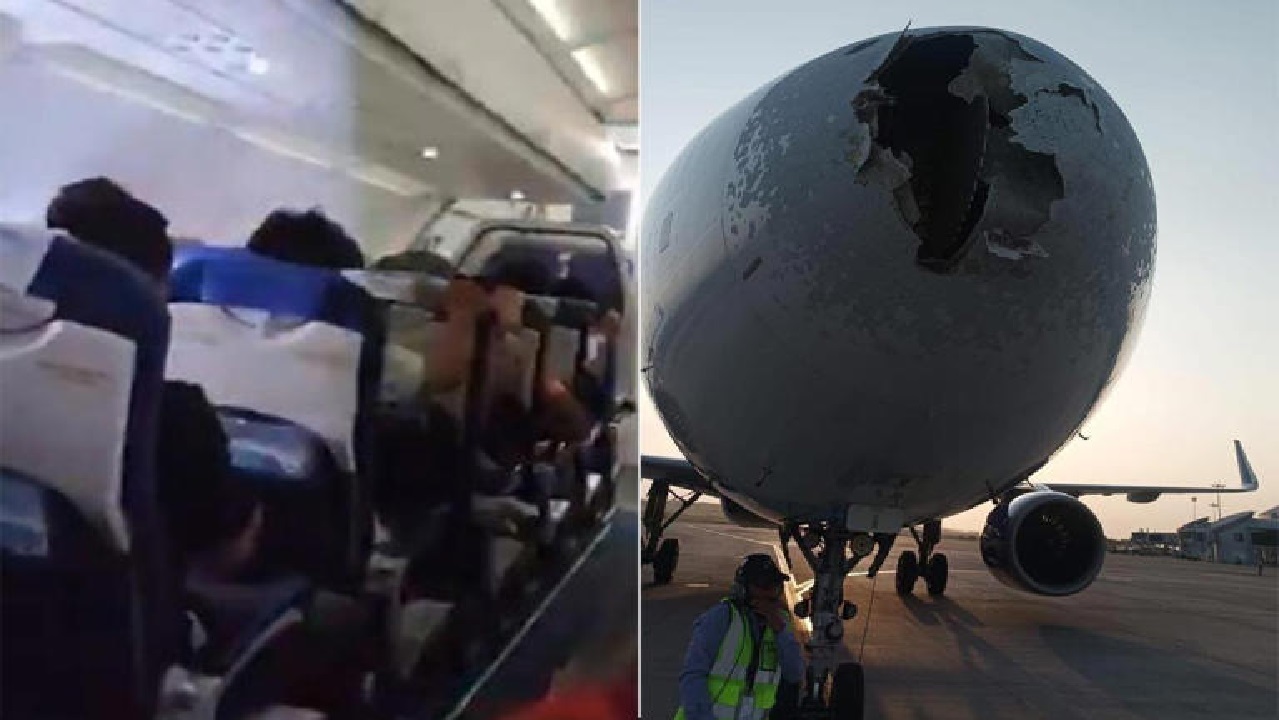
A post-landing inspection revealed major damage to the aircraft’s radome—the nose cone that houses its weather radar—evidence of the storm’s ferocity. Fortunately, there were no injuries among passengers or crew.
The DGCA has opened a formal investigation, with teams examining flight data, cockpit recordings, and conducting technical assessments alongside IndiGo.
Passengers Speak Out
Among those onboard were MPs from the Trinamool Congress, including Derek O’Brien and spokesperson Sagarika Ghose, who later recounted the experience:
“It was a near-death experience. People were screaming, praying, and panicking. Hats off to the pilot.”
Social media clips echo her account—passengers gripping seats, some in prayer, as the aircraft bucked through the storm.
Skill Under Pressure, Questions in the Aftermath
The incident showcases the critical role of pilot skill and training in aviation safety. While India’s aviation systems have grown in sophistication, this event raises important questions: Should emergency airspace access be universally guaranteed? Should cross-border coordination during crises be streamlined?
Above all, it is a story of professionalism under pressure. The flight crew’s swift decisions and calm execution prevented a disaster—turning what could have been tragedy into testament.
(With agency inputs)