


Tensions Flare in Parliament Over Operation Sindoor
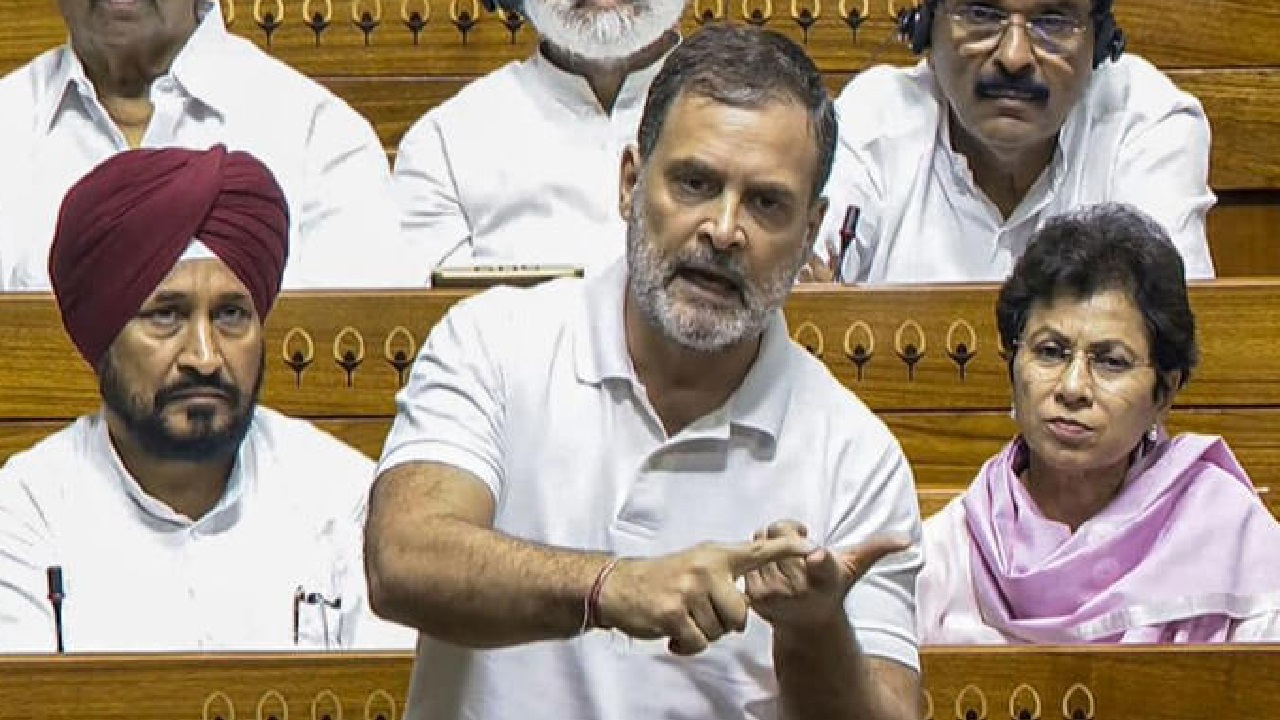
The Lok Sabha turned into a battleground of rhetoric on Tuesday as the debate on Operation Sindoor—India’s military response to the April 22 Pahalgam terror attack—ignited a political firestorm. Amid patriotic proclamations and fiery rebuttals, Leader of Opposition Rahul Gandhi launched a scathing critique of Prime Minister Narendra Modi, accusing him of evading two critical issues: naming China and refuting U.S. President Donald Trump’s claims of mediating peace between India and Pakistan.
As the Prime Minister defended the armed forces and Operation Sindoor with sharp barbs at the opposition, Gandhi challenged him to rise to the legacy of Indira Gandhi by confronting global narratives head-on—starting, he said, by calling Trump “a liar” in Parliament.
Rahul’s Charge: “Where is China in the PM’s Speech?”
Speaking both inside and outside Parliament, Rahul Gandhi voiced deep concern over what he called a diplomatic evasion. According to Gandhi, while India’s military struck back decisively in Operation Sindoor, the government refused to publicly confront the strategic role of China, which allegedly backed Pakistan during the conflict.
“He never said it clearly that Trump was lying… Not once did he mention China,” Gandhi told reporters, emphasizing that the Indian public is fully aware of China’s involvement. “But neither the Prime Minister nor the Defence Minister uttered a word about it,” he said, branding the silence as deliberate and politically cautious.
In his address to the Lok Sabha, Gandhi declared, “If the Prime Minister has even 50% of Indira Gandhi’s courage, he should say right here that Donald Trump is a liar.” He referred to Trump’s repeated claim—29 times, as per Gandhi’s count—that he had brokered a ceasefire between India and Pakistan. “If it’s false, why not deny it boldly in the House?” he asked.
PM Modi Hits Back: Opposition’s “Old Habit” of Doubting Armed Forces
In response, Prime Minister Modi defended Operation Sindoor as a righteous and effective military mission, lauding the armed forces and criticizing what he described as the Congress party’s “legacy of suspicion” toward military actions.
“Terrorists are crying, their masterminds are crying, and seeing them cry, some people here are crying too,” Modi remarked in Parliament, mocking the opposition for what he called habitual resistance to military achievements—from surgical strikes to airstrikes, and now Operation Sindoor.
“They opposed the army during the surgical strike. Then during the airstrikes, and now with Sindoor, they’ve found a new excuse— ‘Why did you stop?’” Modi said, accusing the opposition of undermining national morale. “Not just me, but the entire country is laughing at you.”
Diplomatic Silence or Strategic Restraint?
The crux of Gandhi’s argument was that India must confront external threats not just on the battlefield, but in global narratives as well. For Gandhi, refusing to call out China’s alleged involvement and not countering Trump’s public diplomacy amounted to softness on matters that demand boldness.
Yet the government’s stance suggests a strategic silence—perhaps intended to avoid escalation with global superpowers, or to keep diplomatic channels open. PM Modi reiterated that India seeks peace through strength, declaring, “We are the land of Buddha, not yuddha (war).”
A Battle of Courage and Caution
The fiery exchange in Parliament over Operation Sindoor revealed a deeper divide: one between Rahul Gandhi’s call for outspoken global positioning and PM Modi’s calculated messaging focused on military valor and domestic unity.
Gandhi’s challenge to “name China” and “call Trump a liar” is rooted in a belief that diplomatic ambiguity weakens India’s posture. Modi’s rebuttal, on the other hand, paints the opposition as disruptive during a time that demands solidarity.
As India navigates an increasingly complex geopolitical environment, the real test may lie not just in armed response, but in crafting a consistent and courageous diplomatic narrative—at home and abroad.
(With agency inputs)