



Operation Sindoor and the Fight Against Cross-Border Terror
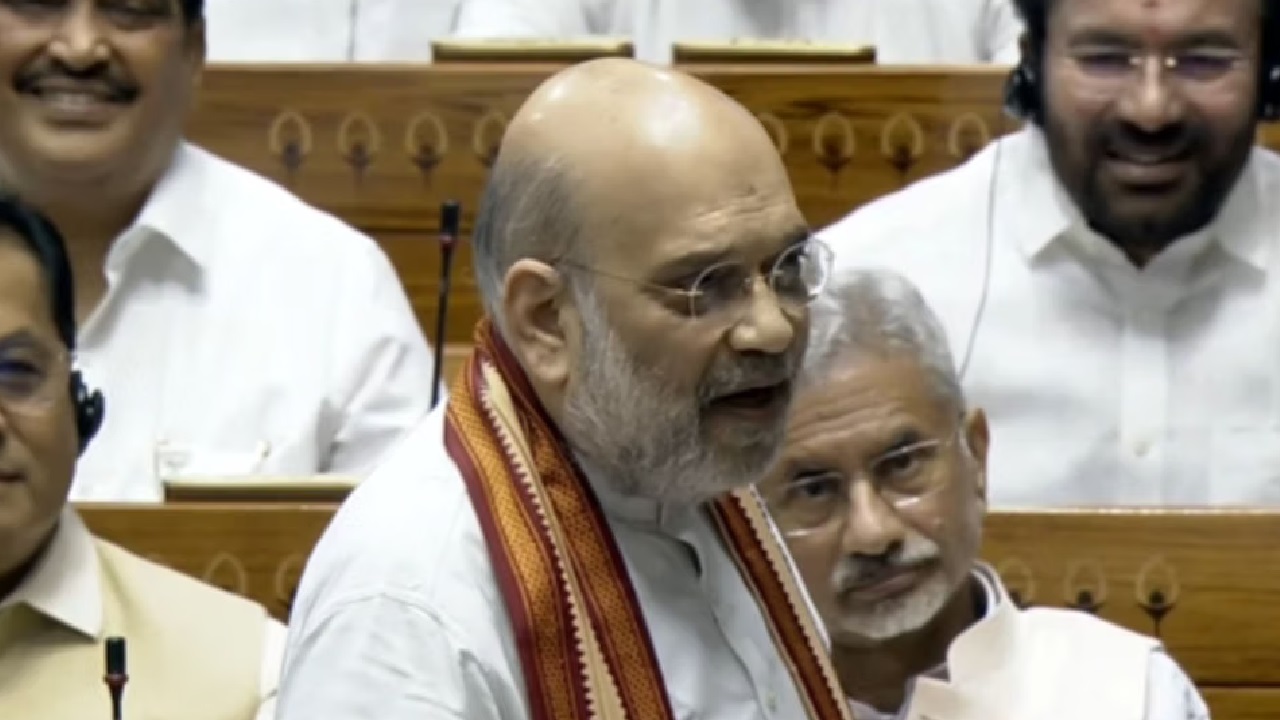
In a bold and decisive move, the Indian government launched Operation Sindoor to retaliate against the brutal killing of 26 civilians in Jammu and Kashmir’s Pahalgam. Union Home Minister Amit Shah, addressing the Lok Sabha, revealed that the Indian armed forces carried out targeted strikes against terror camps inside Pakistan and Pakistan-occupied Jammu & Kashmir (PoJK) on the night of May 6–7. The operation, executed with surgical precision, marks a significant moment in India’s counter-terror strategy and its approach to state-sponsored terrorism from across the border.
The Trigger: Pahalgam Attack and the Response
On April 30, India’s Cabinet Committee on Security (CCS) held a high-level meeting and granted complete operational freedom to the armed forces. The move followed the terror attack in Pahalgam, where Pakistan-based militants killed 26 innocent civilians. The government attributed the act to state-sponsored terror networks operating with the support of Pakistan’s intelligence services.
In response, India launched Operation Sindoor in the early hours of May 7, targeting nine terror camps within Pakistani territory and PoJK. The strikes, carried out between 1:04 AM and 1:24 AM, eliminated more than 100 terrorists. According to Shah, the operation was meticulously planned to avoid civilian casualties—a restraint not shown by Pakistan in its counterattacks.
Operation Details: Precision and Intent
Operation Sindoor was not only a military response but a strategic message. The Indian Director General of Military Operations (DGMO) informed his Pakistani counterpart post-strike, underlining the transparency and precision of the mission.
Shah emphasized:
· No civilian areas were targeted in Pakistan
· India’s strikes were limited to terror camps, while Pakistan retaliated by attacking Indian military and civilian areas
· The Pakistani military’s involvement was indirectly confirmed, as top officers reportedly attended the funerals of terrorists killed in Indian strikes
· The operation culminated in four days of cross-border skirmishes, during which India also neutralized Pakistani airbases and air defense systems. By May 10, Pakistan requested a ceasefire, which India agreed to—having made its point militarily and diplomatically.
Political Crossfire: Shah Targets the Opposition
While recounting the events, Amit Shah criticized the Congress party for what he called a legacy of inaction and appeasement. Referring to former Home Minister P. Chidambaram, Shah questioned the logic behind demanding “proof” that the Pahalgam attackers were from Pakistan.
According to Shah:
· Two of the slain terrorists carried Pakistani voter ID cards
· Chocolates found in their bags were manufactured in Pakistan
· The Congress, he said, is “trying to defend Pakistan” under the guise of seeking evidence
He further linked historical missteps—including the partition, the Indus Water Treaty, and the Simla Agreement—to the rise and persistence of the Pakistan threat. Shah argued that India’s present assertive posture is in contrast to previous governments’ passive approaches.
Geopolitical Implications and India’s Stand on the Global Stage
Shah also used the platform to stress India’s efforts under Prime Minister Narendra Modi to elevate its global stature, including a push for a permanent seat in the UN Security Council. He contrasted this with past governments’ foreign policy failures and criticized the Congress leadership for allegedly aligning with China during sensitive moments like the Doklam standoff.
A Strategic Shift in India’s Security Doctrine
Operation Sindoor represents a clear evolution in India’s approach to terrorism—moving from defensive posturing to proactive neutralization of threats at their source. With over 100 terrorists eliminated and key terror infrastructure dismantled, the operation sent a strong message: India will not absorb attacks passively.
It also served as a political turning point, as the government defended its decisions while pointing to historical decisions that, it argued, created today’s threats. The ceasefire that followed came on India’s terms—only after the operation’s objectives were achieved. Going forward, Operation Sindoor may well be remembered as a template for future responses to cross-border terrorism: swift, decisive, and strategically calibrated.
(With agency inputs)