


Trump’s Trade Threats Strain U.S.-Brazil Ties, Lula Turns to BRICS
A Volatile Shift in Global Trade Politics
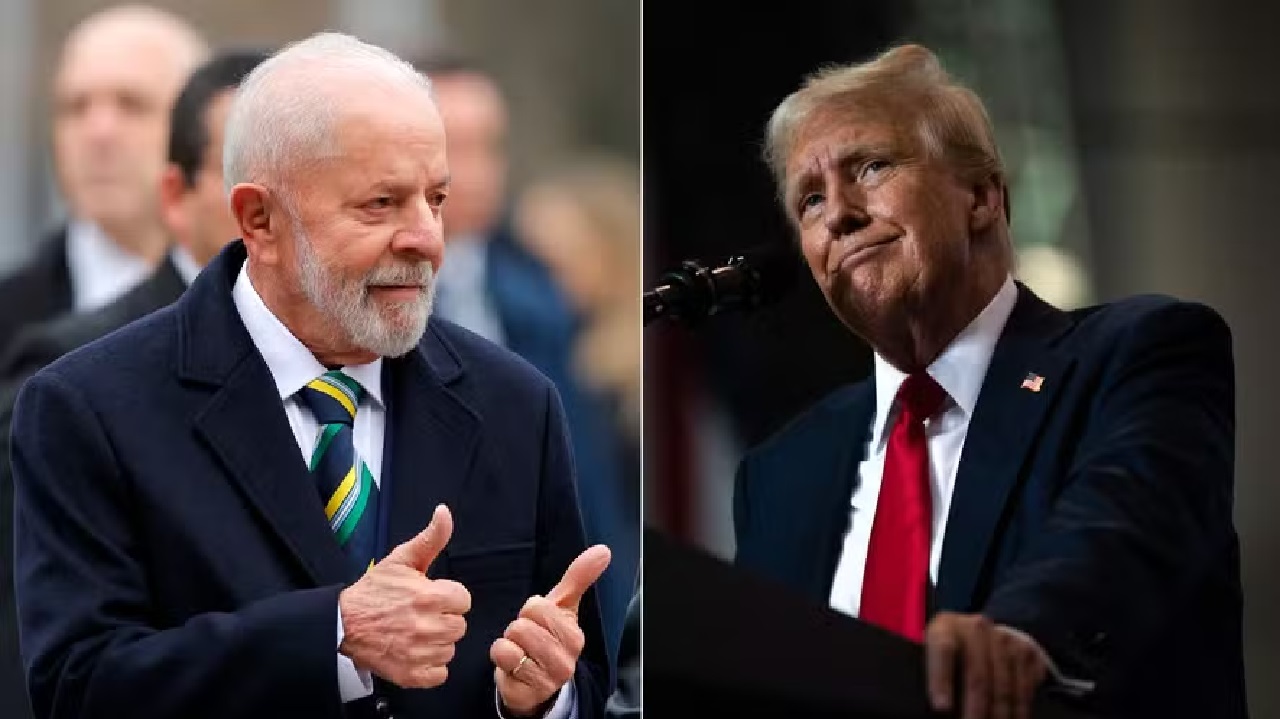
Global markets were thrown into uncertainty as U.S. President Donald Trump reasserted his aggressive tariff policy—this time targeting Brazil. His decision to impose a 50% tariff on Brazilian imports not only exacerbated tensions between the two nations but also pushed Brazilian President Luiz Inácio Lula da Silva to recalibrate his diplomatic strategy. Instead of extending an olive branch to Washington, Lula is now doubling down on alliances within the BRICS bloc, seeking alternative partnerships with China, India, and others.
A Call Declined: Lula Shuts the Door on Trump’s Overture
Despite Trump’s public invitation for dialogue—”He can call me anytime”—Lula swiftly dismissed the offer, making clear that he saw no value in initiating contact. Labeling the day, the tariffs were imposed as “the most regrettable in U.S.-Brazilian relations,” Lula indicated that his priorities now lie elsewhere.
Trump’s gesture was echoed by Brazil’s finance minister, Fernando Haddad, who had initially responded positively. But Lula’s ultimate refusal signals a broader shift in Brazil’s foreign policy, away from Western influence and toward South-South cooperation.
Turning East: BRICS as a Strategic Pivot
Instead of engaging Trump, Lula emphasized stronger ties with fellow BRICS nations—specifically China and India. “I’ll speak to Xi Jinping, I’ll speak to Prime Minister Modi,” Lula declared, underscoring Brazil’s pivot toward emerging economies. While Russian President Vladimir Putin remains diplomatically unreachable due to travel restrictions, Lula made clear that dialogue within the bloc remains his priority.
This realignment comes as Trump threatens further tariffs—an additional 10%—on countries aligning with what he considers anti-American economic coalitions. Lula, however, is resolute in defending Brazil’s sovereignty and trade interests.
The Tariff Flashpoint: A Breakdown in Bilateral Relations
The conflict centers on the U.S. decision to increase tariffs on Brazilian goods to a staggering 50%, a move that deeply unsettled Brasília. Lula responded by pledging to explore all legal channels, beginning with the World Trade Organization, to contest the measures and safeguard Brazilian exports.
Speaking at an event in Brasília, Lula noted that efforts to expand international trade had begun even before the latest American policy shift. “In 2025, we’ll utilize every available avenue to protect our interests,” he vowed.
Political Undercurrents: Bolsonaro, Sanctions, and Judicial Tensions
Compounding the economic discord is a deepening political rift. The U.S. has openly criticized Brazil’s Supreme Court for placing former President Jair Bolsonaro—an ally of Trump—under house arrest. In a sharp rebuke, the U.S. State Department labeled Justice Alexandre de Moraes, who is presiding over the case, as a human rights violator under the Magnitsky Act.
Justice de Moraes, undeterred by international condemnation, reaffirmed his commitment: “Sanctions or not, I will do my job.”
Potential Impacts: A Fractured Alliance and a New Trade Map
The ripple effects of this diplomatic fallout are significant. Brazil may deepen its economic ties with BRICS nations, potentially reducing its reliance on U.S. trade. The tariff escalation could also prompt Brazil to diversify its export markets and invest in regional trade agreements.
For the U.S., this marks a cooling of relations with Latin America’s largest economy, possibly ceding influence to China and India in the region. As the geopolitical chessboard shifts, both nations risk losing more than they gain in this high-stakes standoff.
A Turning Point in U.S.-Brazil Relations
With Trump’s tariffs igniting a trade conflict and political tensions adding fuel to the fire, Brazil is charting a new path—one that sidesteps Washington in favor of emerging global partners. As COP30 approaches, Lula’s invitation to Trump may serve as a gesture of diplomacy, but the message is clear: Brazil is no longer waiting on Washington.
(With agency inputs)