Tariff Turbulence from Washington
In a dramatic escalation of trade tensions, US President Donald Trump has announced a two-phase 50% tariff on imports from India, a sweeping policy change that is set to ripple through multiple sectors of Odisha’s economy. The decision, aimed at protecting American industries, is expected to hit not only shrimp and marine products but also metals, minerals, chemicals, petroleum goods, agricultural commodities, and even software exports.
According to the Odisha Export Policy 2022, the US remains a crucial buyer of the state’s marine products, minerals, metals, and chemicals. This tariff shock now threatens both current revenue streams and long-term growth targets.
Odisha’s Export Profile: A High-Stakes Market
From April to November 2024–25, Odisha exported goods worth ₹54,400 crore. Metallurgical products made up the lion’s share at 52.3%, followed by minerals (23.1%), engineering and chemicals (8.7%), software and electronics (11.6%), and marine products (3.5%).
Shrimp alone accounts for around ₹2,000 crore in annual exports to the US—now at risk of losing market competitiveness to suppliers from nations facing lower or zero tariffs.
Aluminium, Petroleum, and Minerals in the Crosshairs
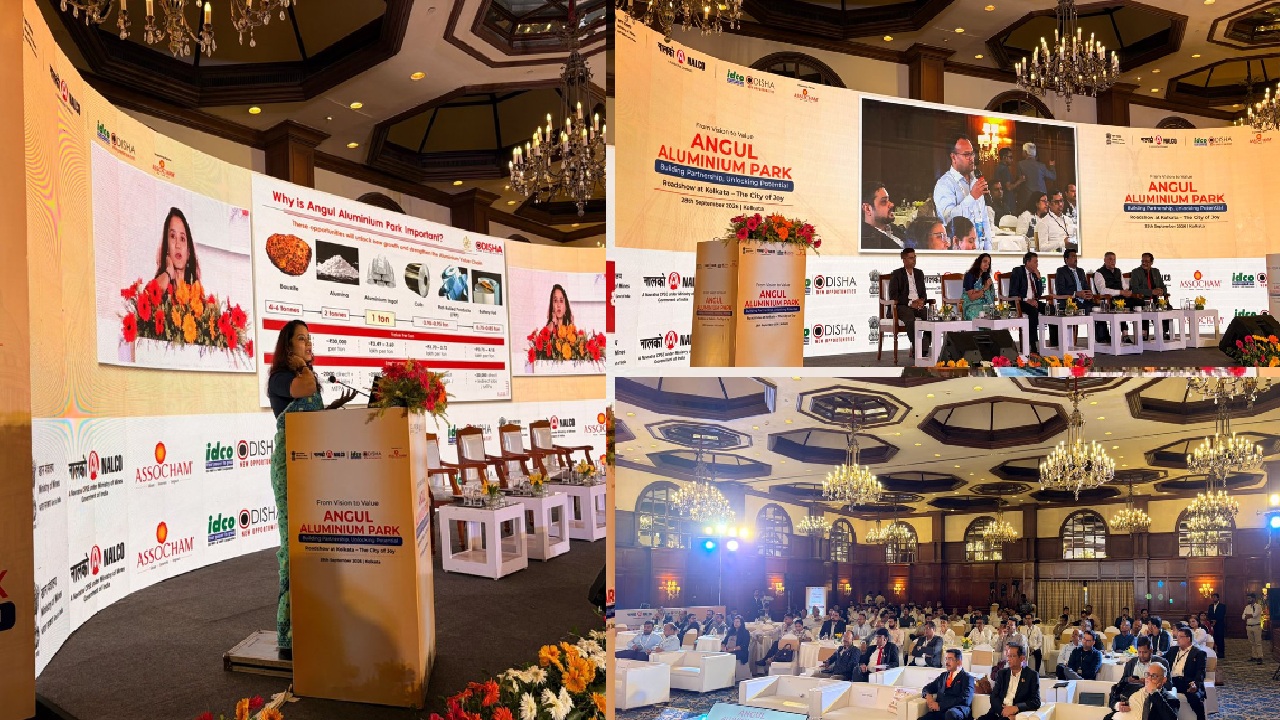
As India’s top aluminium producer, Odisha stands to bear the brunt of the tariff on this sector. In 2023–24, India shipped aluminium worth USD 890 million to the US, with companies such as NALCO, Vedanta Aluminium, and Hindalco operating major plants in the state. Higher duties could drive up costs for US buyers, making Odisha’s aluminium less attractive.
Petroleum products are another critical area. Odisha exported USD 939 million worth to the US last year. These shipments are now equally exposed to the new trade barrier.
Minerals and processed ores—while often finding multiple international markets—still face a potential squeeze, especially where US demand has been stable and high-value.
Sectors Less Vulnerable but Still at Risk
Odisha’s iron and steel exports to the US are comparatively limited, offering some cushion. However, when aggregated with losses from marine, metals, petroleum, and chemical products, the total economic impact could be substantial.
Industry insiders caution that exporters will now need to explore alternative geographies—Europe, East Asia, and the Middle East—to prevent a steep drop in revenues.
Strategic Concerns: From Revenue to Competitiveness
The concern goes beyond the immediate fiscal hit. Aluminium producers risk scaling back operations if US demand declines, potentially affecting employment. Shrimp exporters fear ceding ground to rival nations like Vietnam or Ecuador, whose goods face lighter duties.
Losing ground in a premium market like the US could also have branding and trust implications for Odisha’s exporters, making re-entry into the market more difficult in future.
The Way Forward: Diversification and Diplomacy
Experts suggest a dual-track response—government-to-government negotiations with Washington to seek relief or phased implementation, alongside aggressive market diversification. Incentives for exporters, better logistics infrastructure, and targeted marketing campaigns in emerging markets could soften the blow.
At the policy level, Odisha may need to strengthen its export facilitation programs, align with central trade strategies, and explore free trade agreements that reduce exposure to sudden tariff shocks.
A Test of Resilience
The Trump administration’s steep tariff decision has injected fresh uncertainty into Odisha’s trade outlook. For a state that aims to scale exports to ₹3.5 lakh crore by 2026–27, the road ahead will demand adaptability, agility, and innovative market strategies.
If Odisha can pivot quickly—balancing diplomatic efforts with diversification—it may not only weather this storm but emerge with a more resilient and globally competitive export portfolio. In the shifting sands of global trade, survival will depend not just on what Odisha produces, but how fast it can adapt to the rules of the game.
(With agency inputs)