NATO’s Role in the Russia-Ukraine Conflict
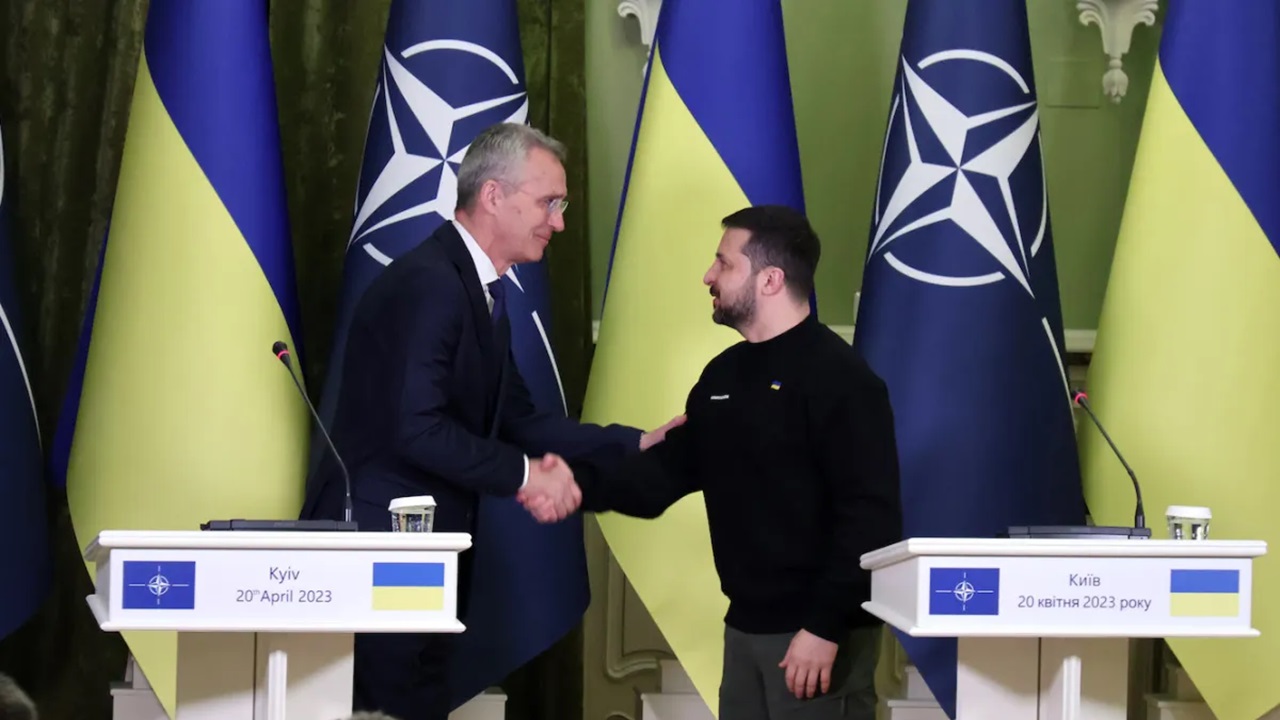
Since the outbreak of Russia’s full-scale invasion in 2022, NATO has stood as both Ukraine’s greatest hope and Russia’s greatest fear. The alliance’s military aid, training, and intelligence sharing have been crucial in enabling Kyiv to resist Moscow’s advances. Yet the central question remains unresolved: will NATO extend its protective shield of membership to Ukraine? For many Western analysts, only that step can secure Ukraine’s sovereignty and bring the war to an end.
General Shirreff’s Hardline Perspective
General Sir Richard Shirreff, former NATO Deputy Supreme Allied Commander, has voiced frustration over recent diplomacy, particularly the Trump-Putin summit. In his words, the U.S. “rolled out the red carpet” for Vladimir Putin instead of holding him accountable for war crimes. He argued bluntly that NATO membership is the “only guarantee” to prevent Russia from prolonging the conflict. According to him, Moscow will never willingly accept such an outcome unless “forced to” through military defeat. In his view, the war remains far from resolution: Ukrainian cities will continue to endure missile strikes, civilians will keep suffering, and diplomacy will struggle to shift realities on the ground.
Zelensky’s Calculated Stance
President Volodymyr Zelensky has consistently underscored NATO as the ultimate safeguard for Ukraine. In a recent interview, he even entertained a controversial idea: placing territories still under Kyiv’s control under NATO’s umbrella, while leaving occupied regions to be resolved diplomatically. Yet he was clear—such an arrangement would only make sense if NATO first recognized Ukraine’s borders in full. Anything less, he warned, would amount to conceding Ukrainian land to Russia. For Zelensky, ceasefires without real guarantees are “too dangerous,” as Russia has repeatedly violated past agreements.
Prospects for Ending the War
The possibility of a West German-style model—admitting a divided Ukraine into NATO—has been discussed in Western policy circles, but no serious proposal has reached Kyiv. The obstacles are immense: Russia views NATO expansion as an existential threat, while many NATO members fear direct confrontation with Moscow. Moreover, Putin has given no sign of softening his objectives. From annexing Crimea in 2014 to launching a full-scale invasion in 2022, his vision of subjugating Ukraine has only grown bolder. The notion of him tolerating even partial Ukrainian NATO membership is, for now, unimaginable.
Diplomatic Maneuvers and Harsh Realities
Zelensky continues to present himself as constructive, signaling openness to dialogue with Trump’s team and expressing willingness to explore difficult compromises. However, his repeated emphasis is that “without NATO, it’s not real independence.” Ceasefires, territorial concessions, or temporary security guarantees may only pause the violence without removing the threat. Meanwhile, Russia maintains pressure through relentless drone and missile strikes, ensuring that the so-called “hot phase” of the war remains very much alive.
The Road Ahead
As things stand, Ukraine’s NATO aspirations and Russia’s imperial ambitions remain fundamentally incompatible. Analysts like General Shirreff argue that only Russia’s decisive battlefield defeat could force a breakthrough. Yet that outcome is distant, and the international community remains divided on how far to go in confronting Moscow. NATO’s hesitancy, Washington’s shifting policy, and Putin’s intransigence mean the war is likely to grind on. What is clear, however, is that for Ukraine, genuine peace and independence will remain elusive until a lasting security guarantee is secured—and in Kyiv’s eyes, that guarantee can only come from NATO.
(With agency inputs)