A War Grinding into Its Third Year
The war in Ukraine, now in its fourth calendar year, has entrenched itself as one of Europe’s most destructive conflicts since World War II. Russia’s full-scale invasion in February 2022, following years of tension after the annexation of Crimea in 2014, has left cities in ruins, displaced millions, and taken hundreds of thousands of lives. Despite Ukraine’s resistance and Western military aid, Moscow continues to hold roughly one-fifth of Ukrainian territory.
Diplomatic overtures have come and gone with little progress. But the first face-to-face summit between Vladimir Putin and Donald Trump in Alaska has revived speculation about whether a negotiated settlement is within reach — and what compromises either side might consider acceptable.
Moscow’s Core Demands
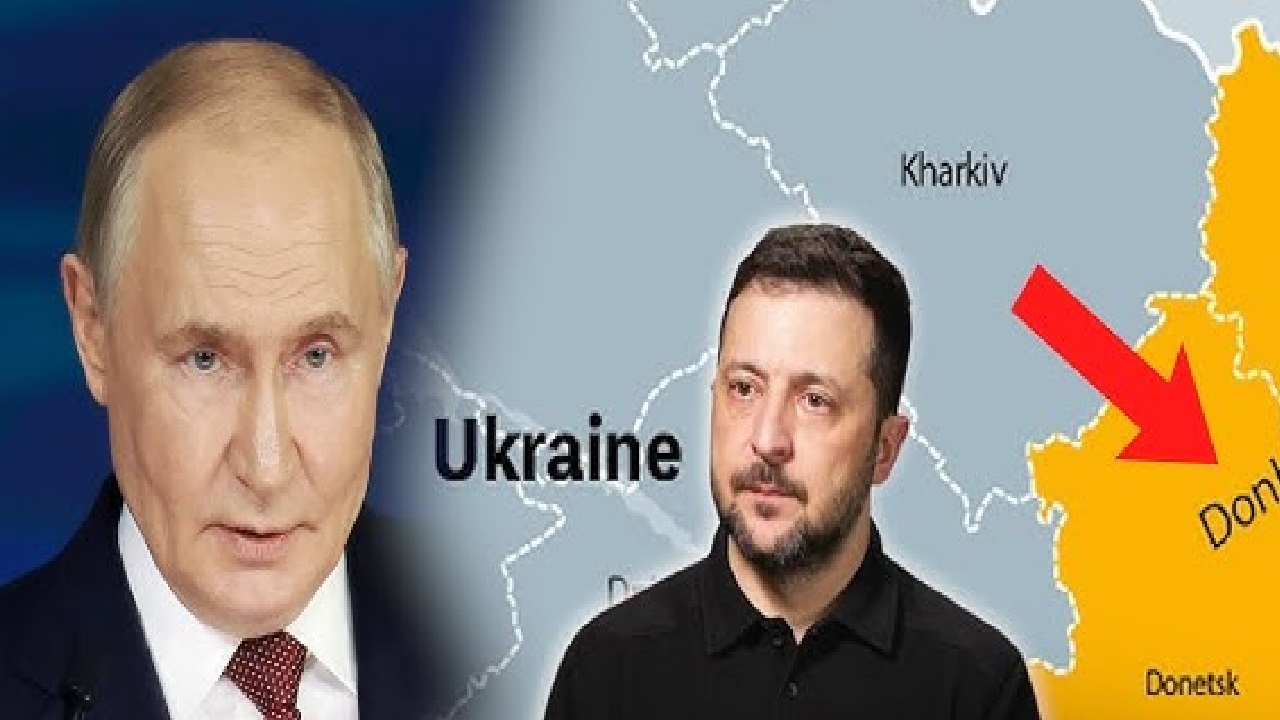
According to three sources familiar with Kremlin thinking, Putin’s proposal hinges on three red lines: Ukraine must cede the entire Donbas region, renounce NATO membership, and pledge to keep all Western troops outside its borders.
The Russian president, they say, is prepared to “freeze” front lines in the southern regions of Zaporizhzhia and Kherson, halting further territorial advances in exchange for recognition of Moscow’s hold there. While Russia currently controls about 88% of Donbas and nearly three-quarters of Zaporizhzhia and Kherson, it has offered to relinquish small occupied pockets in Kharkiv, Sumy, and Dnipropetrovsk.
Equally central to Moscow’s conditions is a legally binding NATO commitment to halt eastward expansion and impose limits on Ukraine’s armed forces. Any peacekeeping deployment involving Western soldiers, the Kremlin insists, would be categorically unacceptable.
The Trump Factor
At their three-hour closed-door meeting in Anchorage, Putin and Trump spent nearly the entire session on Ukraine. Speaking afterward, both struck cautious notes about “opening the road to peace,” though neither divulged detail.
Trump, eager to cast himself as a peacemaker, has promised to end the “bloodbath” and hinted at arranging a trilateral summit involving Putin, Ukrainian President Volodymyr Zelensky, and himself. “I believe Vladimir Putin wants to see it ended,” Trump declared in Washington days later.
Behind the scenes, Trump’s envoy Steve Witkoff reportedly played a pivotal role in preparing the talks, with Kremlin aide Yuri Ushakov facilitating back-channel discussions earlier this month.
Ukraine’s Position: No Concessions on Sovereignty
Kyiv has so far rejected Moscow’s offer as another attempt to secure territorial gains through coercion. Zelensky has repeatedly insisted that Ukraine will not withdraw from internationally recognized land, describing Donbas as the nation’s “fortress” that prevents Russia from pushing deeper into the country.
Ukraine’s constitution enshrines NATO membership as a strategic goal, something Zelensky’s government regards as its only genuine security guarantee. “It is not for Russia to decide whether we join NATO,” he told reporters this week.
Western Responses: Caution and Skepticism
The White House and NATO have not commented directly on the proposals, while European leaders remain wary of Putin’s motives. Britain, France, and Germany have voiced doubts about the Kremlin’s sincerity, warning that Russia could use negotiations to regroup militarily.
Analysts, too, are skeptical. Samuel Charap of RAND argued that “peace” on such terms is politically impossible for Kyiv and could be more about optics for Trump than genuine compromise. “The only way to test Moscow’s seriousness is through structured negotiations at the working level,” he said.
A Calculated Concession or a Tactical Pause?
The Kremlin’s latest offer does represent a shift from Putin’s earlier demand that Ukraine surrender all four regions Moscow claims to have annexed — Donetsk, Luhansk, Kherson, and Zaporizhzhia. Yet by focusing on Donbas and freezing southern front lines, Russia would still secure much of what it sought at the outset: a weakened, neutral Ukraine unable to fully integrate with the West.
For Putin, the calculus is not purely military. Sources close to the Kremlin acknowledge Russia’s economic strains, compounded by sanctions and the high cost of sustaining the war. A frozen conflict that locks in territorial control without further escalation could provide relief while cementing Moscow’s leverage.
Uncertain Path Forward
Despite renewed diplomatic maneuvering, the obstacles remain formidable. Zelensky faces domestic and constitutional limits that prevent ceding territory. Russia, meanwhile, wants Western recognition of its conquests — something Washington and Brussels have repeatedly ruled out.
Complicating matters further is Putin’s questioning of Zelensky’s legitimacy, given that Ukraine postponed presidential elections due to wartime conditions. Moscow has hinted it may refuse to negotiate with him at all.
Between Peace and Prolonged War
The Alaskan summit has opened the first real discussion of concrete terms since the Istanbul talks collapsed in 2022. Yet the gulf between Moscow’s demands and Kyiv’s red lines remains vast. For Ukraine, surrendering Donbas would be an existential defeat. For Russia, neutrality and NATO’s retreat are non-negotiable.
If negotiations stall, the war risks dragging on in stalemate, exacting further human and economic costs. But if carefully managed, this moment could also provide a narrow window to test whether Putin’s signals are genuine.
Ultimately, any resolution will require compromise, security guarantees, and international oversight. Without that, the choices remain starkly binary, as one Kremlin source put it: “There are two choices — war or peace. If there is no peace, then there is more war.”
(With agency inputs)