



Odisha’s Resilience Against Nature’s Wrath
Odisha is no stranger to nature’s fury. Year after year, the state faces recurring challenges in the form of cyclones, torrential rains, floods, and low-pressure systems emerging from the Bay of Bengal. Over time, however, Odisha has honed its disaster management mechanisms, building one of the country’s most robust early warning and response frameworks. With its preparedness tested repeatedly, the state has developed an impressive ability to balance precaution with public reassurance.
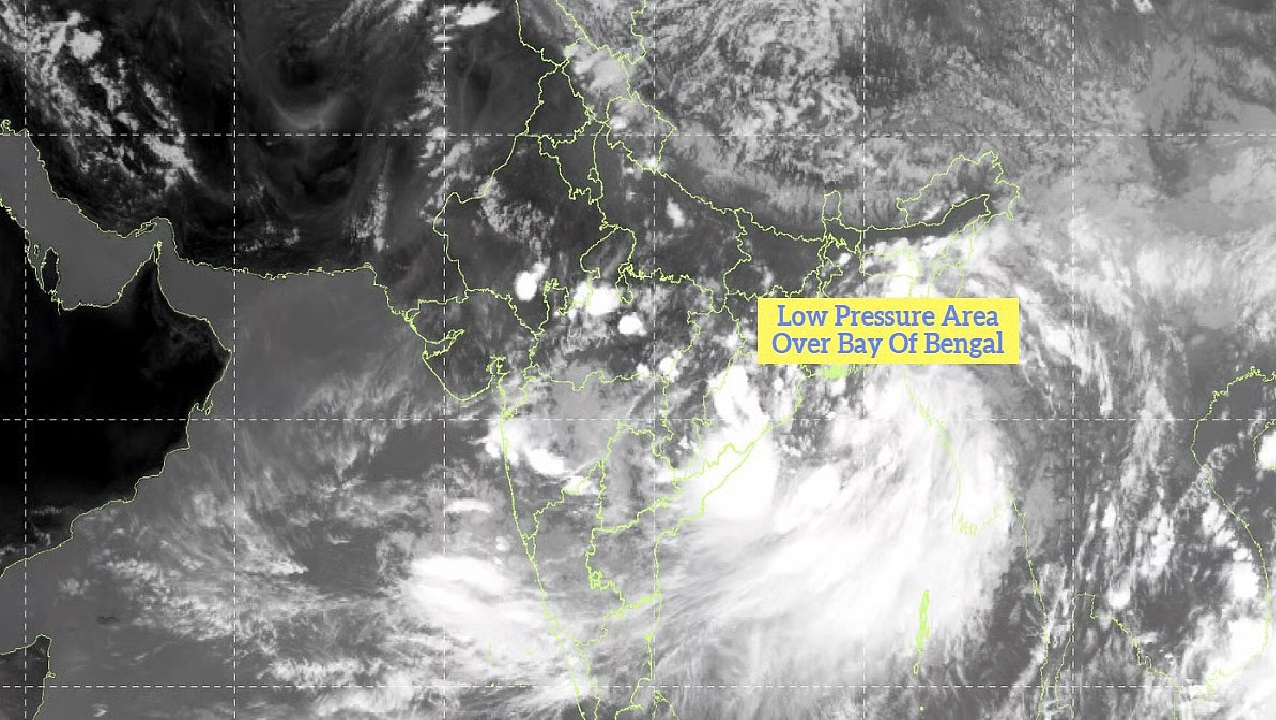
Now, yet again, the machinery is in motion as the India Meteorological Department (IMD) has warned of a new low-pressure area expected to intensify into a depression.
Weather System Brewing Over Bay of Bengal
According to the IMD’s Bhubaneswar centre, the disturbance took shape on Thursday evening under the influence of an upper air cyclonic circulation. Meteorologists expect it to strengthen into a depression by September 26 and cross the south Odisha–north Andhra Pradesh coast the following morning. Heavy rainfall and gusty winds are anticipated across several districts as the system makes landfall.
Districts Under High Alert
Responding to the forecast, Special Relief Commissioner (SRC) Deoranjan Kumar Singh convened a video conference with district collectors of southern and coastal regions. Eighteen districts have been placed on alert, with Koraput and Malkangiri projected to bear the brunt of extreme downpours. Collectors in these districts, along with Nabarangpur, have cancelled all employee leave and directed staff to remain at their posts for immediate response.
Other districts, including Rayagada, Gajapati, Kalahandi, Ganjam, Puri, Khurda, Jagatsinghpur, Cuttack, Kendrapara, Balasore, and Nuapada, have also been instructed to stay fully prepared for possible emergencies.
Emergency Forces Positioned
To strengthen preparedness, Odisha Disaster Rapid Action Force (ODRAF) units and Fire Services teams have been deployed in vulnerable areas. SRC Singh urged officials to create awareness among local communities and advised citizens to remain calm, assuring that the administration is monitoring developments closely. “There is no need to panic, but vigilance is essential,” he emphasized.
Reservoirs and Flood Control Measures
Concerns over flooding often accompany heavy rainfall warnings. However, Chief Engineer of the Water Resources Department, C.S. Padhi, offered some reassurance. Reservoirs in southern Odisha, he explained, are only half-filled and can absorb significant inflows. The Hirakud dam, though nearly full at 529.15 feet against a full reservoir level of 630 feet, is being carefully managed. To release pressure, 20 sluice gates have been opened, with approximately six lakh cusecs of water expected to flow downstream through the Mundali barrage near Cuttack.
Officials continue to track river levels, particularly along the Mahanadi, to ensure early detection of any potential flooding scenario.
Government’s Appeal to Citizens
Authorities have appealed to the public to follow advisories, avoid unnecessary travel, and stay away from swollen rivers and low-lying areas. Local administrations have been asked to prepare shelters, stock relief materials, and ready evacuation plans should the need arise.
Preparedness in the Face of Uncertainty
While the brewing system in the Bay of Bengal poses a serious weather threat, Odisha’s proactive measures underscore the state’s growing resilience. By activating its disaster response teams, tightening coordination across districts, and managing water reservoirs strategically, the state has signaled that it is ready to minimize damage.
For citizens, the message is clear: remain alert but not alarmed. Odisha’s disaster management framework has repeatedly proven effective in past crises, and with communities and government working in tandem, the state is better positioned than ever to withstand the challenges of nature’s unpredictability.
(With agency inputs)