A Region at the Heart of Contest
For decades, Pakistan-Occupied Kashmir (PoK) has been a fault line in the India-Pakistan equation. While New Delhi insists the territory remains an integral part of India under illegal occupation, Islamabad uses it as both a political card and a buffer in its domestic politics. Yet today, the loudest voices are not external but internal. The simmering frustration of PoK’s residents has burst into the open, exposing deep cracks in Pakistan’s governance of the disputed region.
The Call for Shutdown
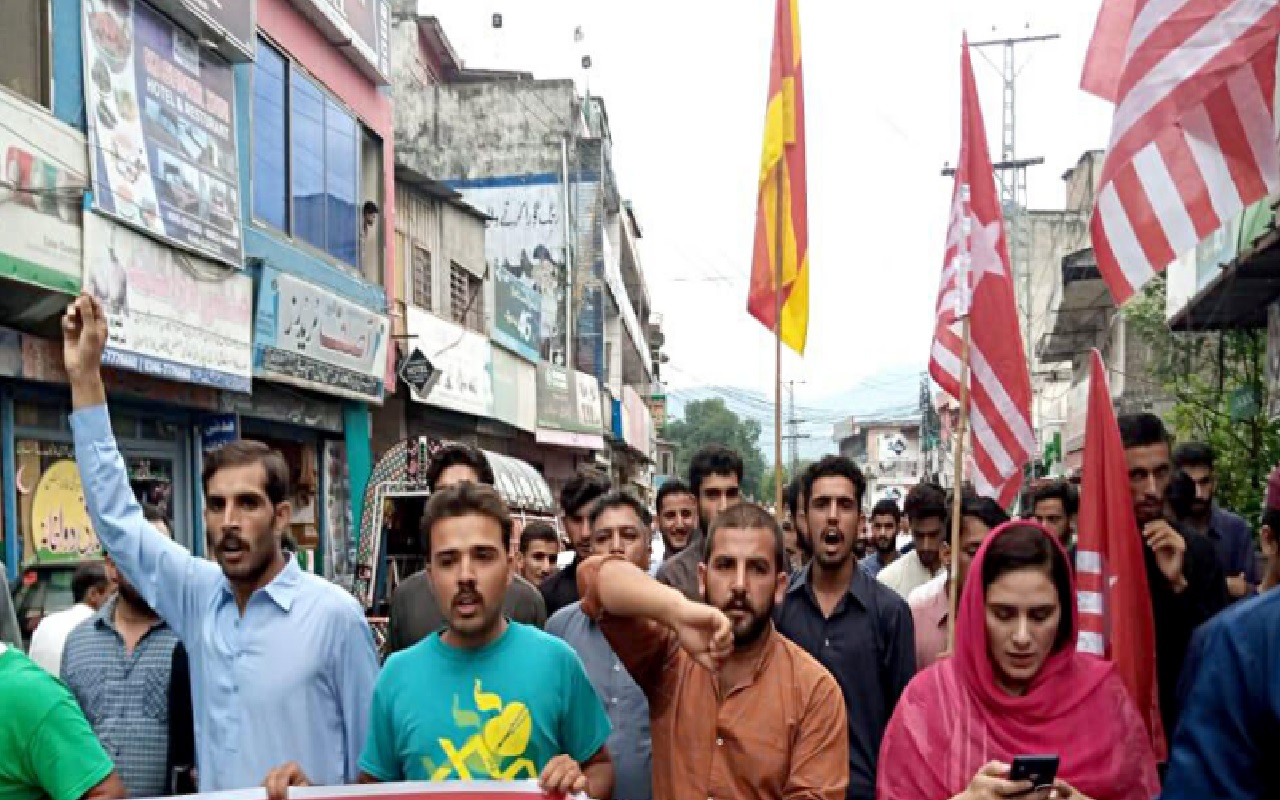
On September 29, the Awami Action Committee (AAC), a coalition of local civic and political groups, launched a sweeping “shutter-down and wheel-jam” strike across PoK. It is one of the largest protests calls the region has seen in recent memory, drawing thousands onto the streets of Muzaffarabad and other towns. The movement stems from long-standing grievances: economic exploitation, political underrepresentation, and unkept promises from Islamabad.
The AAC’s charter of 38 demands outlines structural reforms, including the elimination of 12 legislative seats in the PoK assembly reserved for Kashmiri refugees living in Pakistan. Locals argue these seats tilt the balance in Islamabad’s favour and stifle genuine representation. Other key demands include subsidies on flour and electricity, renegotiation of hydropower projects to benefit local communities, and fairer billing linked to the Mangla Dam, which generates power from PoK’s resources but offers locals little relief.
Voices from the Ground
“This is not a rebellion against the state, but a struggle for dignity,” said Shaukat Nawaz Mir, one of AAC’s leaders, addressing crowds in Muzaffarabad. He insisted that the movement is peaceful but uncompromising: “Our rights have been ignored for 70 years. Either deliver on them or face our defiance.” His words capture the anger of a population that feels plundered by Islamabad while struggling with rising inflation and basic shortages.
Islamabad’s Response: Force over Dialogue
The government of Prime Minister Shehbaz Sharif has chosen to respond with force. Internet services were suspended from midnight before the protest to limit mobilisation. Thousands of troops and additional police units from Punjab and Islamabad were deployed, with convoys patrolling sensitive areas. Roads leading into major towns were sealed, while marketplaces and civic spaces saw heavy surveillance.
Marathon talks between the AAC, the PoK administration, and federal representatives collapsed after 13 hours. Negotiators refused to yield on the abolition of refugee assembly seats, a demand Islamabad considered non-negotiable. District Magistrate Mudasser Farooq warned against disruptions, insisting that “peace is a collective responsibility.” But such official statements have done little to defuse tension, with many seeing the security-heavy response as confirmation of Islamabad’s unwillingness to accommodate PoK’s aspirations.
A Cycle of Unrest
The current protests are not isolated. They follow a string of demonstrations in recent years over subsidies, electricity pricing, and constitutional reforms. In May 2023, protests erupted after Pakistan slashed wheat subsidies and raised power tariffs, despite PoK producing cheap electricity through the Mangla Dam. A year earlier, in 2022, anger flared against the proposed 15th amendment that aimed to alter PoK’s constitutional status. Then, too, highways were blocked, tyres burned, and slogans for freedom from Pakistan rang out.
India has repeatedly highlighted these protests as the natural outcome of Islamabad’s “systemic exploitation” of the occupied territory. For locals, however, the struggle is less about international narratives and more about the immediate issues of livelihood, political dignity, and fair governance.
International Ripples
The unrest is unlikely to remain confined within PoK’s valleys. Large diaspora communities in the United Kingdom, United States, and Europe have announced solidarity demonstrations, hoping to draw global attention to the plight of PoK’s residents. This internationalisation could place further pressure on Islamabad at a time when it already faces economic crises and political volatility.
A Test of Governance and Legitimacy
The uprising in PoK is more than a protest—it is a litmus test for Pakistan’s legitimacy in the region it claims to administer. By deploying soldiers instead of solutions, Islamabad risks deepening alienation and fuelling long-term instability. The AAC’s demands are not radical but rooted in fundamental governance: fair representation, affordable essentials, and equitable use of local resources. Meeting these demands would not only restore a measure of trust but also ease tensions that threaten to spiral out of control.
For Pakistan, the choice is stark. Either continue down the path of suppression and risk losing moral and political ground, or embrace reform and allow the people of PoK to become genuine stakeholders in their own future. The protests of September 29 may yet become a turning point—one that determines whether Islamabad holds on through coercion or earns legitimacy through consent.
(With agency inputs)