A New Era of Electoral Modernization
Over the past few years, the Election Commission of India (ECI) has steadily transformed how India votes — from digital monitoring and transparent funding systems to stricter candidate disclosures. Now, in its latest stride toward voter-centric governance, the poll body has announced 17 sweeping reforms ahead of the Bihar Assembly elections, with the goal of making the democratic process more transparent, accessible, and technologically efficient.
These initiatives, piloted in Bihar, are set to become templates for future elections across India, marking yet another milestone in the country’s evolving electoral landscape.
Colour Comes to the Ballot: EVMs Get a Makeover
For the first time in India’s election history, Electronic Voting Machine (EVM) ballot papers will feature coloured photographs of candidates. Until now, the slips pasted atop EVMs displayed names and symbols in monochrome, which often caused confusion — especially for first-time voters or those in rural areas.
Under the new design, a candidate’s photograph will occupy three-fourths of the image space, ensuring clear visibility. The serial numbers and the NOTA option will appear in bold Indian numerals, improving readability. Additionally, all names will be printed in larger fonts for uniformity.
In another aesthetic change, the ballot paper for Assembly polls will be printed on pink sheets, making it distinct and easy to handle. These enhancements, the ECI said, aim to ensure that no voter leaves the booth uncertain about whom they are choosing.
Streamlining Voter Experience: Accessibility at Every Step
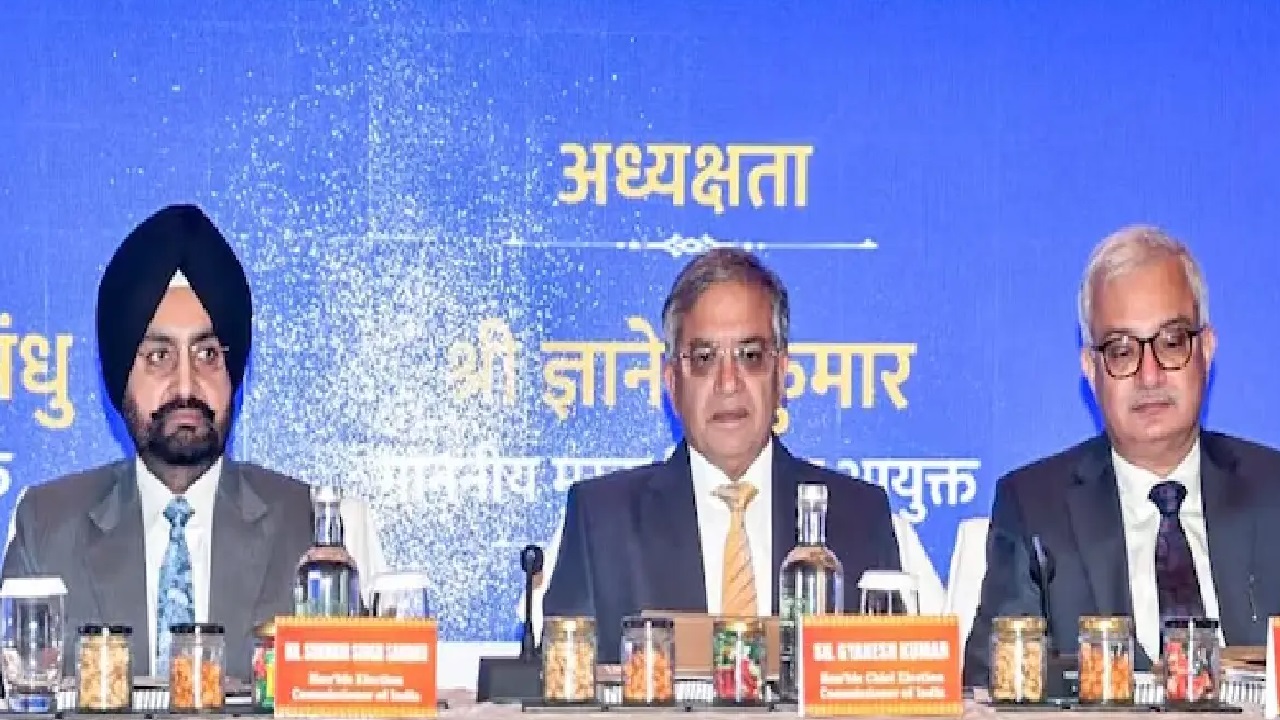
Chief Election Commissioner Gyanesh Kumar, during a press briefing in Patna, highlighted that Bihar will lead the nation in adopting these reforms — both in polling and counting processes.
A major change is the reduction of voters per booth from 1,500 to 1,200, a move designed to cut down waiting time and crowding. This shift has added 12,817 new polling stations, increasing Bihar’s total to 90,712.
The poll body has also introduced a Standard Operating Procedure (SOP) ensuring that EPIC (Elector Photo Identity Cards) is delivered within 15 days of voter registration, reflecting a commitment to administrative efficiency.
In a practical touch, mobile phone deposit counters will now be set up outside every polling booth — a measure to prevent misuse or recording inside voting areas, while ensuring citizens have a secure place to leave their devices.
Technology and Transparency: Webcasting Every Booth
One of the most significant upgrades is 100% webcasting coverage across all polling stations in Bihar. This real-time monitoring system aims to prevent malpractice and reinforce voter confidence in the fairness of the process.
Additionally, booth-level officials will carry official ID cards, helping voters easily identify authorized personnel. The move, though simple, addresses long-standing concerns about impersonation or confusion among voters on polling day.
Counting Reforms and Procedural Clarity
The ECI has also streamlined the vote counting protocol. Earlier, any mismatch between Form 17C (the polling station’s vote record) and the EVM counting unit necessitated a full recount of all corresponding VVPATs (Voter Verifiable Paper Audit Trails). The revised guideline limits recounts to specific discrepancies, thereby saving time without compromising transparency.
Moreover, postal ballots will now be counted before the last two rounds of EVM counting, ensuring early clarity on trends and minimizing delays in result declarations.
Bihar’s Big Test Before Nationwide Rollout
With its 243 Assembly constituencies — including two reserved for Scheduled Tribes and 38 for Scheduled Castes — Bihar presents a complex testing ground for electoral reform. The Special Intensive Revision (SIR) of voter rolls, launched in June 2025, was completed on schedule, ensuring a clean and updated voter list.
The CEC confirmed that elections will conclude before November 22, when the current Assembly’s term ends. Political parties, after consultations, have agreed that polls should be held soon after Chhath Puja, Bihar’s most celebrated festival.
While the reforms have been broadly welcomed, they have also sparked political debate, with some parties questioning the timing and others praising the ECI’s assertive modernization drive.
Reinventing Democracy: Lessons Beyond Bihar
The 17 new reforms represent more than administrative tweaks — they reflect India’s democratic maturity and the ECI’s growing emphasis on citizen convenience and institutional transparency. From visual clarity on ballots to faster card delivery, these steps collectively modernize the voting ecosystem without diluting its integrity.
As Bihar becomes the testing ground for these innovations, the success of these initiatives could reshape how over 900 million Indians engage with democracy in future elections.
Making Every Vote Count, Clearly and Confidently
Elections in India are often described as a festival of democracy, but festivals evolve — and so must their rituals. The Election Commission’s new reforms acknowledge this evolution by merging technology, accessibility, and accountability. If effectively implemented, these measures can redefine the voter experience, ensuring that every Indian — whether in Patna or Pune, Gaya or Guwahati — can cast a vote that is visible, verifiable, and valued.
In the grand story of India’s democracy, Bihar’s ballot may well become the blueprint for the nation’s future.
(With agency inputs)