


A Legacy of Literary Greatness
Since its inception in 1901, the Nobel Prize in Literature has celebrated writers whose works have profoundly shaped human thought and emotion. Founded by Alfred Nobel, the Swedish inventor of dynamite, the award honors those whose words illuminate the human condition — from poets and philosophers to novelists and playwrights. Over the decades, laureates such as Toni Morrison, Gabriel García Márquez, and Kazuo Ishiguro have transformed world literature through their creativity and conscience.
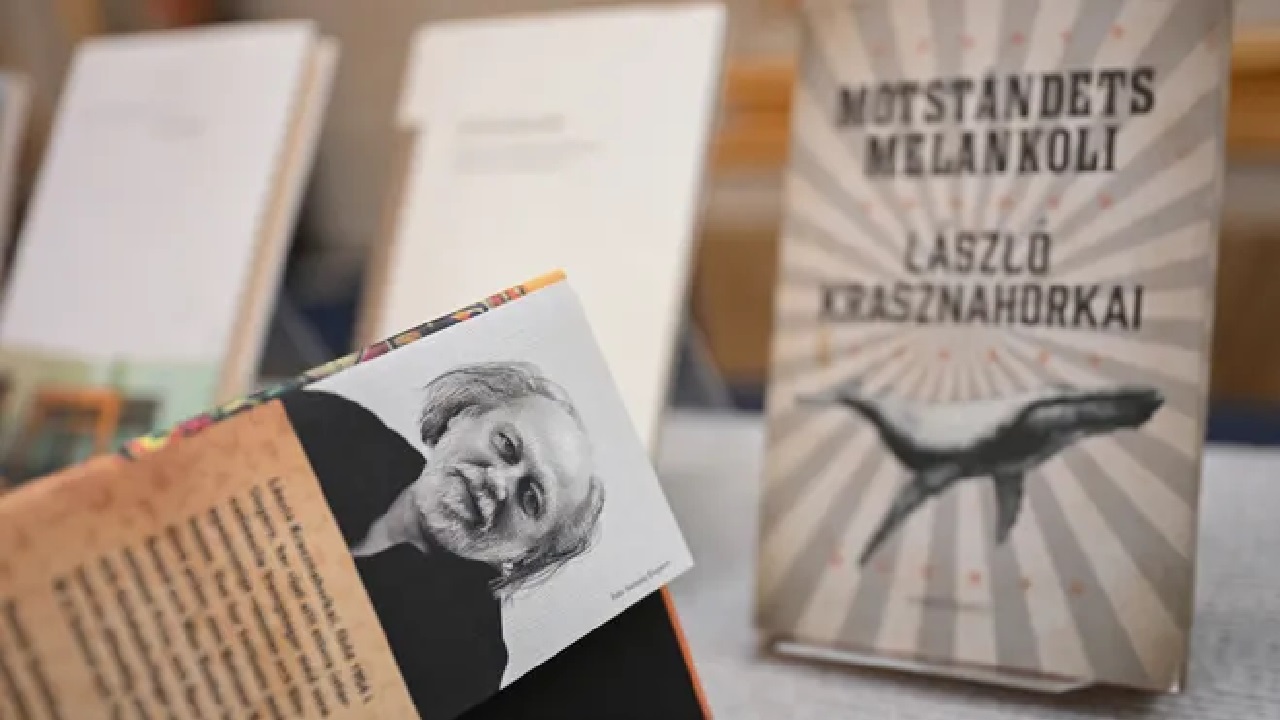
This year, the tradition continues as Hungarian novelist László Krasznahorkai receives the 2025 Nobel Prize in Literature, marking a milestone for Central European storytelling.
A Visionary Voice Amid Chaos
The Swedish Academy announced that Krasznahorkai was chosen “for his compelling and visionary oeuvre that, in the midst of apocalyptic terror, reaffirms the power of art.” He will receive 11 million Swedish kronor ($1.2 million) as part of the award.
Born in 1954 in Gyula, a small town in south-eastern Hungary near the Romanian border, Krasznahorkai emerged as a leading voice of postmodern European fiction. His debut novel, Satantango (1985), captured the decay and moral disarray of a crumbling village — a metaphor for the collapse of ideology in late 20th-century Eastern Europe. The book’s haunting prose and dense narrative style made him a literary phenomenon in Hungary and later worldwide.
Critics describe him as an “epic writer in the Central European tradition,” a lineage that includes Franz Kafka and Thomas Bernhard, known for exploring the absurd, the grotesque, and the existential. His later work, Herscht 07769, has been hailed as a profound depiction of contemporary German society, blending realism with visionary allegory.
The Nobel Tradition of Profound Storytellers
Krasznahorkai joins a distinguished list of authors whose works confront history, identity, and the human psyche. The 2024 Nobel laureate, Han Kang of South Korea, was honored for her “intense poetic prose” examining trauma and memory. In earlier years, Svetlana Alexievich received the prize for documenting the voices of Soviet citizens under authoritarian regimes, while Toni Morrison was celebrated for her exploration of racial identity and moral endurance in America.
The Swedish Academy has also been lauded for recognizing influential women writers in recent years, including Annie Ernaux, Louise Glück, and Olga Tokarczuk — each contributing unique perspectives to the global literary landscape.
Art as a Defiance of Despair
For Krasznahorkai, art is both a mirror and a rebellion — a means to confront the despair that shadows modern life. His dense, winding sentences and apocalyptic imagery create a literary world where chaos and beauty coexist. Through his storytelling, he challenges readers to find meaning amid disorder, reaffirming literature’s timeless power to preserve humanity in dark times.
As the Nobel Committee’s citation suggests, Laszlo Krasznahorkai’s award is not only a recognition of a singular literary voice but also a testament to the enduring strength of art against the disquiet of existence — a reminder that even in the bleakest moments, language can still save us.
(With agency inputs)