A Republican Leader’s Remark Ignites Outrage
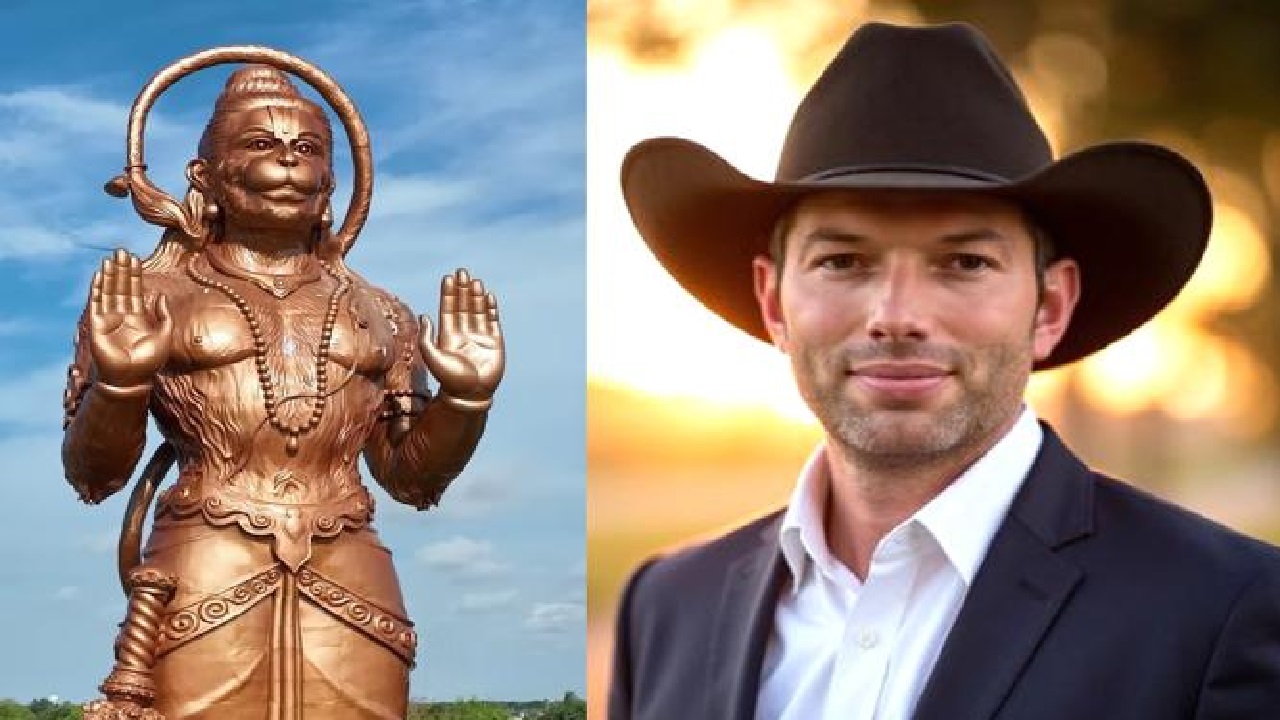
In Texas, a 90-foot statue of the Hindu deity Hanuman—dubbed the ‘Statue of Union’—has become the center of a heated debate over faith, identity, and freedom. The controversy erupted when Texas Republican Alexander Duncan, a Senate candidate, posted a video of the monument on X, calling it a “false statue of a false Hindu God” and asserting that the United States is “a Christian nation.” Citing biblical scripture, he questioned the statue’s presence, triggering immediate backlash from Indian-American communities and faith-based organizations.
Backlash and Legal Concerns
The Hindu American Foundation (HAF) condemned Duncan’s remarks as “anti-Hindu and inflammatory” and formally reported the incident to the Texas GOP, urging the party to hold its candidate accountable. Social media users highlighted that the U.S. Constitution guarantees freedom of religion under the First Amendment, which protects all faiths from government discrimination. Many pointed to the historical and cultural significance of Hindu texts, emphasizing that these ancient traditions predate Christianity and have influenced religious thought globally.
The Statue of Union: Symbol and Significance
Unveiled in August 2024 at the Shri Ashtalakshmi Temple in Sugar Land, Texas, the Statue of Union is one of the tallest Hindu monuments in the United States. Conceived by spiritual leader Sri Chinnajeeyar Swamiji, the 90-foot Hanuman statue represents devotion, strength, and unity, reflecting centuries of Hindu heritage. Despite its spiritual significance, the monument has faced persistent opposition from segments of conservative Americans, who have labeled it “demonic” or drawn offensive comparisons online.
Political Undertones and Community Tensions
Duncan’s remarks are part of a broader pattern of scrutiny toward Indian-American communities. Last month, Peter Navarro triggered controversy by criticizing Brahmins, feeding perceptions of racialized and religiously biased rhetoric. For many Indian-Americans, the Hanuman statue represents not only faith but also a struggle for recognition and respect in public spaces.
Social Media Reactions: Voices of Defiance
The online response has been swift and diverse. Users reminded Duncan that religious pluralism is a cornerstone of American democracy. Some highlighted the contributions of Hindu Americans to medicine, technology, and civic life, underscoring the harm of marginalizing minority faiths. Entrepreneur Tapesh Yadav, a Republican voter, expressed concern that Duncan’s statements contradict the party’s principles of freedom and opportunity. Others educated the public on the Vedas and Hindu philosophy, emphasizing the religion’s historical depth and global influence.
Broader Implications for Religious Freedom
The episode underscores the tension between personal beliefs and constitutional protections. The Establishment Clause prohibits the government from favoring one religion over others. Critics argue that political leaders leveraging religious identity to marginalize minority faiths threaten American pluralism. Hindu organizations stress that respecting cultural diversity strengthens society rather than undermining it.
Balancing Faith and Freedom
The Hanuman statue controversy highlights how faith and freedom intersect in a multicultural society. While political rhetoric may inflame tensions, the statue itself embodies devotion, heritage, and community pride. Constructive dialogue and mutual respect are essential to bridging divides, ensuring that all religious communities—regardless of size or origin—can coexist without fear or marginalization. For policymakers, the challenge lies in balancing personal beliefs with constitutional commitments to equality, pluralism, and religious freedom.
(With agency inputs)