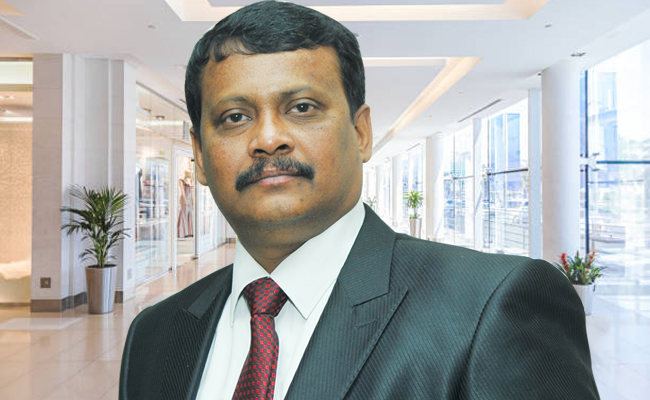



Amar Subramanya’s appointment as Apple’s vice president of AI marks a critical juncture for the company’s AI ambitions. Educated in Bengaluru with a bachelor’s degree from Bangalore University, Subramanya brings over 25 years of experience in large-scale machine learning systems. Known as a “builder-leader,” he has a track record of translating cutting-edge AI research into products that reach hundreds of millions globally, making him uniquely positioned to drive Apple’s late but urgent AI push.
Apple announced on December 1, 2025, that Subramanya will report to Craig Federighi and oversee Apple Foundation Models, machine-learning research, AI infrastructure, search and knowledge, and AI safety and evaluation. He replaces John Giannandrea, who will remain as an adviser until his retirement next spring.
Deep Experience Across Tech Giants
Google Years: Subramanya spent 16 years at Google, including leading work at Google Research and DeepMind-linked projects. He rose to vice president of engineering and played a key role in Gemini Assistant, Google’s flagship conversational AI. His experience spans foundation models, search, Assistant, and AI safety—providing him with a comprehensive understanding of both the opportunities and risks of frontier AI.
Microsoft Stint: In mid-2025, Subramanya joined Microsoft as corporate vice president of AI, reporting to DeepMind co-founder Mustafa Suleyman. He helped integrate advanced models into Copilot, Bing, and other consumer-facing products, gaining hands-on experience in large-scale AI deployment across a broad ecosystem. This role exposed him to rapid iteration cycles, aggressive launches, and tight cloud integration strategies.
Significance of the Appointment
Apple has been perceived as a laggard in visible generative AI capabilities, with rivals like Google and Microsoft moving faster in consumer-facing experiences. Subramanya’s appointment is strategically significant because:
· It strengthens Apple’s AI leadership with someone experienced in both research and product-scale deployment.
· Signals CEO Tim Cook’s intent to accelerate AI integration while preserving Apple’s privacy-first ethos.
· Highlights the growing influence of Indian-origin tech leaders in global AI, underlining India’s role as a talent pipeline for top-tier innovation.
Potential Impact on Apple’s AI Roadmap
Subramanya is expected to bring a sharper focus on foundation models, Siri, and system-wide AI deployment:
Foundation Models and Siri:
· Likely to accelerate the rollout of a truly conversational, context-aware Siri by 2026.
· Could unify AI model stacks across Siri, system features, and apps, reducing fragmentation and improving feature parity with competitors.
· May transform Siri from incremental voice updates into a system-wide assistant integrated with the Apple ecosystem.
Apple Intelligence and Execution:
· Expected to improve delivery timelines for Apple Intelligence 2.0 features, including cross-app actions, in-app automation, and writing tools.
· Could expand hardware support to ensure AI capabilities reach more devices, narrowing the perception gap with rivals.
Infrastructure and Safety:
· Will likely influence expansion of Apple’s training and inference infrastructure, enabling complex models to run partly off-device while preserving privacy.
· Could formalize AI safety and evaluation pipelines, leveraging experience from Google DeepMind and Microsoft to ensure robust deployment.
From Catch-Up to System-Wide AI
Subramanya’s leadership positions Apple to transition from cautious AI experimentation to a coherent, aggressive strategy. By combining privacy, hardware–software integration, and large-scale AI deployment expertise, he could make Siri and Apple Intelligence core organizing layers of the Apple ecosystem. If executed effectively, his tenure may reshape Apple’s AI roadmap from incremental add-ons into a transformative, system-wide upgrade cycle—potentially closing the gap with Google and Microsoft while reinforcing Apple’s unique privacy-first narrative.
(With agency inputs)