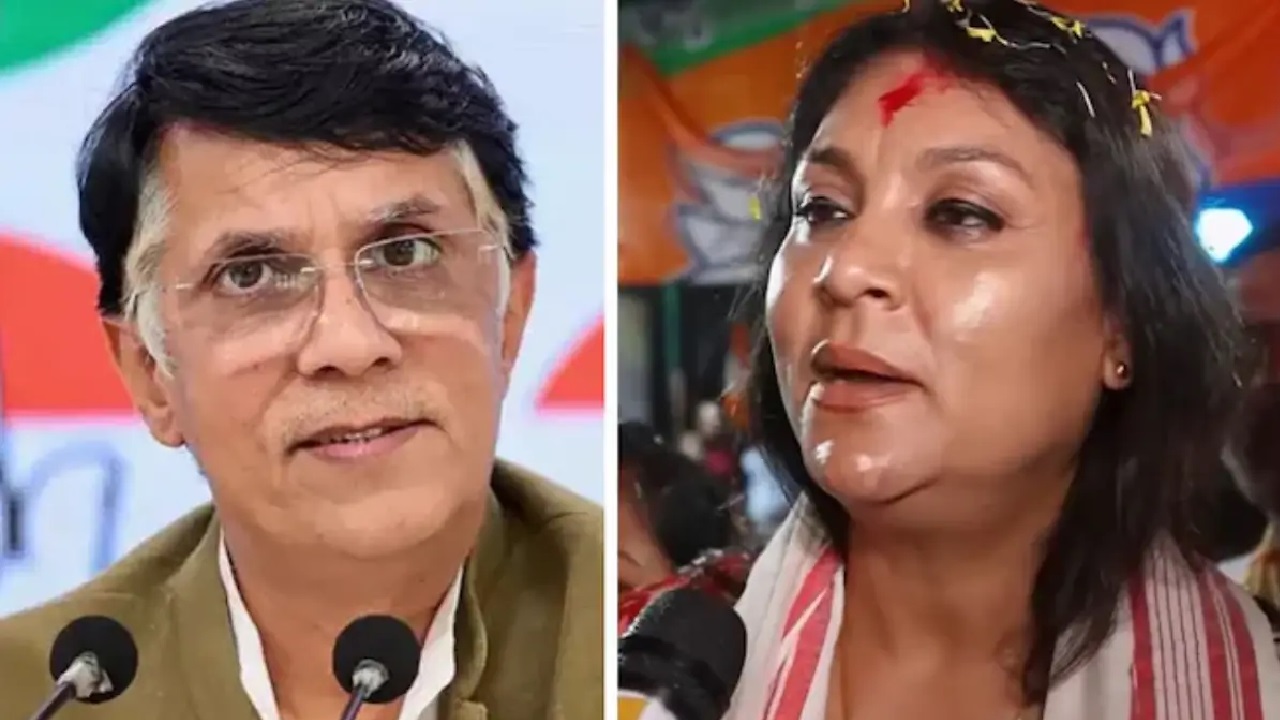
Congress leader Pawan Khera has approached the Telangana High Court seeking anticipatory bail after a case was filed against him by Himanta Biswa Sarma’s wife, Riniki Bhuyan Sharma, over allegations linked to a passport controversy. What began as a political charge has now escalated into a full-blown legal confrontation, with significant implications ahead of the Assam assembly elections.
The Controversy: Allegations and Escalation
The issue erupted after Khera alleged that Riniki Bhuyan Sharma possessed multiple foreign passports and undisclosed overseas assets—claims that, if true, could raise serious questions about compliance with Indian laws and electoral disclosures. He further suggested that these details were not reflected in official affidavits.
The allegations quickly triggered a strong response. Sharma denied the claims, calling them fabricated and misleading, and asserted that she holds only Indian citizenship. Subsequently, a formal complaint was filed, leading to a First Information Report (FIR) against Khera under provisions of the Bharatiya Nyaya Sanhita, including charges such as defamation, forgery, cheating, and criminal conspiracy.
Legal Dimensions: Speech vs Liability
The case now sits at the intersection of political speech and criminal law. Khera’s move for anticipatory bail reflects concerns over possible arrest, especially after reports of police action, including searches at his residence.
Legally, the matter hinges on two key questions: whether the allegations were made with credible evidence, and whether they cross the threshold from political critique into defamatory or criminal conduct. Indian law strictly prohibits dual citizenship and the holding of multiple passports, making the allegations highly sensitive. If proven false, they could invite legal consequences; if substantiated, they could trigger a far more serious inquiry into disclosure norms and legal compliance.
Jurisdiction and Enforcement Questions
An interesting aspect of the case is the choice of jurisdiction. By approaching the Telangana High Court, Khera has raised questions about territorial applicability, given his residence and personal ties to Hyderabad. On the other hand, the complaint originates from Assam, where the alleged defamation is said to have occurred.
The swift response by law enforcement, including the involvement of Assam Police in Delhi, has added another layer to the controversy. Critics argue that such actions reflect political urgency, especially in the run-up to elections, while authorities maintain that due legal process is being followed.
Political Stakes Ahead of Elections
The timing of the controversy is significant. With elections approaching, the passport row has become a high-stakes political tool. For the ruling side, it provides an opportunity to question the credibility and intent of opposition leaders. For the Congress, it represents an attempt to challenge the image of the Chief Minister and raise issues of transparency.
However, without clear documentary backing, such allegations carry risks. Political narratives can quickly shift if claims are perceived as unsubstantiated or exaggerated.
A Test Case for Law and Politics
The unfolding legal battle is more than a personal dispute—it is a test of how India’s legal system navigates politically charged allegations. The outcome of the anticipatory bail plea and subsequent proceedings will shape not only the trajectory of this case but also set a precedent for the limits of political expression.
As the courts weigh evidence against intent, the episode underscores a broader reality: in today’s political landscape, the line between accusation and accountability is increasingly being drawn in courtrooms as much as in campaign arenas.
(With agency inputs)