


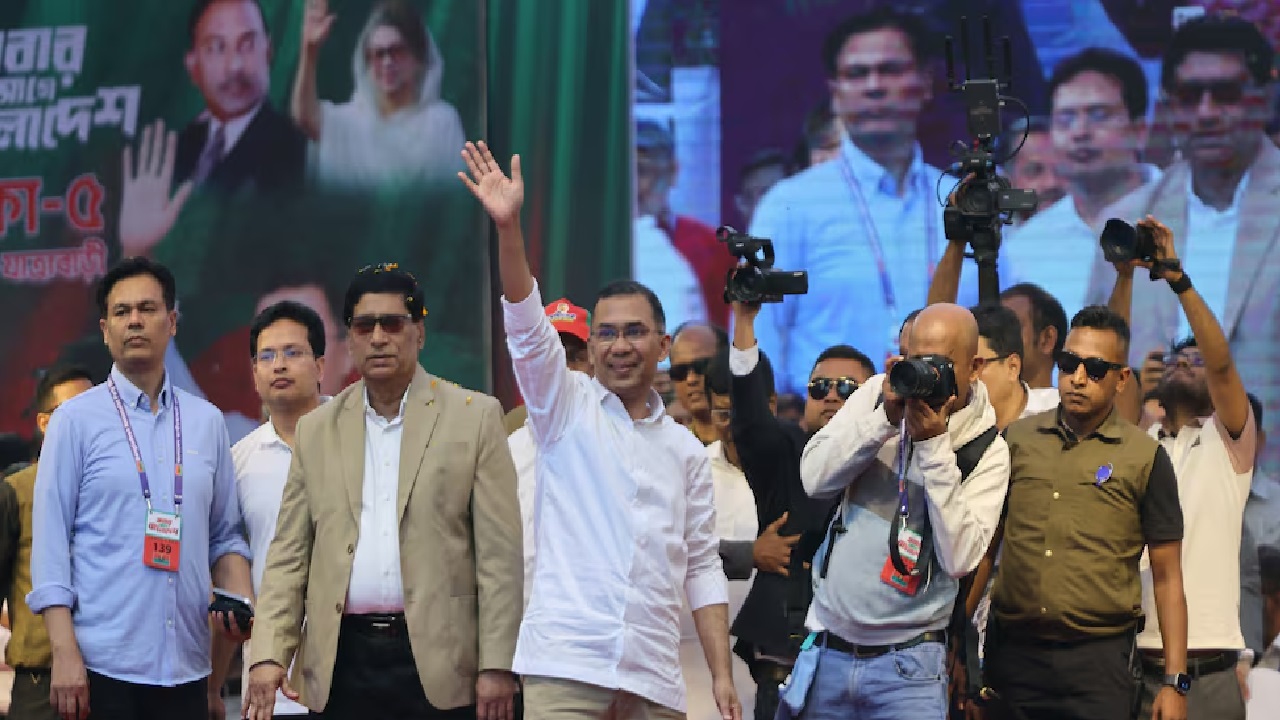
A Nation at the Polls After Political Upheaval
Bangladesh is conducting its first parliamentary election since the August 2024 student-led uprising that forced Prime Minister Sheikh Hasina from office, marking a critical transition for the country’s political order. Voting began on February 12, 2026, under heavy security and the oversight of an interim administration. The election represents not only a contest for power but also a referendum on how Bangladesh will rebuild its democratic institutions following months of turmoil and political restructuring.
Electoral Landscape and Competing Alliances
More than 127 million registered voters—about five million of them first-time participants—are choosing among nearly 2,000 candidates competing for 300 parliamentary seats. The election is being managed by an interim government led by Nobel laureate Muhammad Yunus, who has pledged a transparent process.
The Awami League, once the dominant force in Bangladeshi politics, has been barred after the Election Commission revoked its registration amid allegations of authoritarian governance and violent crackdowns during the 2024 protests. This has left a contest largely between the Bangladesh Nationalist Party (BNP)-led alliance and a coalition spearheaded by Jamaat-e-Islami.
Polling data ahead of voting suggested the BNP holds a modest but clear advantage. Youth unemployment, economic reform, and governance restructuring dominate voter concerns. Simultaneously, citizens are voting in a referendum on an extensive constitutional reform package that proposes term limits for prime ministers and expanded civil rights protections. Supporters view the referendum as foundational to a new political era; critics argue the timeline is rushed.
Could Tarique Rahman Become the Next Prime Minister?
With the Awami League absent from the ballot, BNP leader Tarique Rahman has emerged as the most prominent contender for the premiership. Pre-election surveys have placed him ahead of rivals in public preference, and BNP strategists are confident of securing a parliamentary majority.
However, uncertainty remains. Turnout levels, the influence of undecided voters, and the ability of smaller parties to fragment the vote could all shape the outcome. A decisive BNP victory would likely position Rahman to form the next government. A more fragmented result might prolong interim arrangements or require coalition negotiations.
The broader stakes are significant: a Rahman-led administration could recalibrate Bangladesh’s domestic reforms and foreign relations, particularly with neighboring India, while also facing pressure to maintain stability after years of political confrontation.
Tarique Rahman and the BNP Leadership Legacy
Born in 1965, Tarique Rahman is the son of former President Ziaur Rahman and former Prime Minister Khaleda Zia, placing him at the center of one of Bangladesh’s most influential political families. He joined the BNP in the late 1980s and rose steadily through party ranks, eventually becoming acting chairman in 2018 and formal chairman in 2026 after his mother’s death.
Rahman’s career has been marked by both organizational influence and controversy. He played a role in internal party restructuring during the 1990s and early 2000s, emphasizing grassroots mobilization and research-driven policy discussions. Following corruption allegations and legal battles, he spent years in exile in London, directing party activities from abroad until returning to Bangladesh in late 2025 after the political upheaval that removed Hasina from power.
Now in his early 60s, Rahman seeks to position the BNP as a reform-oriented alternative, emphasizing employment, infrastructure, and inclusive governance. Critics question dynastic politics and past allegations; supporters highlight his experience and political resilience.
A Defining Moment for Bangladesh’s Future
The 2026 parliamentary election stands as a turning point in Bangladesh’s modern history. With the Awami League side-lined and a younger electorate eager for reform, the vote could reshape the country’s political trajectory for years to come.
If the BNP secures a strong mandate, Tarique Rahman may emerge as the central figure in a post-uprising political settlement. Yet regardless of who forms the next government, the deeper challenge lies in restoring institutional trust, ensuring fair governance, and addressing the socio-economic grievances that fueled the 2024 uprising. Bangladesh’s democratic renewal now hinges on whether this election can translate upheaval into stable, accountable leadership.
(With agency inputs)