The Crisis Returns to a Long-Contested Frontier
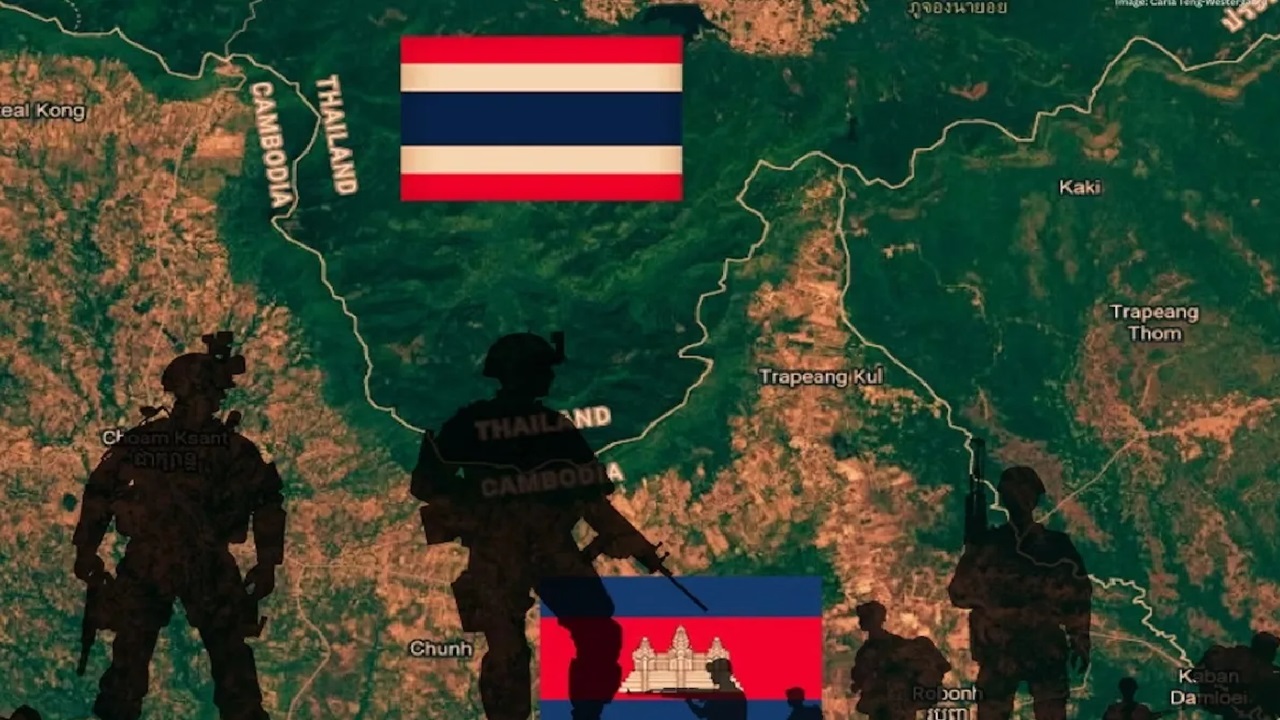
The Thailand–Cambodia border has flared once again, reviving a conflict that has simmered for decades around the rugged terrain of the Preah Vihear Temple. Although the International Court of Justice (ICJ) ruled in 1962 that the ancient sanctuary belonged to Cambodia, ambiguities in old Franco–Siamese treaties left the surrounding land disputed. On 24 July 2025, Thailand’s cross-border airstrikes shattered a fragile equilibrium, thrusting the region back into crisis and triggering mass evacuations on both sides. What followed was not an isolated incident, but an escalation years in the making—compounded by political turmoil, landmine allegations, and reciprocal claims of aggression.
Triggers and Missteps Leading to Armed Escalation
The spark that ignited the crisis dates to May 2025, when a Cambodian soldier was killed in the Emerald Triangle. This was followed by a July landmine blast that injured Thai soldiers, which Bangkok attributed to newly laid Cambodian PMN-2 mines in violation of the Ottawa Treaty. As accusations multiplied—rocket fire, incursions, and leaked phone calls destabilizing Thailand’s domestic politics—border closures and military posturing set the stage for a rapid descent into conflict.
Airstrikes, Artillery Exchanges, and Territorial Standoffs
Thailand’s Operation Yuttha Bodin saw F-16s strike Cambodian 8th and 9th Infantry Division positions, destroying command nodes at Chong an Ma. Over four days, both sides employed artillery, BM-21 rockets, and heavy armor. Thailand announced that it destroyed Cambodian tanks and captured POWs, while Cambodia held fortified positions near Ta Krabey. Civilian casualties accumulated, martial law gripped Thai border provinces, and UNESCO-protected zones—including areas near Preah Vihear—reported damage.
Displacement, Ceasefire Strains, and ASEAN’s Limited Leverage
More than 275,000 civilians were displaced across both countries, infrastructure suffered, and schools shuttered. ASEAN brokered a ceasefire on 28 July, but violations—mines, drones, and sporadic fire—continued into August. Thailand resisted third-party monitoring, while Cambodia sought new ICJ intervention. Political aftershocks rippled through Bangkok, triggering leadership changes and financial market volatility.
International Law: Evaluating Thailand’s Cross-Border Airstrikes
Under Article 2(4) of the UN Charter, states must not violate another state’s territorial integrity. Thailand therefore carries the prima facie burden of showing its airstrikes qualify as lawful self-defense under Article 51. Bangkok argues that Cambodian artillery preparations and ceasefire breaches created an imminent threat—invoking necessity and immediacy standards derived from the Caroline doctrine. Cambodia disputes the existence of any armed attack, framing the strikes as unlawful anticipatory force. ICJ precedents, such as Nicaragua v. United States (1986), indicate that absent clear, ongoing aggression, such actions likely fail the threshold for self-defense.
Proportionality, Distinction, and Cultural Protection
IHL requires proportional force and discrimination between military and civilian targets. Thailand asserts that its December 7 strikes were precise and confined to military installations. However, prior civilian impacts and reports of damage near cultural sites raise questions about proportionality and compliance with the Hague Convention’s cultural-property protections—especially around Preah Vihear.
Ceasefire Obligations and ASEAN Norms
The December strikes also strained the July and October ceasefire agreements, undermining pacta sunt servanda obligations under the Vienna Convention. Cambodia’s appeal for ICJ adjudication clashes with Thailand’s insistence on bilateralism, deepening rifts within ASEAN’s already fragile non-interference framework.
A Conflict Needing Law, Restraint, and Regional Resolve
The renewed border violence stems not only from ancient maps but from modern political pressures and miscalculated responses. Thailand’s legal justification for its airstrikes remains contested and weak without independent verification of an imminent armed threat. Unless both states recommit to binding legal processes—particularly ICJ mechanisms—and ASEAN strengthens its crisis-management capacity, the region risks reliving cycles of militarized nationalism. Durable peace will depend on replacing artillery duels with legal clarity, sustained diplomacy, and genuine respect for sovereignty on both sides.
(With agency inputs)