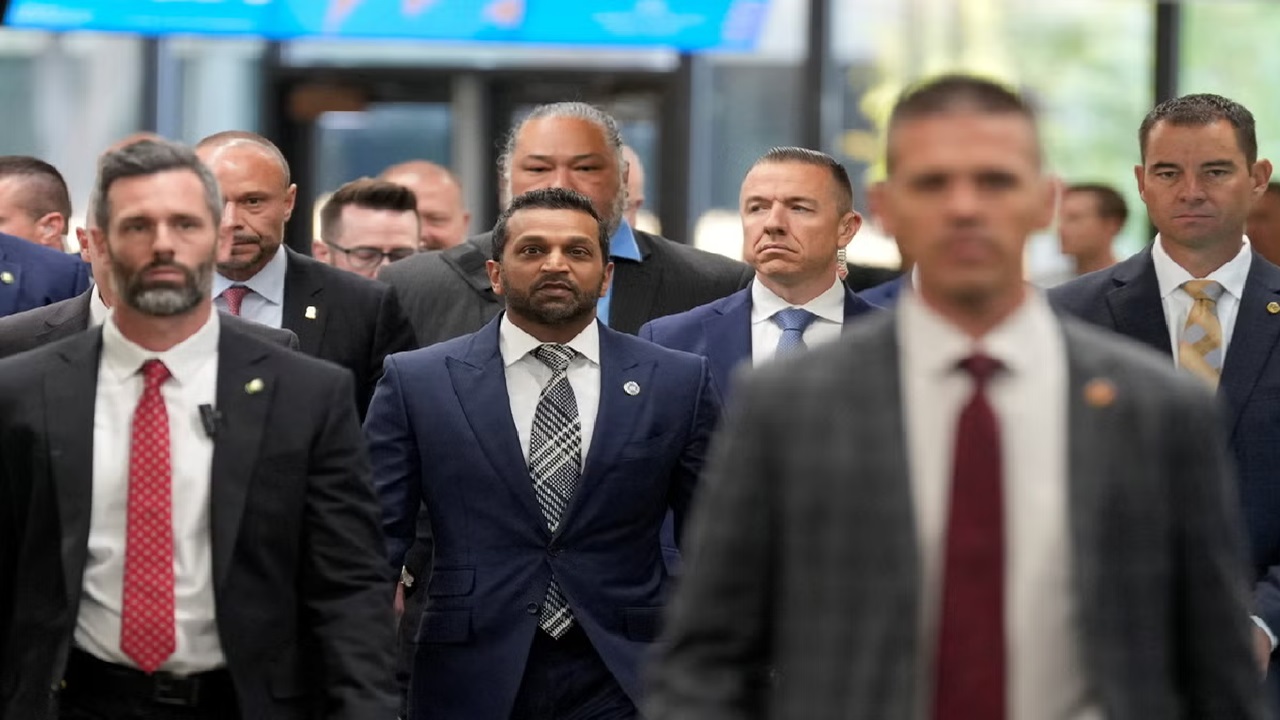
A Tragedy Becomes a Political Earthquake
The shocking assassination of Charlie Kirk, a prominent conservative commentator and activist, on the campus of Utah Valley University has not only devastated his supporters but also plunged the Federal Bureau of Investigation (FBI) into a storm of criticism. Kirk, a close ally of President Donald Trump, was gunned down on September 10, sending shockwaves across the nation already reeling from concerns about rising political violence.
Yet, beyond the crime itself, the handling of the investigation by FBI Director Kash Patel has ignited a firestorm. His early missteps, public statements, and visible misjudgements are now under the microscope, raising questions about his fitness to lead the bureau during a moment of profound national crisis.
Patel’s Premature Announcements
Hours after the killing, Patel took to X (formerly Twitter) to declare that a suspect in the case had already been apprehended. That statement, however, turned out to be false. Local authorities later clarified that while two people were briefly detained, the actual shooter remained at large. At the very same time Utah Governor Spencer Cox was vowing to track down the killer, Patel’s remarks painted a conflicting picture.
Former FBI officials sharply rebuked him, arguing that his haste undermined trust in the bureau. Retired counterterrorism chief Christopher O’Leary was blunt: “He’s got zero leadership experience and capabilities.” The backlash highlighted how words spoken in haste can amplify confusion at moments when clarity is paramount.
Dinner at Rao’s: The Optics Problem
Further controversy swirled when it emerged that Patel dined at Rao’s, one of New York City’s most exclusive restaurants, the very night of Kirk’s murder. His posts about the supposed arrest and subsequent release of a suspect coincided with the dinner reservation, raising eyebrows inside government circles. For many, the optics of fine dining while a manhunt unfolded for Kirk’s killer were disastrous, feeding doubts about Patel’s priorities.
Internal Strain and Harsh Words
The following morning, Patel convened a tense call with FBI agents nationwide. According to sources, Patel and his deputy, Dan Bongino, used profanity to vent frustration over delays in receiving suspect imagery from the Salt Lake City field office. The bureau was under intense pressure to produce results, but the call exposed deep fractures within FBI ranks.
Later, Patel kept a low profile during a press briefing, opting not to speak. Officials later praised this restraint, but the damage from earlier missteps lingered.
The Arrest and Conflicting Narratives
On September 12, authorities arrested 22-year-old Tyler Robinson, with the break in the case coming after Robinson’s father recognized him in surveillance footage. Patel was quick to claim credit, asserting the FBI had pushed for releasing suspect images despite local reluctance.
Utah’s Department of Public Safety (DPS), however, disputed that claim. Officials clarified that while they initially tried facial recognition to avoid false leads, they were always supportive of public release once that failed. Their statement highlighted tensions between federal and state law enforcement, suggesting Patel’s version overstated the FBI’s role.
White House Stands by Patel
Despite mounting criticism, the White House has continued to back Patel. One senior official accused critic of exploiting a tragedy for political gain, noting that Kirk had been a personal friend of Patel. President Trump himself reportedly praised Patel’s handling of events, reinforcing the administration’s message of solidarity.
Conservative Unease and Calls for Removal
Yet, Patel’s critics are not confined to Democrats or the media. Some conservative voices have begun questioning whether he is the right man for the job. Strategist Christopher Rufo bluntly argued it was time to reassess Patel’s leadership, while others on the right suggested his mismanagement tarnished both the FBI and the conservative cause.
This discontent comes at a precarious time: Patel is due to testify before Congress in high-stakes oversight hearings. Already contentious, these sessions will now unfold under the shadow of the Kirk controversy, with Patel’s credibility on the line.
Broader Turmoil Inside the FBI
The fallout from the Kirk case adds to growing unrest within the bureau. Several senior executives have sued the FBI, alleging wrongful dismissal in what they describe as a politically motivated purge to align the bureau with Trump’s agenda. Others have been forced into early retirement or reassignment, leaving morale at historic lows.
Since taking office, Patel has redirected the FBI’s focus toward violent crime, drug trafficking, and immigration enforcement — priorities in line with Trump’s vision. Supporters hail this as a return to law-and-order policing, while critics argue it diverts resources from counterintelligence and corruption cases, undermining the bureau’s long-term mission.
Patel and Attorney General Pam Bondi have also launched investigations into former intelligence chiefs such as James Comey and John Brennan, fueling speculation that political retribution, rather than impartial justice, guides their agenda.
A Moment of Reckoning
The assassination of Charlie Kirk is a tragedy that struck at the heart of America’s political discourse. But the FBI’s response under Kash Patel has transformed a murder investigation into a national debate about competence, credibility, and priorities.
Patel’s defenders insist he remains committed to justice, while critics see a leader out of his depth, prone to missteps that damage the bureau’s reputation. With Congress preparing to grill him and the country demanding answers, Patel now faces his greatest test as FBI director.
Leadership Under Fire
The Kirk case illustrates how moments of national trauma can become crucibles for leadership. For Patel, the questions are stark: can he restore confidence in the FBI, or will misjudgements and political entanglements erode the bureau’s standing further?
As the grief of Charlie Kirk’s family and supporters lingers, the controversy underscores a painful truth — in times of crisis, the line between justice and politics grows dangerously thin.
(With agency inputs)