



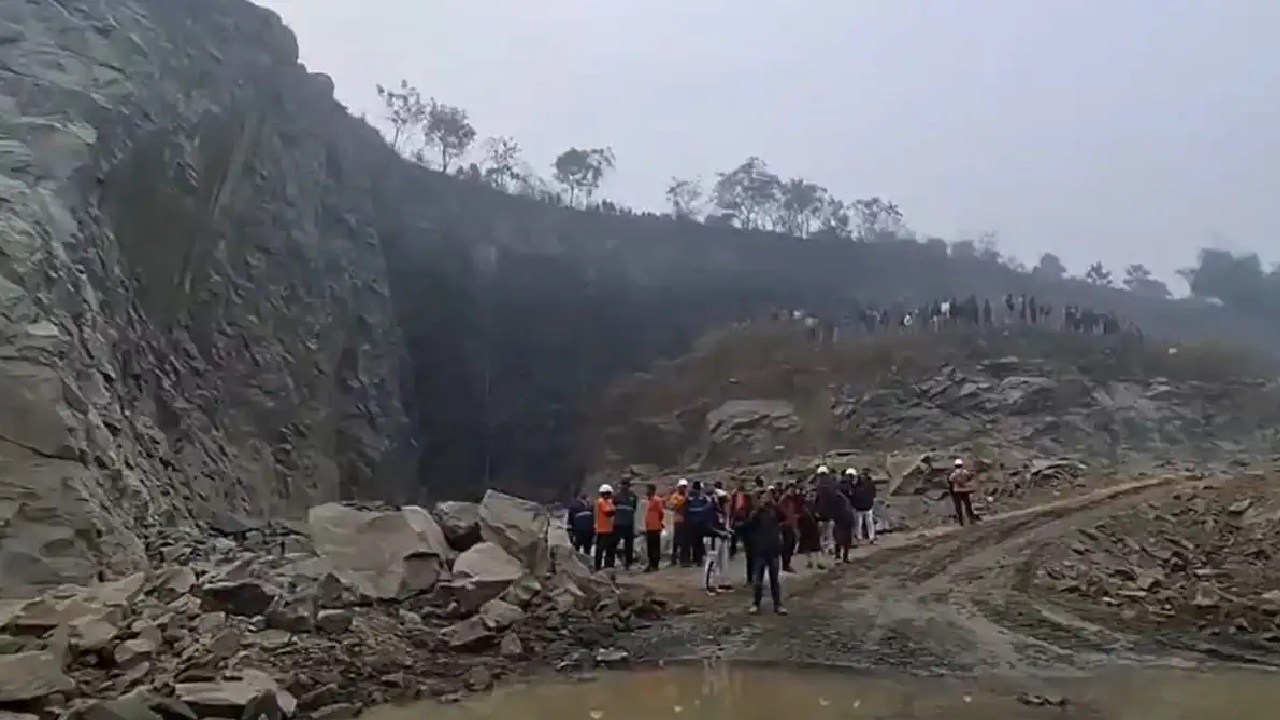
Dhenkanal Quarry Explosion: A Sudden Disaster in Rural Odisha
A powerful explosion at a dolomite stone quarry near Gopalpur village in Odisha’s Dhenkanal district on the evening of January 3, 2026, turned a routine workday into tragedy. The blast triggered a massive rockslide, killing at least two workers and leaving others trapped beneath debris for hours. As rescue teams battled darkness, unstable terrain, and wildlife threats, the incident quickly drew attention to deeper structural problems in the region’s mining practices.
Beyond an Industrial Accident
While quarry accidents are not uncommon in mineral-rich belts, the Dhenkanal explosion stands out for what it reveals about regulatory neglect and unsafe operations. Early findings indicate that the quarry was functioning without valid permissions, raising serious questions about oversight, enforcement, and accountability. What unfolded was not merely a mechanical failure, but the culmination of ignored warnings and systemic lapses.
What Happened on the Ground
The explosion occurred around 8:30 pm during drilling operations, instantly destabilizing the quarry face. A landslide followed, burying four workers under tonnes of rock and rubble. Night-time rescue efforts were suspended due to poor visibility and the risk of elephant movement in nearby forested areas. Operations resumed at first light with teams from the Odisha Disaster Rapid Action Force, fire services, dog squads, and heavy machinery.
By Sunday morning, two bodies had been recovered, later identified as migrant workers from Balasore and Keonjhar districts. Senior district officials, including the collector and superintendent of police, took charge of the site, which was immediately sealed.
Illegal Blasting and Permit Violations: What Investigations Reveal
Preliminary investigations have confirmed that the quarry was operating illegally at the time of the explosion. Officials revealed that blasting permission issued by the Directorate General of Mines Safety (DGMS) had expired in September 2025. Despite a formal closure notice, quarrying activities continued unchecked.
Compounding the violation, the mining lease itself lapsed in December 2025, rendering all subsequent operations unauthorized. This meant that drilling, explosive storage, and blasting were carried out without regulatory supervision, trained personnel, or mandated safety protocols. Investigators suspect that improperly handled or expired explosives may have detonated prematurely, a common risk in unregulated sites.
Police have registered a case against the quarry owner, and the inquiry now focuses on how repeated violations went unnoticed or unenforced. Local residents described the operation as “ghost mining,” a term increasingly used to describe clandestine extraction that thrives on weak monitoring.
A Pattern Repeating Across Odisha
The Dhenkanal blast fits into a troubling pattern. Odisha has witnessed multiple quarry-related fatalities in recent years, often linked to unauthorized blasting and poor explosive management. Similar incidents in Angul and Keonjhar districts have claimed numerous lives, while national estimates suggest over a hundred deaths annually in small, poorly regulated quarries across India. Each incident underscores the same reality: rules exist, but enforcement remains inconsistent.
Turning Tragedy into Reform
The Dhenkanal quarry explosion is a stark reminder that illegal mining is not a victimless economic activity—it carries lethal consequences. While rescue operations and investigations address immediate concerns, lasting change will require stricter inspections, real-time monitoring of leases and permits, and accountability for officials and operators alike. Without decisive action, such tragedies will continue to repeat, exacting an avoidable human cost in India’s mining heartlands.
(With agency inputs)