The Delhi High Court signalled a dramatic turn in the long-running excise policy controversy on March 9, 2026, when Justice Swarana Kanta Sharma said she would pass an order staying the controversial remarks made by a trial court that discharged all accused in the Central Bureau of Investigation (CBI) case. The judge also indicated she would direct the trial court to defer proceedings in the related money-laundering case being pursued by the Enforcement Directorate (ED). The matter is scheduled for further hearing on March 16, and the interim move temporarily pauses the impact of the trial court’s findings.
Trial Court’s Discharge Order
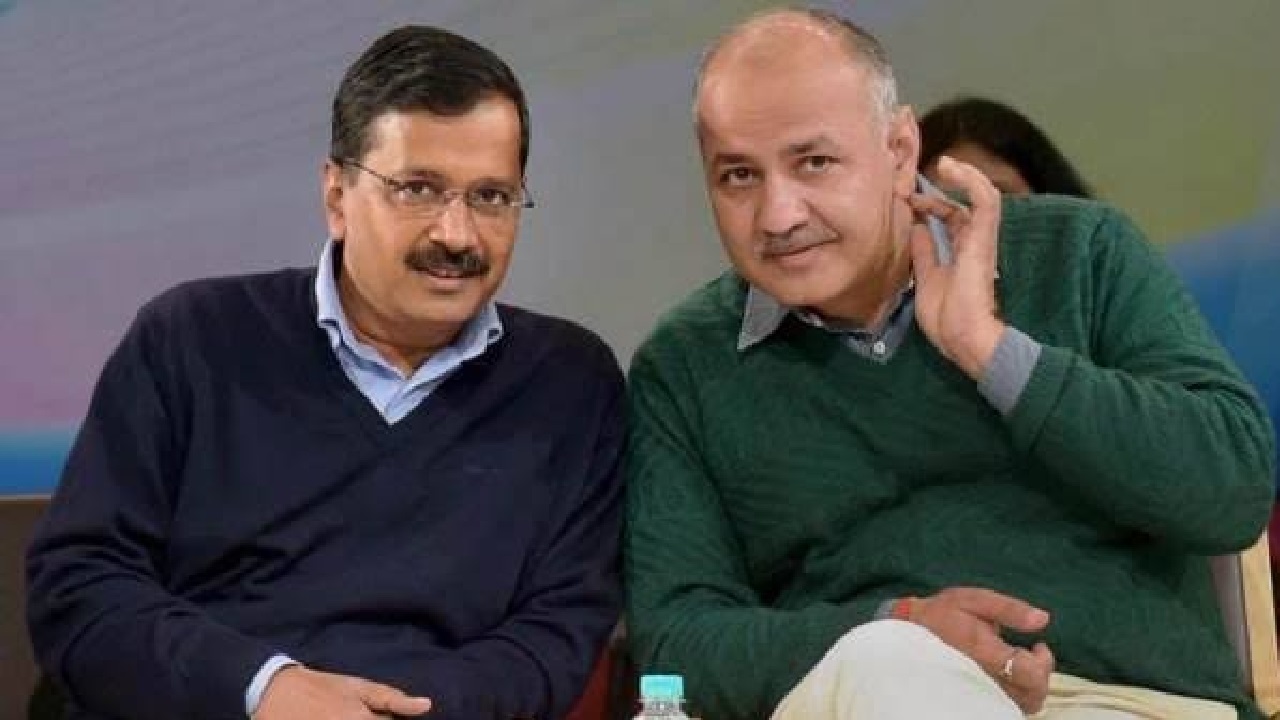
The controversy stems from a February 27 order by Special Judge Jitender Singh of the Rouse Avenue Court, who discharged all 23 accused, including senior Aam Aadmi Party (AAP) leaders Arvind Kejriwal and Manish Sisodia.
In a detailed ruling running nearly 974 pages, the judge held that the CBI’s evidence failed to establish even a prima facie case of criminal conspiracy in connection with the now-scrapped 2021–22 Delhi excise policy. The court concluded that the material presented by investigators amounted to conjecture and suspicion rather than proof of wrongdoing.
The judge further observed that the prosecution’s evidence did not create a “grave suspicion” necessary to frame charges and proceed to trial. He also criticised aspects of the investigation, describing certain steps as “choreographed” and recommending internal scrutiny within the CBI.
The Background: Delhi’s Controversial Excise Policy
At the heart of the case lies the Delhi government’s 2021–22 excise policy, which sought to overhaul the city’s liquor trade. The policy aimed to privatise retail sales of alcohol and replace the earlier system dominated by government-run shops.
The reform intended to increase revenue and reduce corruption by introducing competitive bidding and allowing private players greater operational freedom. However, critics alleged that the policy contained provisions favouring select liquor distributors and retail groups.
Investigators claimed that a group of businessmen dubbed the “South Group” allegedly paid about ₹100 crore in kickbacks to influence the policy’s formulation and implementation. The CBI also alleged that policy tweaks enabled certain liquor cartels to gain disproportionate profits.
The controversy intensified after Delhi Lieutenant Governor V.K. Saxena ordered a probe and the Delhi government eventually scrapped the policy amid allegations that it had caused financial irregularities estimated at ₹4,800 crore.
CBI Challenges the Verdict
Appearing before the High Court, Solicitor General Tushar Mehta strongly criticised the trial court order, describing it as “perverse” and akin to “an acquittal without trial.”
According to the CBI, the investigation was extensive and involved raids, digital evidence, and statements from more than 400 witnesses. The agency argues that the trial judge exceeded the limited scope of examining whether a prima facie case existed at the stage of framing charges.
Instead, the prosecution claims, the court conducted what effectively amounted to a “mini-trial”, evaluating evidence in detail and treating individual actions in isolation rather than as part of an alleged broader conspiracy.
The CBI has therefore sought to have the order set aside and the charges reinstated so that the case can proceed to trial.
Political Fallout and Legal Stakes
The case has long been politically charged. The AAP leadership has welcomed the discharge order as proof that the allegations were politically motivated, with Kejriwal declaring that “truth has prevailed.”
The Bharatiya Janata Party, however, maintains that the case represents one of the capital’s largest alleged corruption scandals and has accused the AAP of attempting to escape accountability.
The High Court’s intervention also affects the ED’s parallel money-laundering case, which is based on the same underlying allegations. Justice Sharma’s indication that those proceedings may be deferred ensures the two cases remain legally aligned while the discharge order is examined.
A Case Far from Over
The Delhi High Court’s decision to stay the trial court’s remarks signals that the legal battle over the excise policy is far from settled. By pausing the effects of the discharge order and reviewing the case more closely, the court has reopened a complex dispute involving law, governance, and political rivalry.
Ultimately, the upcoming hearings will determine whether the case proceeds to trial or whether the allegations collapse entirely. For now, the High Court’s move underscores the judiciary’s cautious approach in high-profile corruption cases where legal interpretation and political stakes intersect.
(With agency inputs)