A City Turns to the Skies
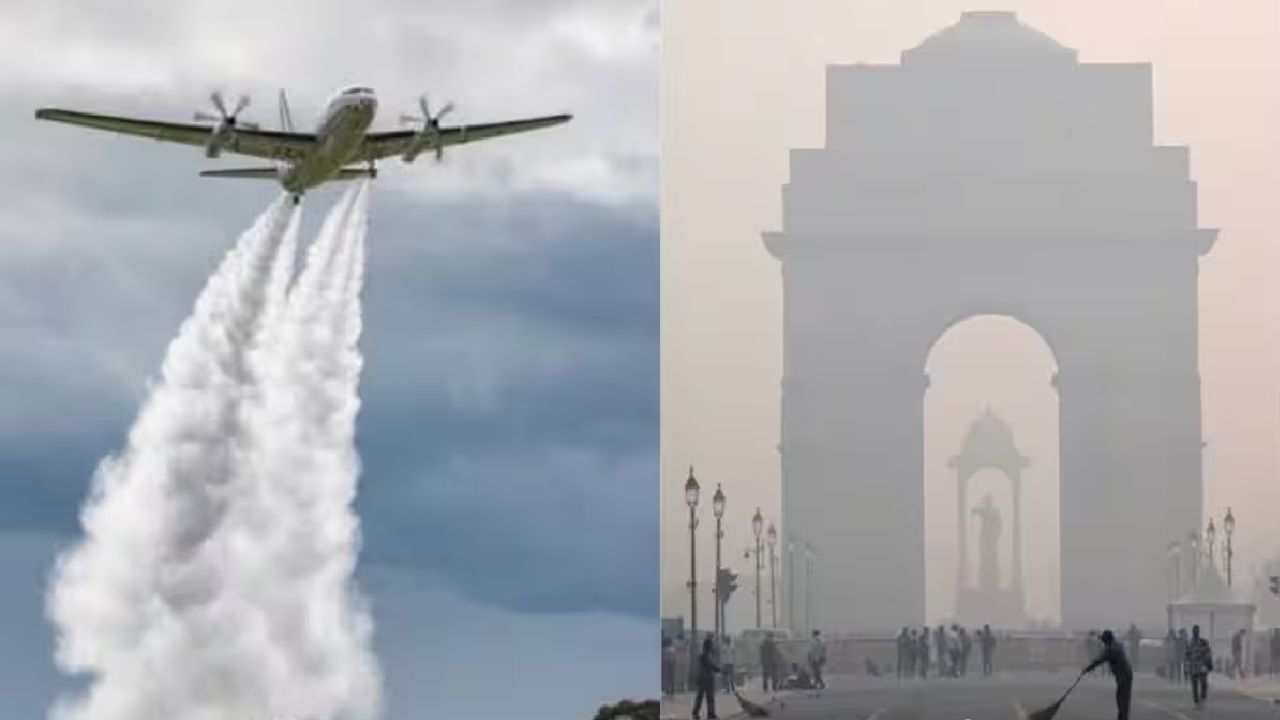
On October 28, 2025, Delhi made history as it attempted something no Indian city had done before—triggering artificial rain to tackle its suffocating post-Diwali air pollution. The capital’s Air Quality Index (AQI) had plunged into the “severe” category, forcing authorities to attempt a technological intervention rather than rely solely on weather or policy.
In collaboration with IIT Kanpur and the India Meteorological Department (IMD), the Delhi government deployed cloud seeding aircraft in hopes of washing away pollutants blanketing the city. Officials said rainfall could begin within 15 minutes to four hours after the operation—if the weather cooperated.
The Science: How Cloud Seeding Works
Cloud seeding, first developed in the 1940s, involves injecting substances like silver iodide or sodium chloride into moisture-rich clouds using aircraft, rockets, or drones. These particles serve as “nuclei,” helping water vapor condense into droplets heavy enough to fall as rain.
In Delhi’s pilot, a Cessna aircraft fitted with seeding equipment dispersed a mix of silver iodide and salt over Khekra, Burari, and Mayur Vihar—areas where cloud activity and humidity were moderately Favorable. The experiment required weeks of coordination among multiple agencies, aviation clearances, and continuous IMD tracking.
Yet, the success of cloud seeding depends on three non-negotiable factors—adequate moisture, dense cloud cover, and atmospheric instability. Studies like the CAIPEEX project in Solapur show rainfall increases of up to 46% under ideal tropical conditions, but Delhi’s dry winter skies and low humidity (often below 20%) make the odds far less certain.
Impact: Short-Term Relief, Long-Term Questions
If successful, artificial rain can immediately reduce PM2.5 and PM10 levels, clearing visibility and easing breathing discomfort within hours. Rain droplets bind with particulate matter, dragging them to the surface and creating a temporary pocket of cleaner air.
However, environmental experts caution that such gains are short-lived. Pollutants from vehicles, industries, and crop burning can quickly return once the rain stops. Worse, without wind dispersal, pollution “rebound” can occur, where stagnant air traps fresh emissions near the surface.
Officials emphasize that cloud seeding is not a silver bullet but a short-term emergency measure, designed to complement—not replace—long-term strategies such as cleaner fuels, EV expansion, and curbing industrial waste.
Feasibility: Promise and Pitfalls
Delhi’s experiment shines a light on both the potential and the pitfalls of cloud seeding:
Advantages:
· Can deliver rapid, visible relief during peak smog periods.
· Strengthens India’s growing scientific expertise in atmospheric modification.
· Provides valuable data for future use in drought or wildfire management.
Limitations:
· Unpredictable efficacy, especially in cold, dry conditions.
· Potential environmental concerns from silver iodide residues in soil and water.
· High operational cost—each flight costing several lakhs.
· Risk of policy complacency, where authorities rely on quick fixes instead of systemic reforms.
Policy and Scientific Imperatives
As the first Indian metropolis to try cloud seeding for pollution control, Delhi has set a precedent other cities are watching closely—from Mumbai to Beijing. The initiative aligns with global urban adaptation strategies, but experts urge rigorous post-operation studies to measure rainfall volume, pollutant reduction, and environmental safety.
The path forward must include:
· Independent evaluation of each seeding mission.
· Clear public communication about scientific limitations.
· Integration with broader clean-air and climate-resilience plans.
· Institutional protocols defining when cloud seeding is justified.
Innovation Meets Accountability
Delhi’s foray into artificial rainmaking reflects both technological ambition and environmental desperation. It is a creative attempt to buy temporary relief for millions struggling to breathe. Yet, the experiment also serves as a sobering reminder: technology can assist, but not substitute, governance and sustainable policy.
As India ventures deeper into an era of climate-driven challenges, the success of such innovations will depend not on how quickly they deliver results, but on how responsibly they are applied—balancing science, ethics, and long-term vision for cleaner, healthier skies.
(With agency inputs)