



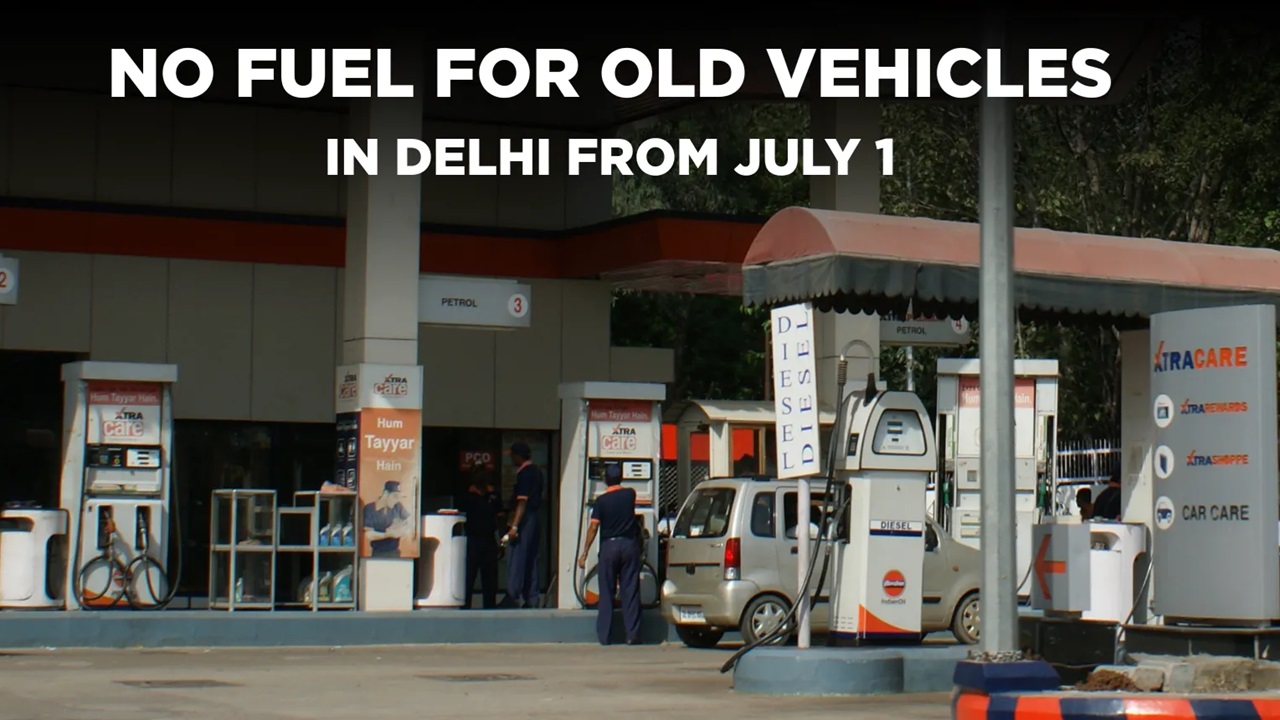
Sweeping ban on refuelling old vehicles triggers fierce public backlash, raising questions on fairness, affordability, and effectiveness.
What Is the Delhi Fuel Ban on End-of-Life Vehicles?
Starting this week, Delhi has enforced a blanket ban on refuelling petrol vehicles over 15 years old and diesel vehicles over 10 years old. The rule, backed by Automatic Number Plate Recognition (ANPR) cameras at fuel stations and integrated with the VAHAN vehicle database, aims to curb vehicular pollution in one of the world’s most polluted cities. Violators face fines of up to ₹10,000 and possible vehicle impoundment.
While authorities defend the move as a long-overdue response to Delhi’s toxic air, the public sees it differently. The ban has triggered widespread outrage, with critics calling it “punitive,” “elitist,” and “inequitable.”
Public Anger: “Why Punish Responsible Owners?”
The most common grievance is the lack of nuance in the rule. Vehicle owners say the law ignores how well a car is maintained. “If I’ve kept my 12-year-old diesel SUV in top condition and it passes fitness tests, why should I be banned from using it?” wrote one user on social media.
For Delhi’s middle class, the economic blow is severe. “Not everyone can afford a new car every decade,” lamented a commuter. For many families, especially post-pandemic and amidst inflation, this could mean entering an endless EMI loop. The resale value of their now-unusable cars is also nearly nil.
“Is This Policy for the People or the Market?”
Many view the policy as a veiled attempt to push new car sales, benefitting automakers and increasing GST revenue. Critics say it’s more about economic churn than environmental concern. “This isn’t a green policy — it’s greenwashing,” one Delhiite quipped online.
Some have drawn attention to the government’s failure to fix Delhi’s roads, which also contribute to emissions and vehicle wear. “You want clean air? Start with potholes,” wrote another resident.
The inconsistency in the policy — banning diesel cars after 10 years and petrol after 15 — has also drawn fire. “Pollution doesn’t see fuel type. Why does the law?” asked one user, highlighting the confusion and perceived arbitrariness.
The Broader Numbers: A City Under Siege
The ban isn’t targeting a small fraction. Delhi is home to 62 lakh end-of-life vehicles — nearly 80% of the 79 lakh registered vehicles are now banned from being refuelled. This is 41% of the city’s entire vehicular population, dwarfing the share in states like Bihar (2.4%) and Maharashtra (9.4%).
Nationally, India has 6.1 crore vehicles aged over 15 years, accounting for 17.9% of all registered vehicles. Delhi carries the heaviest burden — making it both ground zero for pollution and the hardest-hit by the crackdown.
Origin and Intent: Born of Court Orders, Delayed by Reality
The roots of the ban trace back to a 2014 National Green Tribunal (NGT) order, which called for strict action against aging, high-emission vehicles. However, implementation was delayed for a decade due to legal and logistical barriers.
Revived in early 2024 after renewed court pressure, the Delhi government cited alarming trends:
· Only 6.27% of the 47.51 lakh national end-of-life (EOL) vehicles were deregistered between 2018–21.
· Seasonal smog spikes demand urgent intervention.
Pollution Data: A City in Crisis
Delhi’s average AQI in 2024 stood at 169, peaking at 290 in November — far worse than cities like Mumbai or Kolkata. With over 79 lakh registered vehicles, vehicle emissions are responsible for more than half of the city’s air pollution, according to multiple studies.
Authorities believe that removing old vehicles could significantly improve air quality — but it comes at a heavy social cost.
Implementation and Its Challenges
Even as 500+ fuel stations deploy ANPR cameras, implementation hurdles remain:
· Evasion is possible through fuel jerrycans or travel to neighboring cities.
· Only 1.4 lakh vehicles were scrapped voluntarily by 2023, while 6.23 lakh obtained NOCs to resell them in other states — a loophole that simply displaces pollution.
· NCR-wide coordination is required, as similar bans are due in neighbouring regions by April 2026.
Balancing Clean Air with Fairness
The Delhi fuel ban reflects the government’s urgent need to combat deadly pollution, but also exposes deep policy fissures. While well-intentioned, the sweeping nature of the regulation penalizes responsible vehicle owners and disproportionately hits the middle class.
For the policy to succeed, it needs better transition planning — subsidies, scrappage incentives, and mobility alternatives. Otherwise, it risks becoming a symbol of policy overreach rather than environmental reform. Clean air is essential, but justice in climate action is just as critical.
(With agency inputs)