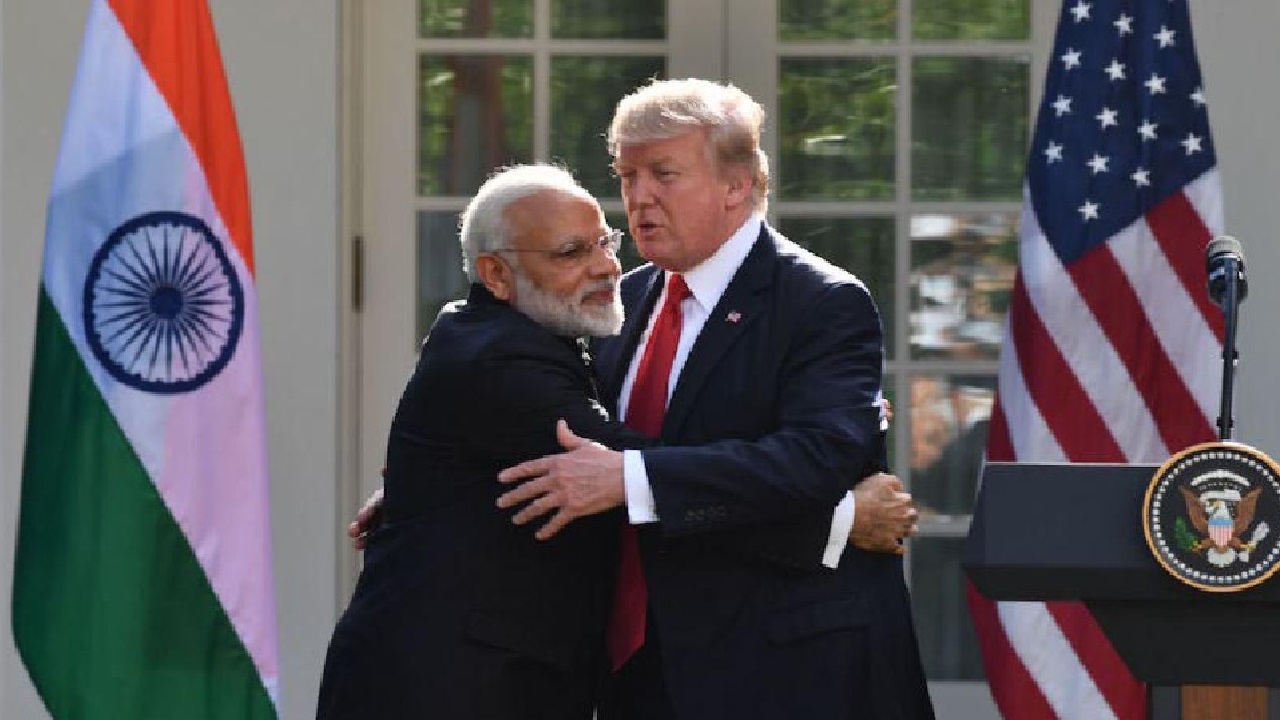
Democratic lawmakers are sounding alarms that Donald Trump’s tariff barrage against India is on a collision course with one of Washington’s most consequential strategic priorities: maintaining a durable partnership with New Delhi at a moment of intensifying rivalry with China and persistent uncertainty around Russia. What was long viewed as a “low-cost, high-benefit” relationship is, they argue, now strained by punitive economic measures that risk reshaping both diplomacy and trade.
A Sharp Congressional Reproach
At a recent House Foreign Affairs Subcommittee hearing on the US–India partnership, Ranking Member Sydney Kamlager-Dove led an unusually pointed critique of the Trump administration’s tariff and visa moves. She noted that tariff rates on Indian exports now exceed those applied to Chinese goods, while H-1B visa fees—disproportionately affecting Indian workers—have soared.
Dove argued that the Biden administration left behind a relationship at “the height of its strength,” underpinned by robust Quad cooperation, expanding defence-technology ties, and mutual efforts to position India as a trusted node in critical supply chains. Those gains, she warned, are at risk of being squandered amid escalating trade frictions that overshadow shared strategic aims.
Witnesses reinforced this assessment, describing the tariff fight as the most politically radioactive issue in the relationship and warning that it diverts attention from core priorities such as countering China and building resilient supply networks.
The Geopolitical Undercurrents: China, Russia, and the “Lost India” Scenario
Dove’s stark admonition—Trump could become “the American President who lost India”—captured the broader Democratic fear that New Delhi may hedge or drift if it perceives Washington as unreliable. The criticism sharpened further when lawmakers linked the tariff measures to Trump’s ambivalent posture on Russia, arguing that coercive trade pressure tied to India’s Russian oil purchases risks backfiring.
The symbolism of Narendra Modi’s public camaraderie with Vladimir Putin was invoked as a reminder that India has options. If Washington pushes too hard, Democrats contend, India could tighten ties with Moscow or pursue deeper alignment with other partners, narrowing US leverage at a critical juncture in Asia’s strategic balance.
Strategic Costs: Trust Erosion and Hedging
Legislators and expert witnesses identified several downstream risks:
· Eroding political trust: Tariffs and visa hikes may be read by Indian policymakers as signs that Washington takes New Delhi for granted, undermining two decades of bipartisan outreach.
· Greater multi-alignment: India may reinforce its longstanding strategy of diversifying defence, energy, and economic partnerships—including with Russia and the EU—to insulate itself from US policy swings.
· Lost opportunity vis-à-vis China: Heavy-handed trade pressure risks undermining convergences on China’s assertiveness, making it politically harder for India to be seen cooperating closely with a partner that appears punitive.
Experts described the partnership as one of Washington’s most cost-effective strategic assets; sacrificing it over tariff disputes, they argued, would be “strategic malpractice.”
Economic Impact: Trade Volumes and Sectoral Stress
While overall macro-level trade volumes are unlikely to collapse, the tariff hikes—many nearing 50%—pose acute stresses for specific Indian export categories. Labour-intensive sectors such as textiles, gems and jewellery, leather goods, seafood, and select chemicals face significant pressure, with tens of billions of dollars in exports potentially exposed. Analysts project concentrated losses, including double-digit declines in shipments such as auto components.
On the US side, importers must now choose between absorbing higher costs, raising prices, or shifting sourcing to lower-tariff countries. Supply chains are already adjusting through order diversion, price renegotiation, and discussions about relocating manufacturing to third-country facilities.
Strategic sectors—pharmaceuticals, certain electronics, defence inputs, and critical minerals—have been partially insulated from the harshest duties, reflecting an effort to avoid disrupting sensitive supply chains. Yet the broader uncertainty has introduced new caution among firms considering India-focused investment.
A Partnership at an Avoidable Crossroads
The emerging picture is not one of a trade partnership in freefall, but of a relationship increasingly distorted by tariff-induced friction. The pain will be uneven—falling heavily on labour-intensive Indian exporters and on US firms reliant on competitively priced Indian inputs—yet the strategic consequences loom larger than the economic metrics alone.
For Washington, punitive trade actions risk undermining its own long-term objective of cultivating India as a central pillar of Indo-Pacific strategy and a counterweight to China. For New Delhi, the episode reinforces the need to diversify export markets and reduce vulnerability to geopolitical shocks.
Ultimately, the tariffs highlight a central paradox: at the very moment the US and India claim to seek deeper integration, policy choices are driving them toward mistrust and strategic drift. The costs of that divergence may prove far higher than the revenue gained from any tariff hike.
(With agency inputs)