A Crisis Spreading Across Markets
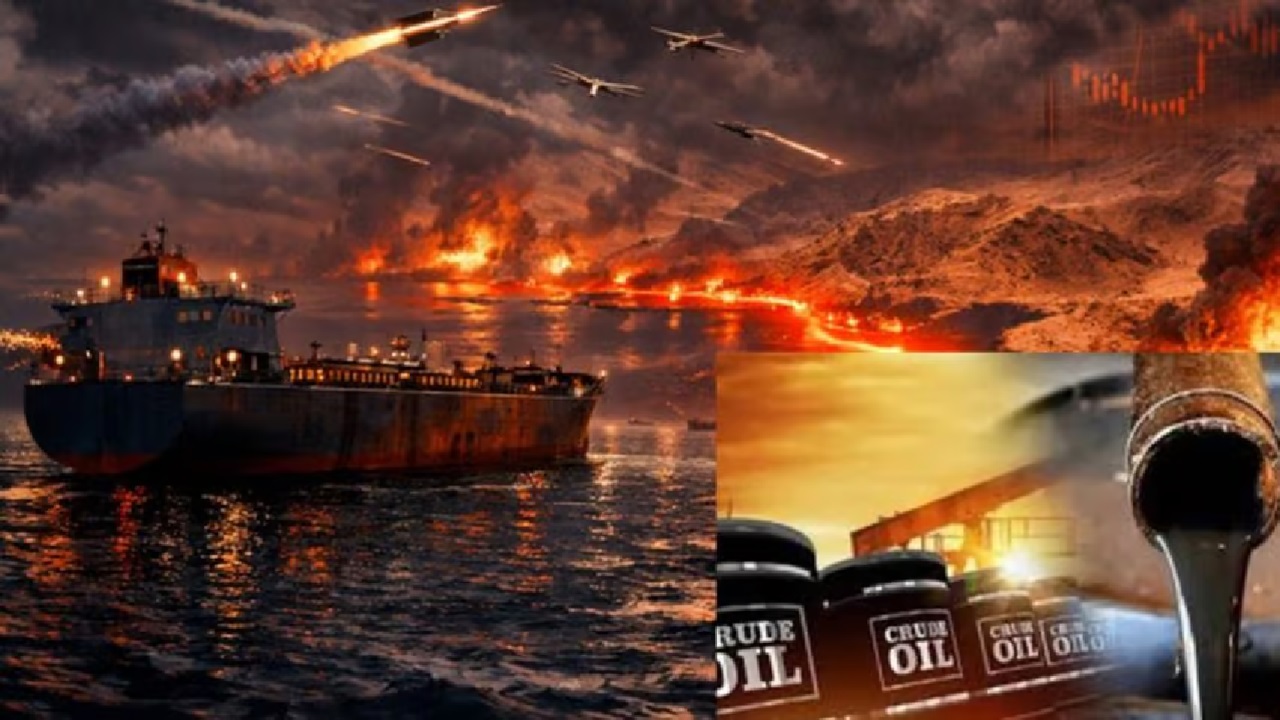
The Iran war is no longer confined to geopolitics—it is now hitting the global economy with visible force. Business surveys across major economies show slowing activity, rising costs, and growing uncertainty. At the same time, oil and gas infrastructure is under unprecedented strain. From the Middle East to the United States and Russia, energy hubs are burning or shutting down, pushing crude prices above $100 a barrel. With key facilities likely to take years to rebuild, the world may be entering the largest oil disruption in modern history.
Middle East: The Heart of the Shock
The epicentre of the crisis lies in the Gulf, where critical hydrocarbon infrastructure has come under direct attack. Strikes on Iran’s South Pars gas field and retaliatory damage to Qatar’s Ras Laffan Industrial City have shaken the backbone of global LNG supply. With potential losses of up to 17% in Qatar’s export capacity, the implications are severe for energy-dependent regions, particularly in Asia and Europe. As these hubs anchor global gas trade, even partial disruptions are enough to tighten markets and drive up heating and industrial fuel costs worldwide.
Russia and the Expanding Energy Battlefield
The conflict’s ripple effects are visible in Russia, where energy infrastructure has increasingly become a target. Attacks on refineries and oil-loading ports are eroding the country’s ability to process and export petroleum products. This not only disrupts Russian supply chains but also reduces global refining capacity at a time when demand remains high. The result is a squeeze not just on crude availability but on refined fuels like diesel and jet fuel, amplifying price pressures across continents.
United States: Accidents Add to Instability
Compounding the crisis, a major refinery fire in Port Arthur, Texas—one of the largest refining hubs in the U.S.—has further tightened supply. Though accidental, the shutdown underscores the fragility of an already strained system. With less refining capacity online, fuel margins are tightening, pushing up global benchmarks for gasoline and diesel. The convergence of war-related disruptions and industrial accidents highlights how interconnected and vulnerable the global energy network has become.
Economic Fallout: Growth Slows, Inflation Rises
The economic impact is already evident. Business surveys from the United States, Europe, and Japan show weakening momentum. In the eurozone, private sector growth has nearly stalled, with rising input costs and declining confidence raising fears of stagflation—a mix of slow growth and high inflation. Similar trends are emerging in the U.S., where higher energy prices are dampening business sentiment and employment prospects.
Across the G7 economies, the pattern is consistent: slowing growth paired with accelerating costs. Central banks now face a difficult balancing act, as they consider tightening monetary policy to control inflation while avoiding further damage to already fragile growth.
A Prolonged Era of Uncertainty
What makes this crisis particularly dangerous is its scale and persistence. Unlike past disruptions confined to a single region, this is a multi-theatre shock affecting production, refining, and distribution simultaneously. The damage to infrastructure, especially in the Gulf, suggests that recovery will not be swift. As energy prices remain elevated, the global economy faces a prolonged period of inflationary pressure and subdued growth. The unfolding scenario is not just a temporary disruption—it signals a structural shift in energy security and economic stability worldwide.
(With agency inputs)