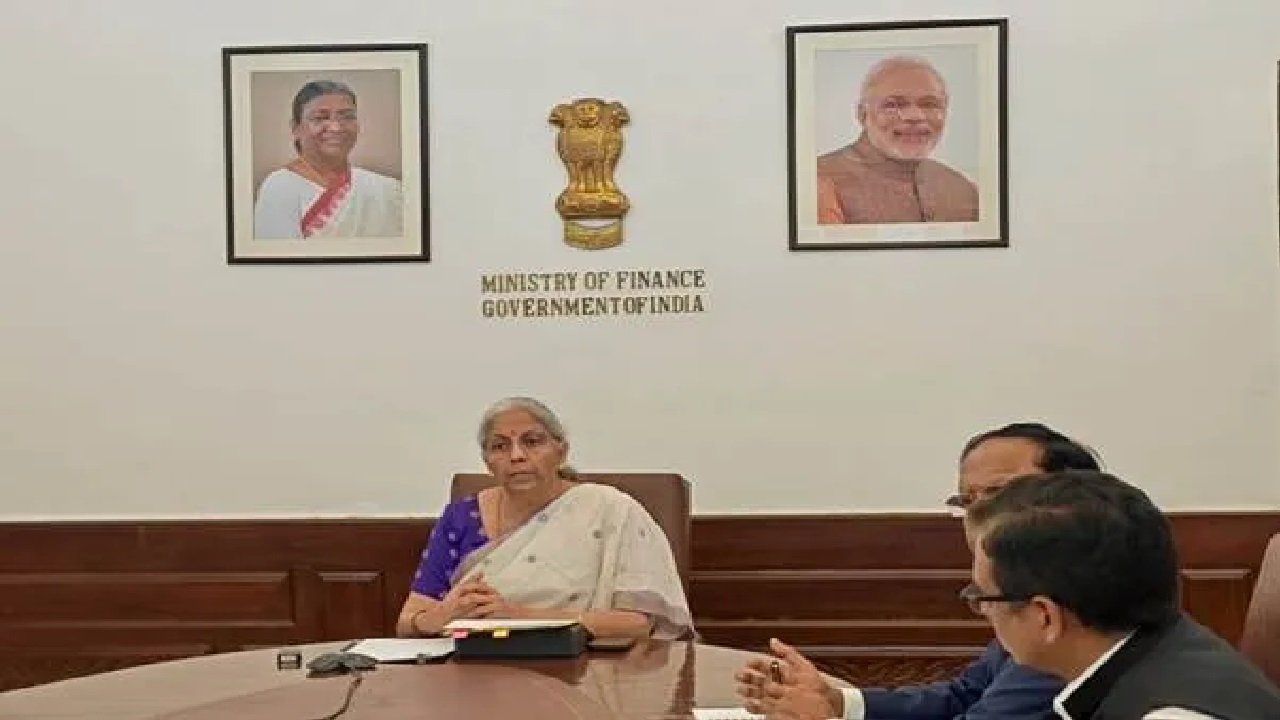
As tensions rise along India’s western border, Union Finance Minister Nirmala Sitharaman convened a high-level meeting on Friday with top executives from banks, insurance firms, and financial regulatory bodies. The urgent gathering aimed to assess and reinforce the financial sector’s preparedness for potential disruptions, particularly in digital services and operational resilience. This move comes at a critical juncture as the Indian Rupee weakens, trading near record lows amid geopolitical uncertainty and capital outflows. As of now, the rupee is hovering around ₹84.50 against the U.S. dollar, reflecting investor anxiety and external pressure on the economy.
Cybersecurity and Operational Continuity Take Center Stage
With the increasing threat of cyberattacks during geopolitical crises, the Finance Minister’s meeting emphasized the cybersecurity posture of the financial sector. Top officials from RBI, CERT-In, IRDAI, and NPCI joined representatives from public and private banks to present their preparedness strategies.
Banks reported the deployment of advanced anti-DDoS (Distributed Denial-of-Service) mechanisms, and the execution of mock drills simulating cyber breach and disaster scenarios. Heightened vigilance against phishing attacks and round-the-clock monitoring by Security Operations Centres (SOCs) and Network Operations Centres (NOCs) were also confirmed. These efforts are coordinated with government bodies like CERT-In and NCIIPC to ensure swift detection and mitigation of threats.
Directives to Maintain Seamless Financial Services
Recognizing the vital role of the financial sector during crises, Sitharaman issued clear directives to banks to ensure uninterrupted access to digital and physical banking services, especially in border areas. These include:
· Cash availability at ATMs
· Stable UPI and internet banking operations
· Continuous functionality of core banking systems
Banks were instructed to rigorously test and update emergency protocols and fortify their digital infrastructure against breaches. Each institution must designate two senior officials at their headquarters: one for cybersecurity, and another for operations and ATM functionality. These individuals are to report real-time incidents to CERT-In and other relevant agencies.
Special Focus on Rural Banking and Insurance Support
The finance minister also directed banks to provide additional operational and financial support to Regional Rural Banks (RRBs). With limited digital infrastructure in rural regions, ensuring uninterrupted services becomes critical during national emergencies.
Insurance companies were similarly instructed to fast-track claim settlements and maintain steady customer service, ensuring policyholders face minimal disruption. This instruction reflects the government’s intent to safeguard financial inclusion and citizen welfare, even amid geopolitical instability.
Rupee Weakens Amid External Pressures
While the government reassures stability, the financial markets reflect mounting pressure. The Indian Rupee’s decline to around ₹84.50 per USD is largely driven by:
· Geopolitical tension, increasing the demand for safe-haven assets like the dollar
· Outflows from equity markets
· Higher global oil prices, straining India’s import bill
· A stronger U.S. economy, leading to policy tightening by the Federal Reserve
A weakening rupee can impact import costs, inflation, and foreign investor sentiment, adding to the urgency of ensuring that India’s financial institutions remain resilient and well-prepared.
The Finance Minister’s high-level review signals the government’s proactive approach in fortifying the country’s financial infrastructure during volatile times. As cybersecurity threats and operational risks loom large in the wake of border tensions, ensuring seamless access to financial services becomes not just a logistical priority but a cornerstone of national economic security. With the rupee under pressure and global uncertainties rising, robust financial preparedness and public confidence in banking systems will be vital in navigating the challenges ahead.
(With inputs from agencies)