Bihar’s Crucial Electoral Battle
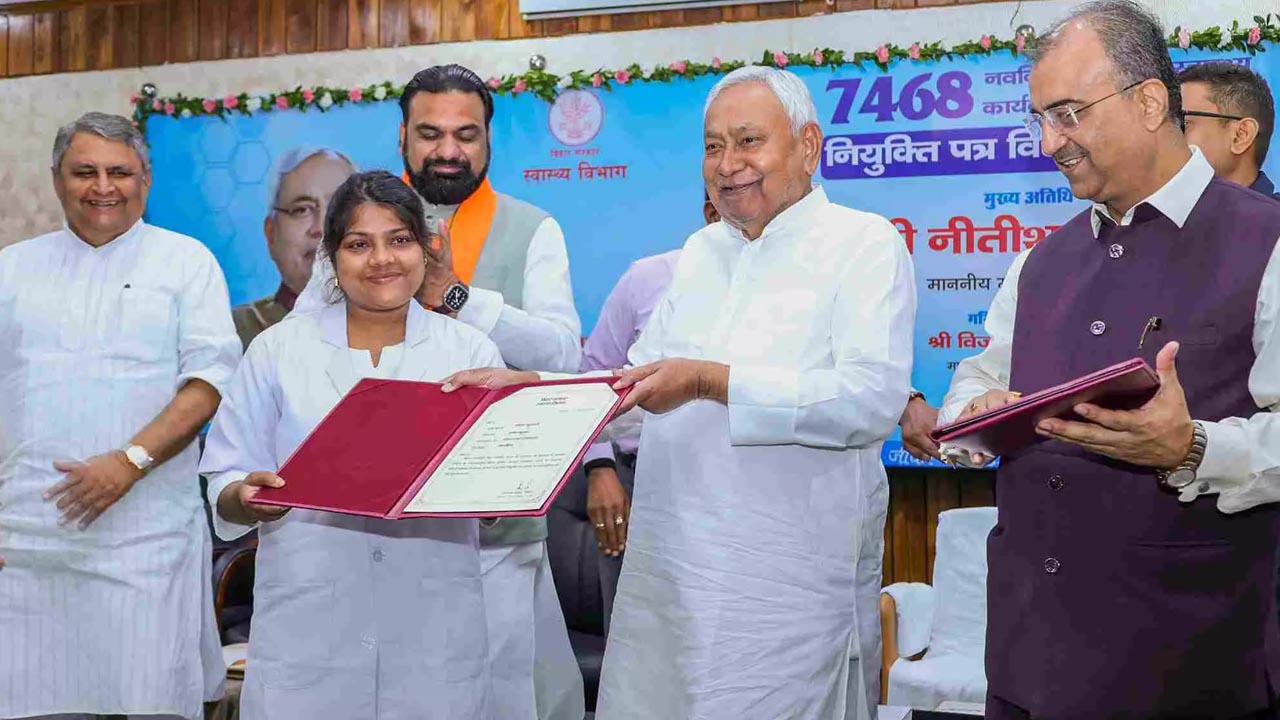
As Bihar heads toward another high-stakes Assembly election, the political atmosphere is thick with promises, controversies, and competing narratives. Long regarded as one of India’s most politically vibrant states, Bihar has often set the tone for national debates on governance and electoral behavior. This time, one demographic is clearly at the centre of attention—women. Chief Minister Nitish Kumar, who has held sway over Bihar politics since 2005, has rolled out a series of targeted welfare measures aimed at consolidating women’s votes, a bloc that has steadily grown in both size and influence across successive elections.
Pension Hikes: Direct Relief for Women Beneficiaries
The strategy began with a Cabinet decision on June 24 to raise monthly pensions for the elderly, widows, and the disabled from ₹400 to ₹1,100. By July 11, over ₹1,227 crore had been transferred directly into the accounts of 1.11 crore beneficiaries of six pension schemes. Notably, official data indicates that more than 54% of these recipients are women, underscoring the government’s intent to align financial relief with its political priorities.
Strengthening Local Quotas and Worker Incentives
In early July, Kumar reinforced his pro-women stance by tightening the 35% quota for women in state government jobs, now restricting it only to domiciled residents of Bihar. Later that month, the Cabinet approved a significant hike in honorariums—raising ASHA workers’ pay from ₹1,000 to ₹3,000 and doubling Mamata workers’ incentives to ₹600 per delivery. Both measures address a large grassroots workforce that plays a critical role in rural healthcare and maternal welfare, areas where women are both providers and beneficiaries.
The Mahila Rozgar Yojana: Ambitious Self-Employment Push
Perhaps the boldest announcement came on August 29, when the Cabinet cleared the Mukhya Mantri Mahila Rozgar Yojana with an outlay of ₹20,000 crore. Under the scheme, one woman in every family will receive an initial grant of ₹10,000 to launch a small enterprise. If the venture shows promise after six months, she can qualify for an additional grant of up to ₹2 lakh. Complementing this, the government plans to develop local haat bazaars as platforms for women entrepreneurs to market their products. Officials argue that the initiative could reduce migration by encouraging local employment while creating a visible class of women-led businesses in the state.
Jeevika Bank and Rural Women’s Credit Access
Adding further weight to the women-first narrative, Prime Minister Narendra Modi on September 2 announced ₹105 crore as seed capital for the Bihar Rajya Jeevika Nidhi Credit Co-operative Federation Ltd, popularly called the Jeevika Bank. Rooted in the Jeevika Self Help Group (SHG) movement launched by Nitish in 2006, this new cooperative bank is designed to provide affordable credit to rural women. Today, Jeevika connects over 1.4 crore women across 11 lakh SHGs, making it one of the most influential social initiatives in Bihar’s rural economy.
Women’s Voter Turnout: A Decisive Trend
The focus on women is no coincidence. Bihar has consistently recorded higher female voter turnout compared to men in Assembly polls. In 2020, nearly 60% of women voted, compared to 54.6% of men. Even in the 2019 Lok Sabha polls, 18 constituencies in Bihar reported women voting in larger numbers than men—a striking pattern given their smaller share on electoral rolls. Clearly, women voters are no longer a silent demographic; they are shaping outcomes in tightly contested constituencies.
Kumar’s Track Record with Women’s Policies
Nitish Kumar’s political journey has been closely tied to women’s empowerment. In 2006, his government reserved 50% of seats in local bodies for women, the first state to do so. The same year, the Mukhyamantri Balika Cycle Yojana was launched, which gave bicycles to schoolgirls to curb dropout rates. Later came the 35% reservation in government jobs for women (2016) and the Kanya Utthan Yojana (2018), offering financial support for girls until graduation. These policies, sustained over nearly two decades, have cemented his image as a leader committed to women’s empowerment.
Political Gamble or Social Transformation?
Nitish Kumar’s latest flurry of schemes is both a political calculation and a social experiment. By targeting pensions, jobs, healthcare, entrepreneurship, and credit access, his government is attempting to weave women more deeply into Bihar’s economic fabric. Critics argue these promises are timed with elections and may strain state finances. Supporters counter that the measures could trigger long-term structural change by empowering women as active participants in both household decision-making and local economies.
As Bihar heads into the polls, one thing is certain: women will once again be at the heart of the political battle. Whether Nitish Kumar’s women-first agenda translates into votes remains to be seen, but its impact on the state’s social and political landscape will likely endure well beyond the electoral season.
(With agency inputs)