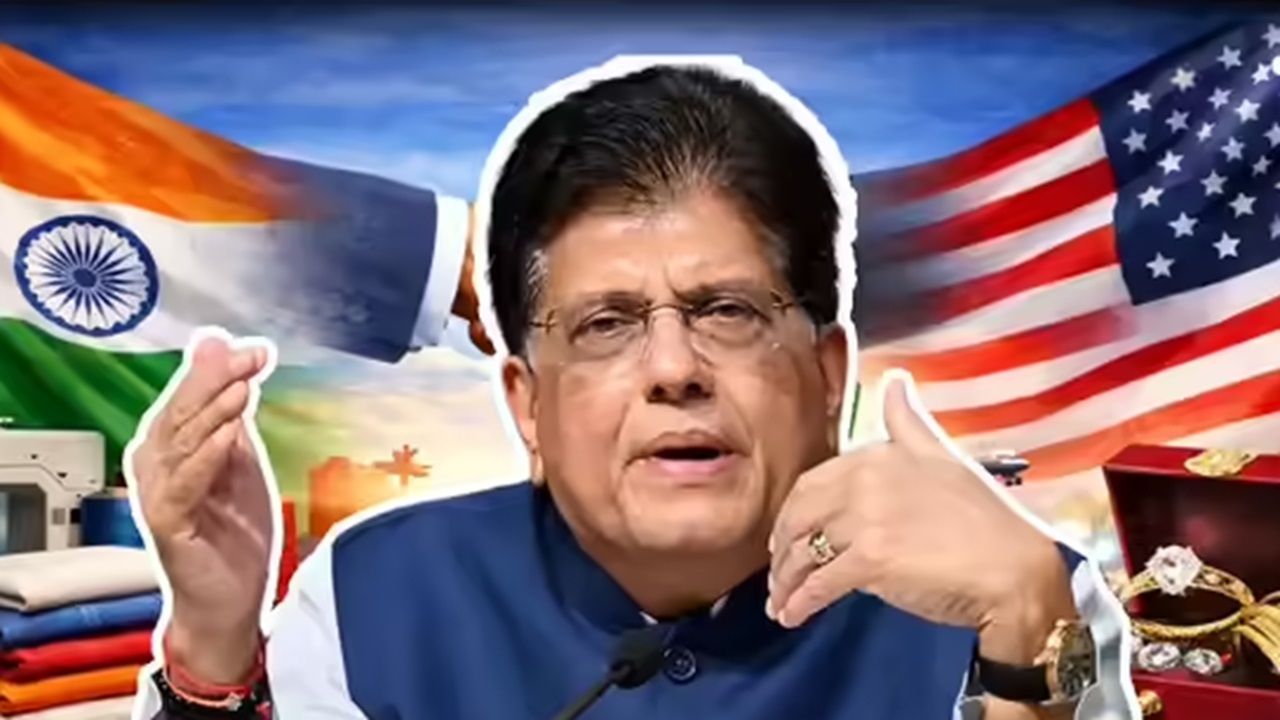
Piyush Goyal at WTO: Bilateral Momentum Builds
At the WTO’s 14th Ministerial Conference (MC14) in Abu Dhabi, India’s Commerce Minister Piyush Goyal held a series of high-level bilateral meetings, reinforcing India’s intent to deepen trade ties and reshape global cooperation frameworks. These engagements reflect New Delhi’s broader strategy to secure diversified Free Trade Agreements (FTAs) and position itself as a key player in a shifting global trade order. With an ambitious $2 trillion export target by 2030, India is accelerating negotiations across continents.
Canada CEPA: Resetting a Crucial Partnership
One of the most notable developments came from Goyal’s meeting with Maninder Sidhu, where both sides pushed forward the Comprehensive Economic Partnership Agreement (CEPA). Revived after Mark Carney’s recent India visit, negotiations have moved swiftly, with both countries aiming to conclude talks within the year. The agreement is expected to significantly expand trade in goods, services, and investments, targeting $50 billion in bilateral trade by 2030. Importantly, it signals a thaw in previously strained relations.
UK CETA: From Agreement to Action
Goyal’s discussions with Peter J Kyle focused on implementing the India-UK Comprehensive Economic and Trade Agreement (CETA), signed in 2025 by Narendra Modi and Keir Starmer. Beyond execution, both sides explored cooperation in emerging sectors like clean energy, agriculture, and critical minerals. The dialogue also touched upon broader WTO reforms, emphasizing inclusivity and balancing digital trade norms with development concerns.
New Zealand FTA: Reviving a Dormant Track
In talks with Todd McClay, Goyal worked to revive the long-pending India–New Zealand FTA. With bilateral trade recently crossing $1 billion, both nations are seeking a balanced agreement, particularly addressing India’s sensitivities around dairy imports. The renewed push aligns with India’s Indo-Pacific strategy, strengthening supply chains and regional partnerships.
EU FTA: Nearing the Finish Line
Goyal’s engagement with Maros Sefcovic highlighted progress on the India–EU Free Trade Agreement, whose negotiations concluded in early 2026. The focus now shifts to procedural steps such as legal vetting and ratification. Once finalized, this deal could become one of India’s most significant trade agreements, unlocking access to a vast market while boosting investment flows.
Analysis: India’s Calculated Trade Diplomacy
Goyal’s approach reflects a pragmatic and multi-layered diplomacy. Instead of relying on a single bloc, India is pursuing parallel agreements with key economies, reducing overdependence on any one partner—particularly China. This marks a strategic pivot after India’s exit from RCEP, emphasizing bilateral and plurilateral gains.
Crucially, India is negotiating from a position of cautious openness—seeking market access for its services and manufacturing sectors while protecting sensitive domestic industries. By aligning FTAs with domestic priorities like MSME growth and supply chain resilience, Goyal is ensuring that trade policy supports broader economic goals. His stance at the WTO—prioritizing agriculture protections and resisting blanket e-commerce duty waivers—also underscores India’s commitment to safeguarding developing nation interests.
A Strategic Trade Reset
Piyush Goyal’s engagements at MC14 reflect more than routine diplomacy—they signal a deliberate recalibration of India’s global trade strategy. By advancing multiple FTAs simultaneously and shaping WTO discourse, India is positioning itself as both a negotiator and a rule-shaper. The success of these efforts will depend on timely execution and political consensus, but the direction is clear: India is no longer reacting to global trade shifts—it is actively shaping them.
(With agency inputs)