High Stakes, Strong Start: Early Voting Surge in Assam, Kerala and Puducherry Sets the Tone
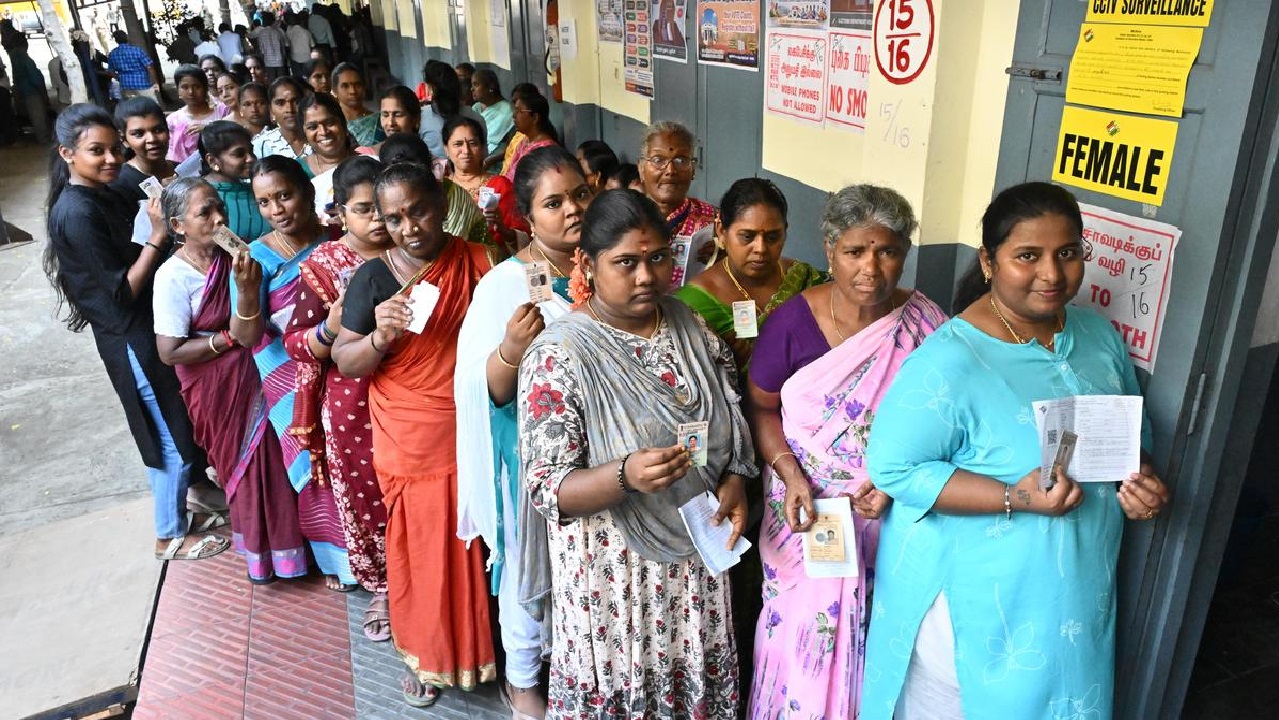
Voting across Assam, Kerala, and Puducherry began on a robust note, with early turnout figures indicating strong voter enthusiasm in all three regions. According to the Election Commission of India, turnout by around 9 am stood at 17.87% in Assam, 16.23% in Kerala, and 17.41% in Puducherry. With polling stretching through the day, these initial numbers reflect a high level of engagement among over 5.3 crore eligible voters participating across 296 constituencies.
Diverse Political Contests Across Three Regions
Each of the three regions presents a distinct electoral battle shaped by local dynamics and leadership stakes.
In Kerala, Chief Minister Pinarayi Vijayan leads the Left Democratic Front (LDF) in a bid for an unprecedented third consecutive term. The contest is intensifying against a resurgent Congress-led United Democratic Front (UDF), alongside a steadily expanding BJP-led alliance. With over 2.7 crore voters and 883 candidates, the state’s electorate—particularly women and young voters—holds the key to determining whether continuity or change prevails.
In Assam, the electoral fight is more sharply bipolar. Chief Minister Himanta Biswa Sarma heads the BJP-led NDA, aiming for a third straight victory, while the Congress-led opposition bloc is attempting a comeback after a decade. With around 2.5 crore voters and 722 candidates, issues such as regional identity, development, and security are expected to significantly shape voter choices.
Meanwhile, Puducherry presents a smaller but politically sensitive contest. Chief Minister N. Rangasamy and the NDA are seeking a second term against a Congress-DMK-aligned opposition. With just under 10 lakh voters and 294 candidates, the Union Territory’s election carries symbolic weight despite its size.
Symbolism and Leadership Optics on Poll Day
The opening day of voting has also been marked by visible leadership participation and symbolic gestures. In Kerala, Governor Rajendra Vishwanath Arlekar cast his vote in Thiruvananthapuram, while Vijayan framed the election as decisive for the state’s future trajectory.
In Assam, Sarma’s visit to the revered Kamakhya Temple underscored cultural and spiritual messaging, while Congress leader Gaurav Gogoi positioned the election as a turning point for the state’s political direction.
In Puducherry, Rangasamy’s decision to arrive on a motorcycle to cast his vote reflected grassroots, accessible image—highlighting the close and competitive nature of the contest.
Early Trends and Broader Political Signals
The early turnout trends suggest strong mobilisation across regions, with Assam slightly leading. This may indicate effective grassroots outreach by the NDA in the Northeast, while Kerala’s steady turnout points to sustained engagement in a politically aware electorate shaped by welfare and governance debates.
If these patterns continue into higher overall turnout by the end of polling, the results could carry national implications. They may serve as a critical indicator of the BJP’s political momentum and the resilience of regional alliances like Kerala’s LDF.
A Defining Electoral Moment
The strong opening to voting in Assam, Kerala, and Puducherry reflects not just administrative efficiency but also a deeply engaged electorate. Each region’s contest is rooted in its own political realities, yet collectively they form an important test of leadership, governance models, and alliance strategies.
As the day progresses and turnout builds, the eventual results will go beyond state boundaries—offering insights into India’s evolving political landscape and setting the tone for future electoral battles.
(With agency inputs)